Judson Daland Prize for Outstanding Achievement in Clinical Investigation
Howard Y. Chang
The 2014 recipient of the American Philosophical Society's Judson Daland Prize for Outstanding Achievement in Patient-oriented Clinical Investigation is Howard Y. Chang in recognition of his discovery of the existence and function of a new class of pervasive genes in the human genome, termed long noncoding RNAs (1ncRNAs). Dr Chang's research is focused on mechanisms that coordinate the activities of genes that control cell fate. He has pioneered methods to identify key regulators of large-scale transcriptional programs important in development of cancer, aging and response to infections. His discoveries have introduced the important and pervasive roles of long noncoding RNAs in chromatin regulation. He also invented the first method to map RNA occupancy of chromatin genome-wide, revealing that each lRNA can interact extensively with hundreds or thousands of sites across the genome.
Dr. Chang received a Ph.D. at Massachusetts Institute of Technology in 1998 and an M.D. at Harvard Medical School in 2000. He completed his residency and postdoc in dermatology and genetics at Stanford University School of Medicine in 2004, and became an assistant professor in its Department of Dermatology. He is currently a professor of dermatology at Stanford and Early Career Scientist at Howard Hughes Medical Institute.
The Daland Prize selection committee consisted of Clyde F. Barker (chair), Donald Guthrie Professor of Surgery, University of Pennsylvania; John N. Loeb, Professor Emeritus of Medicine, Columbia University; Arno Motulsky, Professor Emeritus of Medicine and Genome Sciences, University of Washington; and Thomas E. Starzl, Professor of Surgery, University of Pittsburgh School of Medicine.
BEQUESTS have several basic forms. A specific bequest directs that the APS is to receive a specific piece of property, such as a number of shares in a particular stock, a rare book, or a work of art. A general bequest directs that the APS receive a specified dollar amount. A residual bequest designates all or a portion of whatever remains after all debts, taxes, expenses, and all other bequests have been paid. A contingent bequest takes effect only if the primary intention cannot be met—e.g., if there are no surviving beneficiaries. Bequests may be unrestricted or restricted; in the latter case, donors are encouraged to contact the Development Office to assure that the Society will be able to fulfill the donor’s intentions for the use of the funds. In the State of Pennsylvania, bequests may be established irrevocably.
A TESTAMENTARY TRUST is a charitable remainder trust (established under the donor’s will) that provides payments to a beneficiary (often a spouse) for life. The principal is paid to the APS upon the death of the beneficiary.
CHARITABLE GIFT ANNUITIES are a form of life income gift. In exchange for a transfer of cash or securities, the APS contractually guarantees to make fixed annuity payments to the donor and/or another beneficiary. The payout rate depends on the age and number of beneficiaries.
DEFERRED INCOME GIFT ANNUITIES postpone annuity payments until a set time in the future—at retirement, for example. This type of gift is useful for donors who have a high current income, and who wish to augment potential retirement income on a tax-favored basis.
CHARITABLE REMAINDER TRUSTS (CRT)provide fixed income (Charitable Remainder Annuity Trust) or variable income (Charitable Remainder Unitrust) to the donor and/or another beneficiary such as a spouse. Upon the death of the last beneficiary, the principal passes to the APS. The donor establishes the trust with cash, securities, or real estate and specifies how the trust income and principal are to be distributed. Most CRT’s are for life, though some are term trusts with a limited period of years, not to exceed 20. Term trusts are sometimes used to provide tuition to grandchildren for private school or college, with the principal then coming to the charity.
CHARITABLE LEAD TRUSTS enable the donor to make a charitable gift while retaining the trust assets in his or her family. Income from the trust is paid to the APS for a specified period of years. In a grantor lead trust, the assets are returned to the donor at the end of the trust term. In a nongrantor lead trust, the assets are typically distributed to children or grandchildren at the end of the trust term. The advantage of the nongrantor type is that it can significantly reduce the gift and estate taxes on the value of assets used to fund the trust. Any appreciation in the trust’s assets will avoid gift and estate taxes.
REAL ESTATE may be contributed outright, or it may be placed in a trust and sold to provide a stream of life income until the beneficiaries’ death, at which time the principal comes to the APS. Donors may also make a gift of a “remainder interest” in a personal residence or farm. This “retained life estate” plan enables the donor to continue to occupy the residence without disruption. A charitable deduction, often substantial, is given for the present value of the remainder interest.
The CHIP—(CHARITABLE IRREVOCABLE PLEDGE) takes advantage of the fact that, in the State of Pennsylvania, donors may irrevocably designate a charity as a beneficiary in their wills. A CHIP—typically a substantial sum—creates an asset on the charity’s balance sheet, against which the charity may borrow (e.g., for a current building or renovation program). The donor avoids being “maxed out” on his or her annual charitable deductions and maintains investment control of the asset and its liquidity. The donor may also pledge to contribute an annual sum to absorb the interest cost of borrowing the principal amount of the pledge.
Donors may designate the APS as the beneficiary of a LIFE INSURANCE policy, or make a gift to the Society of a paid-up policy.
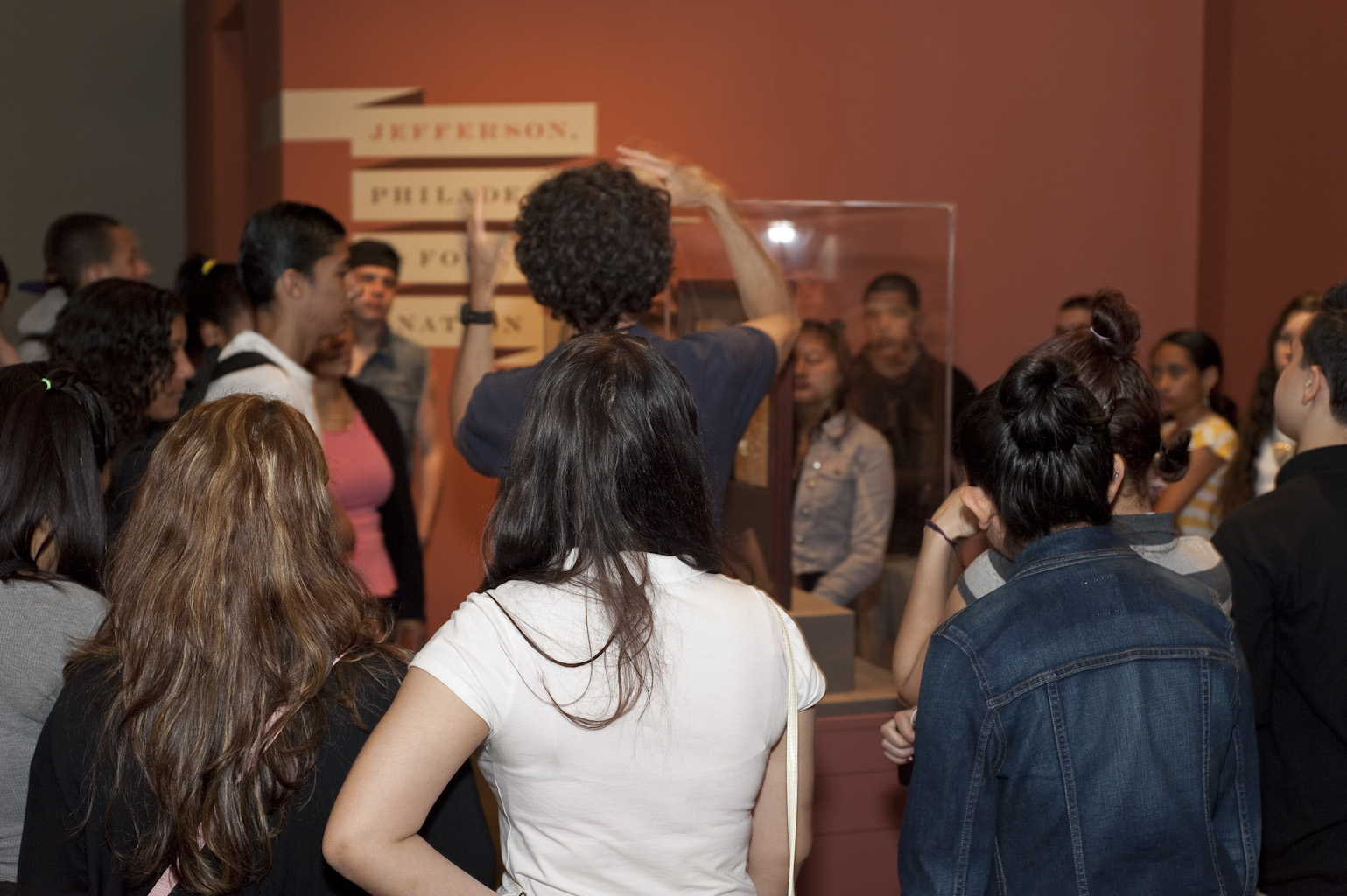
We continue to monitor the current public health situation and will open the exhibition in a limited capacity when it is safe to do so, hopefully in 2021. A virtual tour is available now.
Currently not accepting exhibition tour requests due to the Society's health and safety measures during the pandemic.
Information on booking distance learning programs coming soon! In the meantime, email [email protected] with any questions.
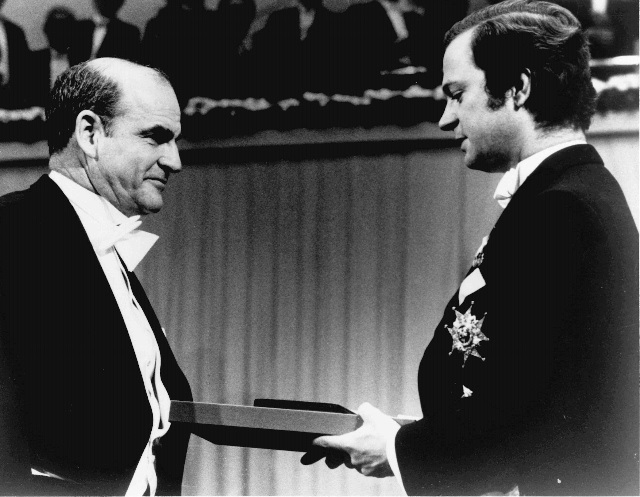
Baruch Blumberg receives the 1976 Nobel Prize in Physiology or Medicine. Photograph from the Baruch S. Blumberg papers donated to the American Philosophical Society.
Gifts to Library Collections
The American Philosophical Society Library welcomes contributions of books, manuscripts, personal papers, works of art on paper, digital objects, and other materials suitable for the Library’s collections.
Gifts of tangible personal property are accepted when donated materials enhance existing collections, fall within the collection development policy of the Library, or represent an extraordinary opportunity to document areas related to the mission of the Library.
The Library’s major collecting areas are:
American history, with an emphasis on the mid-Atlantic region, ca.1750–1840
American anthropology, with an emphasis on Native American languages and cultures
Natural history and natural philosophy
Life sciences, with an emphasis on evolutionary theory, genetics, molecular biology, and paleontology
Physical sciences in the 20th and 21st centuries, with an emphasis on quantum physics
Medical research in the 20th and 21st centuries
All Library acquisitions are catalogued and made available for scholarly use as quickly as possible after accessioning.
Prospective donors should contact the Librarian, at [email protected].
In keeping with IRS regulations for gifts of tangible personal property, professional appraisals of gifts for tax purposes are the responsibility of donors.
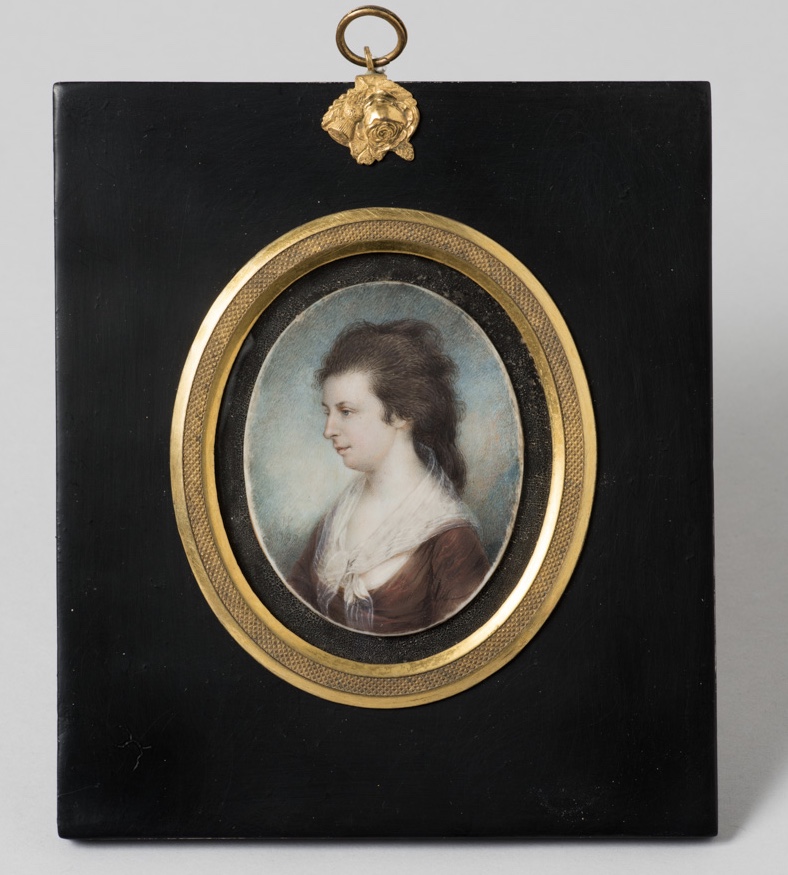
Miniature Portrait of Mrs. James Peale by James Peale, Sr., ca. 1790. Gift of Sam Carrier and Susan Kane, 2014. American Philosophical Society.
Gifts to Museum Collections
The Museum welcomes contributions of fine art, scientific instruments, patent models, miniatures, medals and medallions, furniture and other decorative arts, and archaeological and ethnographic objects in accordance with the scope and themes of its collection.
The collection of the APS Museum reflects the central role of the APS—and Philadelphia—in the founding of the nation and the early development of science and technology in the colonies and early Republic. The collection is strongest in:
Objects relating to early American history (especially Benjamin Franklin, the Society’s founder)
Early American portraits
The history of science and technology from the 18th century through the early 20th century
The collection is housed in a secure, climate-controlled space. Objects are also displayed in conjunction with thematic exhibitions in Philosophical Hall.
Gifts of tangible personal property are accepted in accordance with the collections policy of the Museum. Prospective donors should contact Mary Grace Wahl, Associate Director for Collections and Exhibitions, at [email protected].
In keeping with IRS regulations for gifts of tangible personal property, professional appraisals of gifts for tax purposes are the responsibility of donors.
Multiply the impact of your personal contribution to the American Philosophical Society.
Many employers offer matching gift programs and will match charitable contributions made by their employees. To find out if your company has a matching gift policy, please enter your employer’s name below. If your company matches, you may be able to access the forms directly through the search. Just follow the instructions.
Matching gifts—when combined with your donation—double or triple the resources available to the Library, Museum, and other programs.
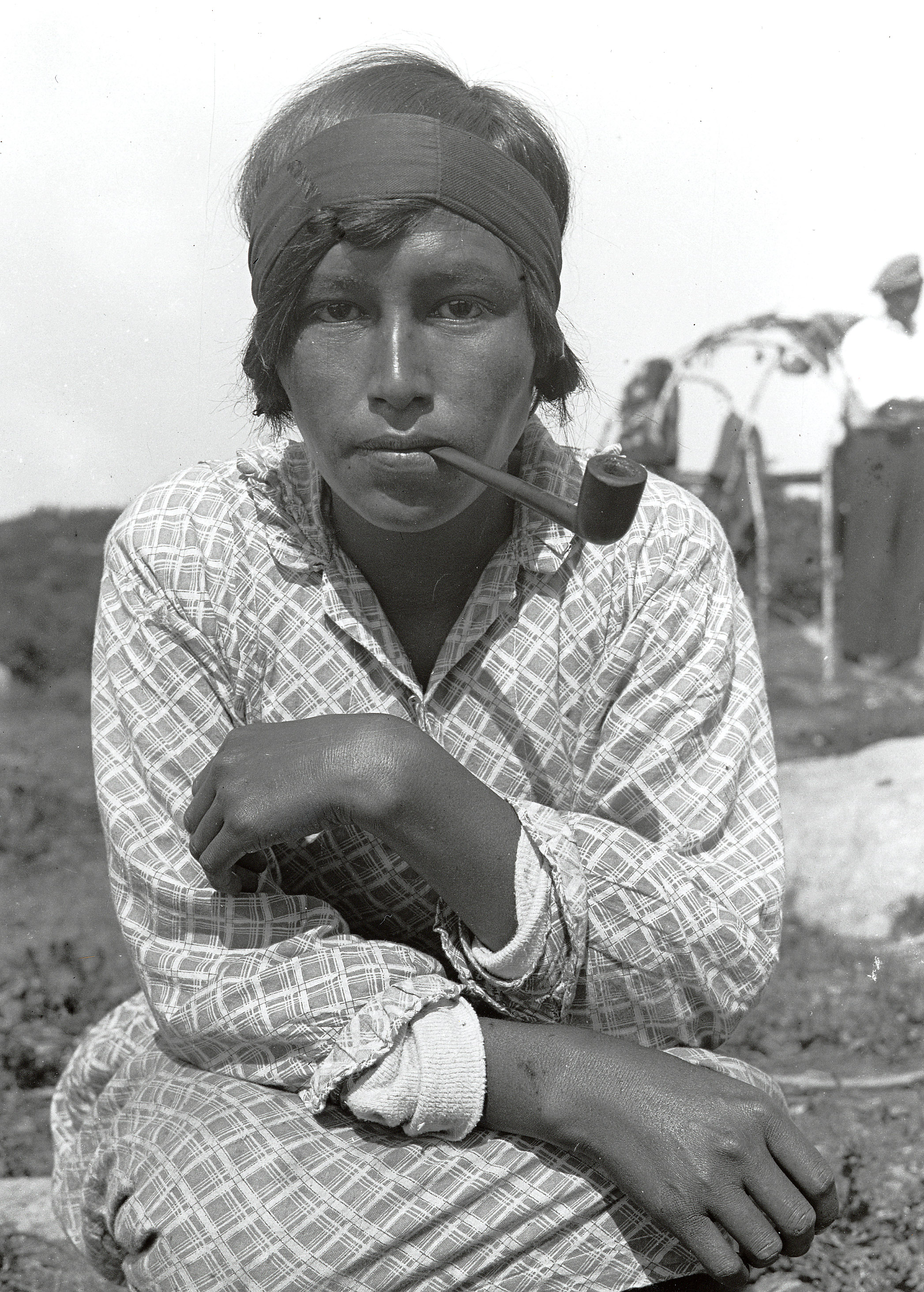
Nenawan (Maggie Duck) of the Ojibwe community of Little Grand Rapids, Manitoba, 1930s. Photo by A. Irving Hallowell. A. Irving Hallowell Papers. American Philosophical Society.
The National Endowment for the Humanities has awarded the American Philosophical Society a $500,000 challenge grant to create an endowment for the Library’s Center for Native American and Indigenous Research (CNAIR).
CNAIR will allow the Library to build on a quarter millennium of collecting Native American materials, and several years of unprecedented activity involving both collegial and digital partnerships with Native American communities. This permanent and dynamic division of the Library will focus on the pursuit and integration of scholarly, archival, and tribal interests, and in the process, inspire new scholarship and educational initiatives among both academic and Native communities. Three overarching programmatic goals encompass CNAIR’s potentially wide-ranging impact:
Practicing and promoting Digital Knowledge Sharing as a catalyst for a new era in Native American and indigenous studies
Establishing a consortium of sister repositories (including emerging tribal archives) and working collaboratively toward extensible models to serve scholars working in the fields of Native American studies, ethnohistory, linguistics, cultural anthropology, and ethnomusicology
Encouraging a new generation of indigenous scholars to advance academic pursuits and cultural revitalization in tribal settings
To date, we have raised more than $1,454,000 of the $1,500,000 needed.
For more information or to make a gift, please contact Linda Jacobs at 215-440-3434 or [email protected].
Endowment and Restricted Gifts
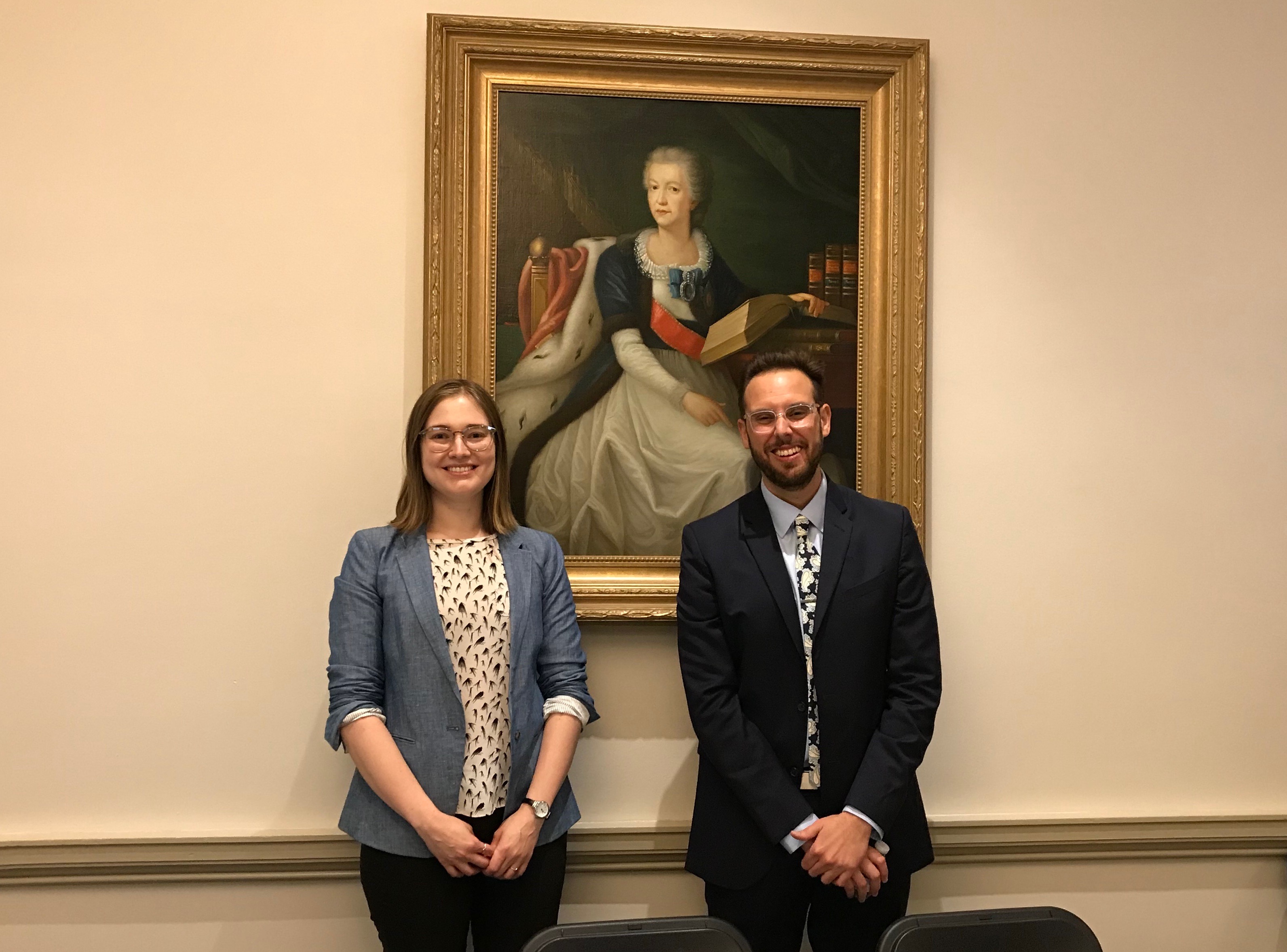
Alexandra Montgomery and Will Fenton, 2016 and 2017 Elizabeth R. Moran Fellows. Alexandra Montgomery worked to uncover the history of Brushwood and Bryn Clovis farms using a newly donated deed collection spanning nearly 300 years of Chester County history. Will Fenton examined hundreds of volumes of diaries across the American Philosophical Society manuscript collections. See the online diary research guide he developed with the APS technology team over the course of his fellowship
The APS’s endowment, built up over more than two centuries with gifts from Members and Friends, has a history of sound management with steady long-term growth. Investment income from our restricted and unrestricted endowment funds plays a crucial part in our operations.
If you have any questions or wish to establish an endowment fund, please contact Linda Jacobs at 215-440-3434 or [email protected].
Examples of naming opportunities include:
Library funds for the acquisition and processing of books and manuscripts
Research Grant funds in all fields for graduate students and postdoctoral level scholars
Exhibitions
Public outreach programs
Meetings
Principal staff positions
Endowed Research Grants
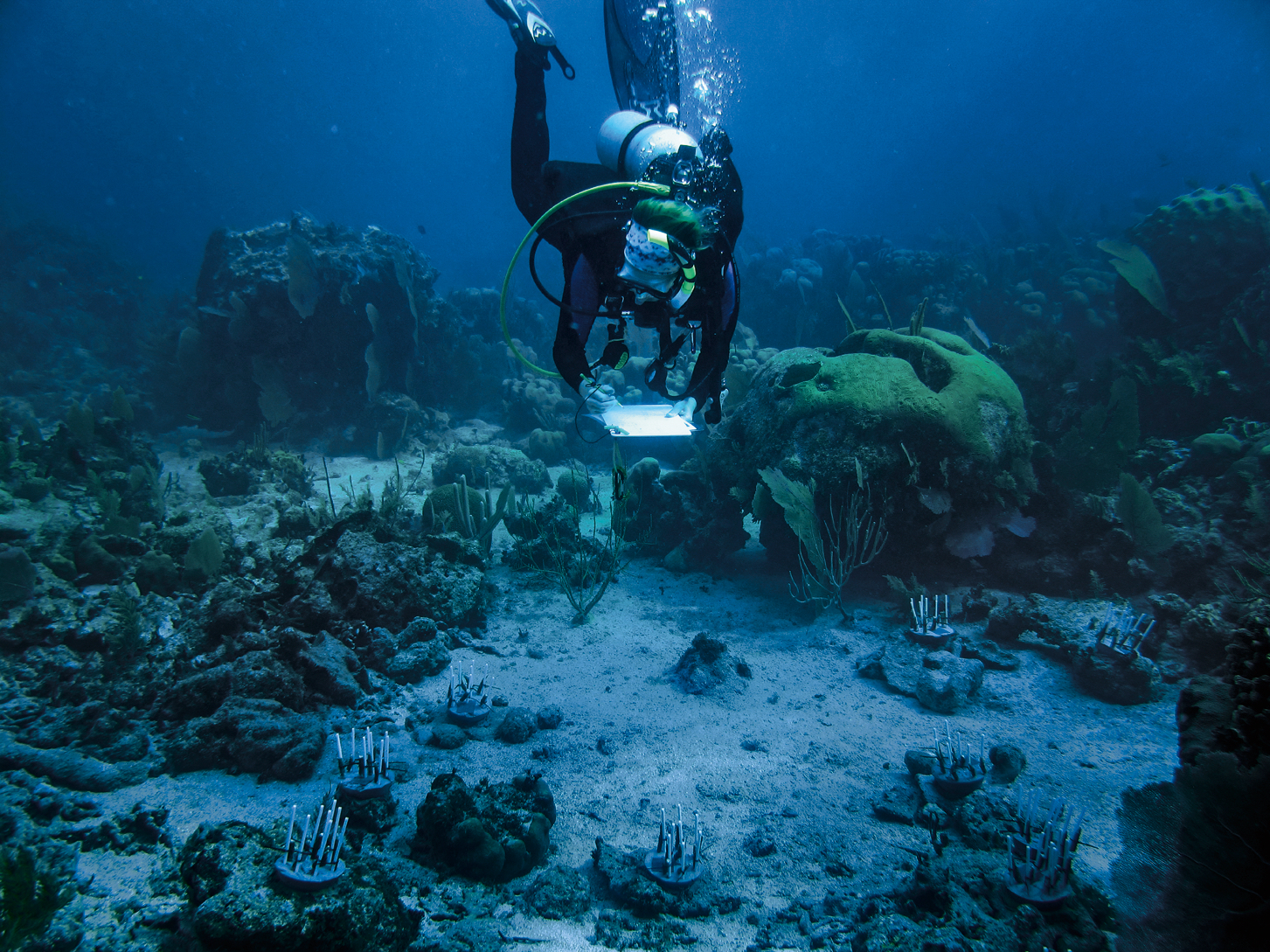
A. cervicornis transplanted fragments on cement “cookies” attached to a hard substrate at Calabash Forereef. Photo by Kathryn Lesneski, Lewis and Clark Fund for Exploration and Field Research grant recipient (2016).
The APS is one of the preeminent organizations in the nation offering grants and fellowships on a competitive basis for scholarly research. The APS has a long and distinguished tradition of research and exploration, dating back to the founding era. Since 1933, the APS has provided grants and fellowships to more than 16,000 scholars—many of them younger scholars at critical stages in their careers. In the last decade alone, the APS has awarded some 1,500 research grants to early-career scholars at more than 600 colleges and universities.
Donors may endow and name a research grant for a minimum contribution of $50,000 in the programs listed below, or they may establish general endowments for research grants, allowing the APS to apply the funds as needed in programs such as those listed below. Donors will receive annual reports on the recipients of grants supported by the income from their respective endowed funds.
Franklin Grants provide funds in any discipline for research that is often travel-related, usually to museums and libraries abroad. There are few, if any, comparable programs of this scale offering grants that are fully portable (i.e., not tied to a specific research center or discipline). These grants are generally awarded to postdoctoral scholars and typically support the cost of research leading to publication.
Lewis and Clark Grants for Exploration and Field Research were established in 2004 in honor of the Lewis and Clark Bicentennial. (The APS cosponsored Lewis and Clark’s journey, and its Library is home to their journals.) The Lewis and Clark Grants support doctoral students from disciplines with a large dependence on field studies, such as archeology, anthropology, biology, ecology, geography, geology, linguistics, paleontology, and population genetics, but grants will not be restricted to these fields.
Library Resident Research Fellowships provide support for short- and long-term fellowships for scholars from outside the region, enabling them to use the resources of the APS Library on site. Recipients come from all over the world. The Library is internationally recognized for its holdings in early American history and culture; the history of science, medicine, and technology; and Native American anthropology.
Please contact Linda Jacobs at 215-440-3434 or [email protected] for further details.
Meeting Patrons
Photo by Frank Margeson.
The APS encourages contributions to the endowment of the Meetings, an APS tradition that reaches back to the year of its founding. Meeting Patrons are recognized on a prominent plaque in Benjamin Franklin Hall. Planned gifts (including intended bequests, if sufficiently documented) as well as outright gifts are accepted for this purpose.
The titles of the gift levels below pay tribute to the first eight members of the American Philosophical Society (not including the founder, for whom Benjamin Franklin Hall is named). These eight “Men of Speculation,” along with Franklin, embody the tradition of APS Meetings, which continue to bring together leading thinkers and doers of their times to share observations, experiments, and research. The descriptor following each name is the stated role of that individual in the operation of the APS, as established in its founding Proposal. Engaging profiles of these men are provided in Dr. Whitfield J. Bell Jr.’s Patriot Improvers, which comprises short biographies of APS Members between 1743 and 1768.
Meeting Patron Circles of Support
$1,000,000
John Bartram Circle, Botanist
$500,000
Phineas Bond Circle, Natural Philosopher
$250,000
Thomas Bond Circle, Physician
$100,000
William Coleman Circle, Treasurer
$75,000
Thomas Godfrey Circle, Mathematician
$50,000
Thomas Hopkinson Circle, President
$25,000
William Parsons Circle, Geographer
$10,000
Samuel Rhoads Circle, Mechanician
For more information or to make a gift, please contact Linda Jacobs at 215-440-3434 or [email protected].
A Tribute or Memorial Gift is an especially meaningful way to recognize friends, family, colleagues, and special occasions, while at the same time supporting the American Philosophical Society's mission.
Your contribution will be acknowledged with a personalized card sent to the honored individual or family—without reference, of course, to the amount of the gift. In addition, the name of the individual being honored will be listed in the Society’s Report to Donors.
Gifts may be mailed to:
Development Department American Philosophical Society 104 South Fifth Street Philadelphia, PA 19106
Please remember to include the name and address of the person who should be notified of your generosity.
For more information, please contact please contact the Development office at 215-440-3434 or [email protected].
The American Philosophical Society established the Friends of the APS in 2009 to engage wider audiences in Benjamin Franklin’s visionary mission of “promoting useful knowledge.” Today, Friends and Alumni of the Society's grant and fellowship programs contribute critical unrestricted funds and designated donations to the Society’s independent research library, public museum, publications, and research program that provides support to early-career scholars and scientists for projects around the globe.
Your support will help steward national treasures, promote new knowledge, and open the Society’s doors for public learning and enjoyment. The APS welcomes unrestricted gifts, but you may also designate your annual contribution for the Library, the Museum, Research/Grants, and/or Publications.
Supporting Friends and Alumni enjoy engaging opportunities for intellectual fellowship. Private offerings include:
Exhibition previews, public lectures, and scholarly presentations
Exclusive behind-the-scenes tours
Advance notice and registration for special programs
Networking and "meet up" gatherings, on- and off-site
Gift Levels and Benefits
Contributors are invited to enjoy a full year of engagement opportunities. All levels receive monthly e-news and recognition in the Society’s Annual Report.
For more information, please contact the Development office at 215-440-3434 or [email protected].