Letters and Social Distance

Imagine a world where there are vast physical distances between you and a friend, family member, or colleague. This might sound all too familiar to a reader in 2020, but this was also very familiar for most prior to modern transportation. To compensate for distance and instead of texts, Zoom, or emails, letters were commonly used to communicate with those far away. Though the technology of communication has changed drastically, has much else changed? 

In centuries past, letters were the main form of communication over long distances. Their envelopes or folds and contents communicated implied and direct messages through the materials used and the written word. Today, we have text messages and other forms of digital communication. How are these methods and choices of media similar, how are they different? If you look beyond handwriting and some basic mechanics, the similarities might be surprising. During COVID-19, as we practice social distancing, the moment provides us with a set of constraints similar to those of earlier centuries. We seek ways to connect while spending time in physically different spaces. The written word provides comfort and conveys vital information. Even the way messages are sent continues to give information about power structures, hierarchies, relationships, and historical context. 

As it was then and is now, few things compete with that feeling of opening a letter. We all know it. That feeling of opening a card or a letter you’ve received in the mail. The little teasers of information on the envelope - who sent it, the stamp they chose to use - give you a sense of what to expect. The time of year you’ve received the card might also give additional hints of the contents. The quality of the paper, a wax seal, and the physical condition of the letter also carry meaning. Now, there are almost too many ways in which we receive written messages. Mail, social media, text, email, and probably others all convey their own meaning. Think about the difference between your initial thoughts on receiving a text from a friend compared to receiving an email from a friend.


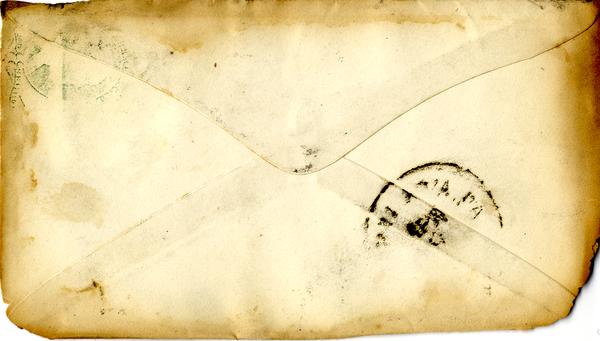
Though not from the 18th century, this envelope from the William Parker Foulke Papers (1840-1865) evokes that feeling of receiving a letter


The contexts in which the sender composed the message and in which the recipient reads the message carry emotionally-based, time-based, and socially-based meanings. In the 18th century, the lucky writer might have found a book full of templates for situations running between needing money while at sea to checking in on a sibling. Today, we still have a variety of contexts and templates. Between writing cover letters for a job to saying “happy birthday” on Facebook, modern communicators find themselves in different yet similar situations to those in earlier centuries. You can now see edits on posts to certain social media platforms; somewhat like seeing strikethroughs in the 18th century letters. Though we’ve been gifted (or occasionally cursed) with autocorrect, is the context for edits any different? These contexts also usually give hints about how to send the message and how to respond. 

Luckily, responses could also come from the same book of templates and modern society has also set-up some standard responses based on the context. If you’ve sent a generic response to a job application, is that very different from copying a template that tells you how to respond to someone asking a favor in the 18th century? Responses to written communication are usually tied to the context. Those receiving a response usually already have your response in mind. It’s often important to match that expectation. Responses always demonstrate, very clearly, that written communication involves more than one person -- it is a social act. 

Now that you are thinking way too much about written communication, check out the activities. Think about family or friends who might not be nearby. This moment is a great one for sending letters or communicating with those we care about!

Header image: Post Office - Post Office, 1788 January 1 - https://diglib.amphilsoc.org/islandora/object/post-office-1788-january-1#page/1/mode/1up

Signature image
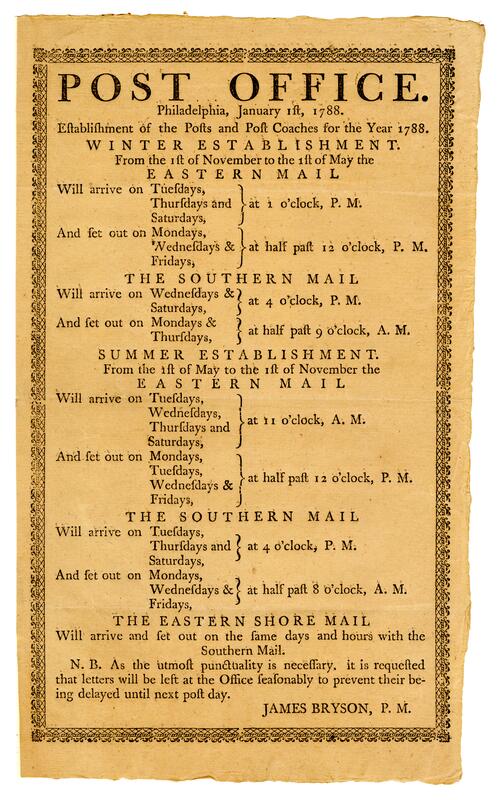
Post office listing and mail delivery times, 18th century
Access

The Art of Letter Writing

During the 18th century, letter writing was the only way to communicate long distance. Therefore, learning how to properly write a letter was a part of any young man or woman’s education. 

Letters were incredibly important. They were sent for the same reasons that we send letters, emails, and texts todayto conduct business, share news with friends and family, and share information or ask questions about various topics. Letters could also serve as a means of introduction to someone whom you’d never met.

However, in the 18th century, letter writing and learning how to write letters was much more formal than it is today. The tone of a letter and what was considered appropriate to write in a letter depended on who you were writing to and why. You would not write the same letter to your mother as you would to a business partner. This is still true today, but we no longer formally learn the etiquette of writing letters the way they did in the 18th century. Eighteenth-century letter writing manuals provided sample letters for a variety of situations. Copying these sample letters allowed a person to practice letter writing and learn appropriate letter-writing manners. 

Ever try to write an email to someone, only to revise it several times and worry over the appropriate tone of voice or the content? Ever worry about how to address a letter or email -- should it be to Dr., Mr., Mrs., Ms., Mx., or Miss? 18th-century folks worried about that, too. In fact, one letter writing manual stated, “Many being at a Loss how to address Persons of Distinctions either in Writing or Discourse, are frequently subject to great Mistakes in the Stile and Title due to Superiors.” It then included a very detailed list of how to address a letter, whether you were addressing the King (“To the King’s Most Excellent Majesty, ‘Sire, or May it please your Majesty.’”) or a merchant (“To Mr. A.B. or Esq; Merchant, in Tower-Street, London, ‘Sir’”). 

Be careful though—in the 18th century, if you wrote a letter to a well-known person with a detailed address, they might be offended. Mail carriers should well know how to find “Benjamin Franklin, Philadelphia” without his specific address! After all, “In directing your Letters to Persons who are well known, it is best not to be too particular, because it is lessening the Person you direct to, by supposing him obscure, and not easily found.” These days, we are expected to use specific addresses when sending a letter, but that was not standard practice in the 18th century before standard street numbers and zip codes. Luckily we no longer have to worry about that particular faux pas. 

Benjamin Franklin, an expert letter writer, owned a manual titled The Art of Letter-Writing. A scroll through the contents will give you a sense of the variety of sample letters and topics. Franklin also published an American edition of George Fisher’s The American Instructor, or Young Man’s Best Companion. This book for children included letter writing as an important task a young gentleman had to learn, coming just after learning the alphabet and how to make a pen. It included pages of the alphabet in different scripts for students to practice by copying or tracing—just like students do in schools today. However, while students today often only learn print and cursive (which is increasingly falling out of favor), Franklin's students were encouraged to learn five types of handwriting, and each was used for a different purpose.

Try out the activities to learn more about 18th-century letter writing!

Header image credit: 
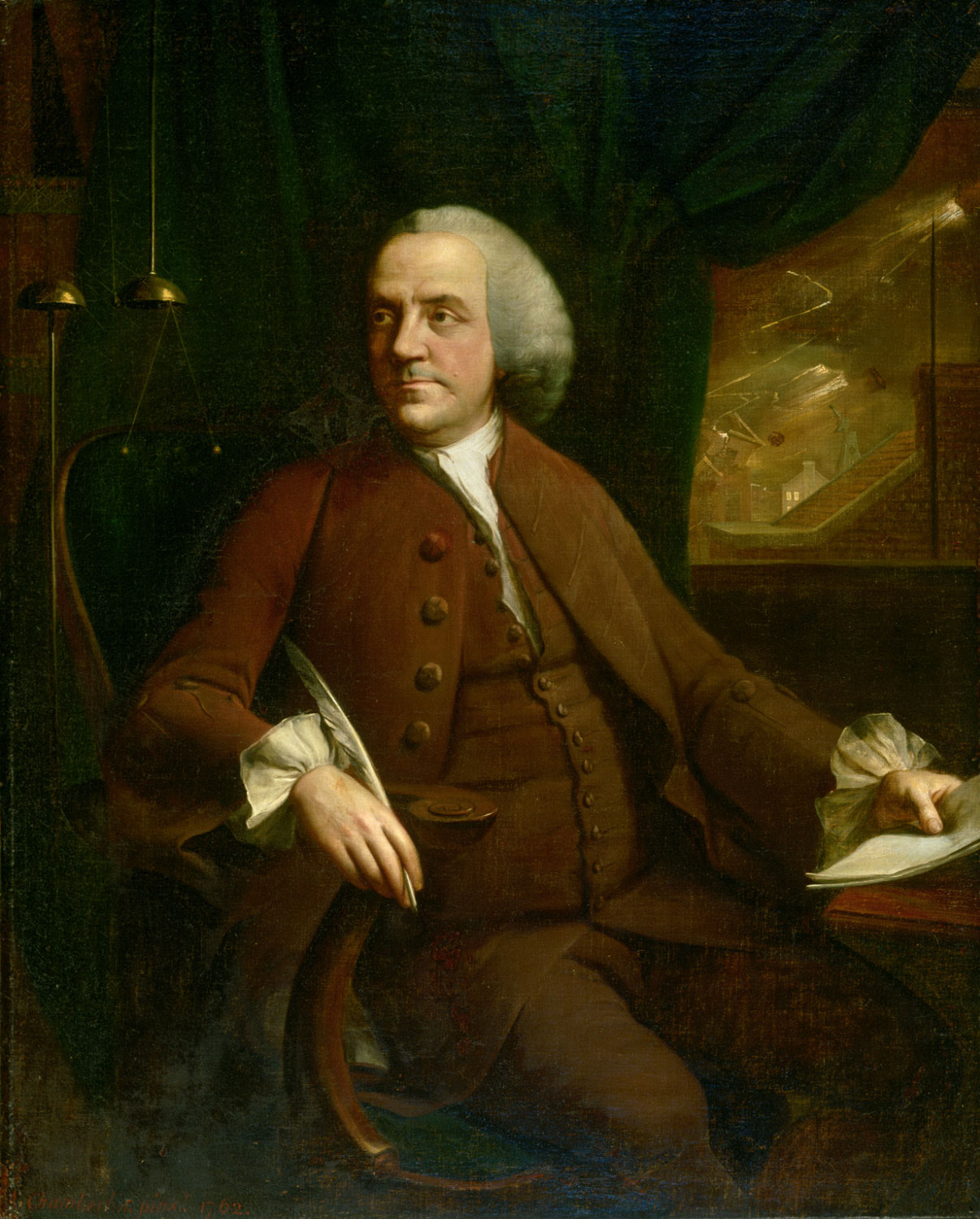
Portrait of Benjamin Franklin by Mason Chamberlin (1762), Philadelphia Museum of Art.

Signature image
Portrait of Benjamin Franklin
Access

APS Member News

New Members for 2026

The American Philosophical Society has extended invites of membership to newly elected members for 2026. Election to the American Philosophical Society honors extraordinary accomplishments in all fields. Read more about this year's election.

Further Reading

For other news about Members and the APS please visit our APS Press page, specifically the annual American Philosophical Society News.

July 2026

Esther Duflo (APS 2025) to receive the 2026 Daniel Patrick Moynihan Prize from the American Academy of Political and Social Science, recognizing her "work on the microeconomics of development and the use of randomized controlled trials to evaluate social policy." She will receive the prize and deliver the 13th Moynihan Lecture on Social Science and Public Policy in early 2027.

June 2026

Kelsey C. Martin (APS 2026) awarded 2026 Kavli Prize in Neuroscience for demonstrating that "separate branches of the same neuron can regulate synaptic strength independently through local translation."

APS Members named to Forbes "America's 250 Most Successful Living Immigrants." #16 George Soros (APS 2009), #24 Katalin Karikó (APS 2024), #25 Yo-Yo Ma (APS 1999), #36 Eric Kandel (APS 1984), #38 Roald Hoffmann (APS 1984), #60 Esther Duflo (APS 2025), #75 Elizabeth Blackburn (APS 2005), #128 Angus Deaton (APS 2014), #129 Ardem Patapoutian (APS 2023), #184 Jack Szostak (APS 2012), #185 James Peebles (APS 2004), #229 Joseph Neubauer (APS 2007), #232 Daron Acemoglu (APS 2021), #240 David Card (APS 2025), #248 Indra Nooyi (APS 2021).

Carl H. June (APS 2020) receives Feinstein Institute's 2026 Ross Prize in Molecular Medicine, with Michael Sadelain, for "revolutionizing the field of of T-cell engineering, transforming cancer treatment." 

Seyla Benhabib (APS 2024) to receive 2026 Karl Jaspers Prize from Heidelberg University in recognition of her "outstanding philosophical work and public impact."

Judith Kimble (APS 2002) receives 2026 Thomas Hunt Morgan Medal from the Genetics Society of America in recognition of her lifetime contributions "of pioneering scientific contributions that shaped our understanding of stem cell regulation in animals and for her visionary service which has significantly influenced research policy, training, and equity in science."

Xiaowei Zhuang (APS 2019) awarded 2026 Dickson Prize in Medicine from the University of Pittsburgh School of Medicine for "developing transformational imaging and genomic technologies that have reshaped multiple fields, especially neuroscience and cancer research, and that are now widely used to study tissue organization in health, aging, and disease."

May 2026

Ruth J. Simmons (APS 1997) awarded 2026 Radcliffe Medal from Harvard University, recognizing her as "a visionary who reimagines what is possible and has the courage and the tenacity to do what is needed."

Yannick Nézet-Séguin (APS 2022) inducted into the Philadelphia Music Alliance's Walk of Fame outside the Kimmel Center.

Simon A. Levin (APS 2003) and Teresa K. Woodruff (APS 2026) elected to the Fellowship of the Royal Society.

Margaret M. Murnane (APS 2015) named Optica Honorary Member in recognition of her "pioneering advances in ultrafast laser technology and XUV science, as well as exceptional service to the optics community through sustained mentorship and leadership."

Paolo Galluzzi (APS 2002) awarded the 2026 Premio all Carriera (Lifetime Achievement Award) by the Italian Society for the History of Science for having "successfully combined philological rigor and original interpretation, institutional vision and a capacity for innovation, making a decisive contribution to the enhancement of Italy's scientific and technical heritage."

May-Britt Moser (APS 2015) elected as foreign member of the Korean Academy of Science and Technology.

Benjamin F. Cravatt (APS 2026) receives Technische Universitat Darmstadt's Emanuel Merck Lecture Award in recognition of his "unwavering long-term commitment to advancing science."

George Cardona (APS 1997) confirmed by California Senate as Chief Trial Counsel for the State Bar of California.

Julie Packard (APS 2004) honored with Ocean Hero award at the 2026 Peter Benchley Ocean Awards in recognition of her lifetime's work and dedication to ocean conservation.

APS Members Receive Honorary Degrees
Cecilia Rouse (APS 2021), Bowdoin College
Harriet Zuckerman (APS 1996), Columbia University
Katalin Karikó (APS 2024), Drexel University
Cass Sunstein (APS 2010), Duke University
Katalin Karikó (APS 2024), Simon A. Levin (APS 2003), Johns Hopkins University
Denyce Graves (APS 2021), The Julliard School
Mary-Claire King (APS 2012), New York University
Steven Chu (APS 1998), Caryl Emerson (APS 2003), Princeton University
Kip Thorne (APS 1999), Rochester Institute of Technology
Francis S. Collins (APS 2022), The Rockefeller University
Janet Rossant (APS 2025), Toronto Metropolitan University
Fabiola Gianotti (APS 2019), University College Dublin
Daron Acemoglu (APS 2021), Henry Louis Gates (APS 1995), Katalin Karikó (APS 2024), University of Oxford
Joyce Carol Oates (APS 2016), Marcia McNutt (APS 2002), University of Southern California
Janet Rossant (APS 2025), University of Toronto
Kwame Anthony Appiah (APS 2001), Robert D. Putnam (APS 2005), JoAnne Stubbe (APS 2004), Yale University

Katalin Karikó (APS 2024) joins Hungary's Tisza Government Health Advisory Team.

Joseph L. Goldstein (APS 1987) received David Rockefeller Award for Extraordinary Service from The Rockefeller University in recognition of his scientific contributions throughout his career.

Joyce Chaplin (APS 2020) named Walter Channing Cabot Fellow by Harvard University in recognition of her contributions to the field of early American history.

Ken Burns (APS 2011) awarded inaugural Commonwealth Prize by the Virginia Museum of History & Culture in Richmond, established to commemorate America's 250th, in recognition of his career chronicling our nation's past through documentary films.

Jill Lepore (APS 2014) awarded the 2026 Pulitzer Prize in History for her book, We the People: A History of the U.S. Constitution.

Seyla Benhabib (APS 2024) receives Upsala University's Skytte Prize in Political Science, honoring her for "examining how justice is possible in a world of constant human mobility, with deep respect for the rights of both individuals and states."

April 2026

APS Members Richard L. Kagan (APS 2011), Angela R. Riley (APS 2025), Leslie B. Vosshall (APS 2022), and Patricia J. Williams (APS 2019) elected to the American Academy of Arts & Sciences.

David Gross (APS 2007) awarded the Special Breakthrough Prize in Fundamental Physics "for a lifetime of groundbreaking contributions to theoretical physics, from the strong force of string theory, and for tireless advocacy for basic science worldwide."

Carla Hayden (APS 2020) receives 2026 Champion of Writers Award from The Author's Guild.

Francis Collins (APS 2022) awarded 2026 Dr. Charles L. Branch BrainHealth Award from the Center for BrainHealth in recognition of of his "transformative contributions to neuroscience, leadership and human health."

Deborah Willis (APS 2024) receives 2026 AIPAD Award for redefining and rewriting the "historical and cultural narratives of African American photography in the United States."

Terrence Sejnowski (APS 2025) wins inaugural World Digital Technology Academy Award for the foundational development of the Boltzmann Machine, a precursor to modern AI tools

Stuart Orkin (APS 2017) receives 2026 Breakthrough Prize, along with Swee Lay Thein, for "determining the mechanism behind the body’s transition from fetal hemoglobin to adult hemoglobin and validating its potential as a therapeutic target for sickle cell disease and beta-thalassemia."

Naomi Oreskes (APS 2019) delivers Stanford University's 14th Annual Stephen H. Schneider Memorial Lecture.

David Ginsburg (APS 2020) delivers University of Michigan's 101st Henry Russel Lecture.

Irwin M. Jacobs (APS 2013) receives TechCon Fellows Lifetime Achievement Award in recognition of his "visionary thinking, transformative innovations, and lasting impact" on telecommunications.

Carl Wunsch (APS 2003) awarded BBVA Foundation Frontiers of Knowledge Award in Climate Change and Environmental Sciences for his "foundational contributions to studies that revealed the impact of global warming on the world's oceans."

March 2026

Hazel Rose Markus (APS 2025) receives 2026 Sage-CASBS Award in recognition of her pioneering research and theory connecting the self, identity, and agency to the structure of an individual's daily life.

February 2026

Natasha Trethewey (APS 2022) named 2026 recipient of the Stone Award for Literary Achievement by Oregon State University, honoring her work and "the role that poetry and literature play in expanding awareness and cultivating connection."

Carl June (APS 2020) receives the BBVA Foundation Frontiers of Knowledge Award in Biology and Biomedicine for "revolutionizing cancer treatment using immunotherapy based on the patient's own genetically modified cells."

APS Members named to the Forbes 250 Innovators: Martine Rothblatt (APS 2008), Michael Bloomberg (APS 2015), Leroy Hood (APS 2000), Carl June (APS 2020), Phillip Sharp (APS 1991), J. Craig Venter (APS 2013), Frances Arnold (APS 2018), William Kaelin (APS 2024), Xiaowei Zhuang (APS 2019), Drew Weissman (APS 2024), Katalin Karikó (APS 2024), Warren Buffet (APS 2009).

Francis Collins awarded Public Welfare Medal by the National Academy of Sciences in recognition of his "visionary leadership of the Human Genome Project...[and] decades of public service."

Mary Beard receives Gold Medal for Outstanding Contributions to Public Discourse by the College Historical Society (Hist) of Trinity University in Dublin, celebrating her "outstanding contribution to academia and public life."

David Nirenberg (APS 2024) named inaugural Distinguished Visitor in the Arts and Humanities at Johns Hopkins University.

Yo-Yo Ma (APS 1999) wins 20th Grammy Award, Best Classical Instrumental Solo, for Shastakovich: The Cello Concertos.

Xiaowei Zhuang (APS 2019) awarded the 2026 Ernest Solvay Prize for "pioneering the development of genome-scale imaging, which has transformed biochemical research, enabled spatial genomics, and created a new paradigm for understanding the molecular and cellular architecture of complex tissues."

January 2026

Rosalie Abella (APS 2018) awarded the Order of Canada in recognition of her outstanding legal career and her steadfast commitment to equality, human rights, and social justice.

Veerabhadran Ramanathan (APS 2006) receives Crafoord Prize in Geosciences from the Royal Swedish Academy of Sciences "for fundamental contributions to our understanding of how aerosol particles and other climate pollutants influence the atmospheric energy balance of the Earth System."

Martha Minow awarded the 2025 Friedrich Schiedel Prize for Social Sciences and Technology by the Technical University of Munich School of Social Sciences and Technology "in recognition of her exceptional and field-defining contributions at the intersection of law, social sciences, and technology, notably in the area of Artificial Intelligence."

Marcia McNutt receives the 2025 Public Service Award from the American Association of Immunologists in recognition of her advocacy for federal research support, scientific integrity, and evidence-based policy-making.

Cynthia Dwork awarded the 2026 Japan Prize for her contributions to "building and ethical digital society."

Carol Anderson (APS 2023) to deliver the 2026 Lewis & Clark Law School's Martin Luther King, Jr. Endowed Lecture on January 19, focusing on "The Strangling of American Democracy" and the forces reshaping democratic participation in the United States.

Lorraine Daston (APS 2017) receives Award for Scholarly Distinction from the American Historical Association in recognition of her transformative scholarship, visionary leadership, and profound service to the global historical discipline.

Emanuel Ax (APS 2009) is named 2026 Musical America Artist of the Year.

December 2025

Riccardo Muti (APS 1989) presented with the 2025 Ratzinger Prize by Pope Leo XIV in recognition of his broad reach and impact as a Classical conductor.

Mary-Claire King (APS 2012) is awarded 2025 VinFuture Special Prize for Women Innovators in recognition of her identification of the BRCA1 gene, responsible for inherited susceptibility to breast and ovarian cancers.

Belgian town of Neder-Over-Heembeek names the Ingrid Daubechies Street after mathematician, Ingrid Daubchies (APS 2003), in recognition of her work on modern imaging formats, including JPEGS, and for her commitment to gender equality in science.

November 2025

APS Members Danielle S. Allen (APS 2015), S. James Gates (APS 2012), and Anthony Grafton (APS 1993) are awarded the 2025 Barry Prize for Intellectual Achievement from the American Academy of Sciences & Letters and are inducted into the Academy.

Jonathan Losos (APS 2024) honored with the Arthur Holly Compton Faculty Achievement Award from Washington University in St. Louis.

Gordon S. Wood (APS 1994) awarded the 2025 Irving Kristol Award by the American Enterprise Institute.

Joy Harjo (APS 2021) receives Portrait of a Nation Award from the Smithsonian in recognition of her transformative contributions to American culture and letters.

October 2025

John Clarke (APS 2017) is awarded the 2025 Nobel Prize in Physics, with Michel H. Devoret and John M. Martinis, "for the discovery of macroscopic quantum mechanical tunneling and energy quantisation in an electric circuit."

Naomi Oreskes (APS 2019) received the 2025 Volvo Environment Prize in recognition of work on the history of science, climate change, and scientific consensus.

September 2025

Lucy Shapiro (APS 2003) receives the 2025 Lasker-Koshland Special Achievement Award in Medical Science in recognition of her discovery of bacterial coordination through the generation of daughter cells and her exemplary leadership in the field of developmental biology.

Veeranhadran Ramanathan (APS 2006) awarded the Grand Medal of the French Academy of Sciences, the highest distinction awarded by the Academy, for his visionary commitment to climate science and research.

Maria Jasin (APS 2022) is the 2025 recipient of the Pearl Meister Greengard Prize, awarded by Rockefeller University in recognition of her contributions to DNA repair and gene editing.

David Eisenberg (APS 2003) awarded the 2026 Gregori Aminoff Prize in Crystallography by the Royal Swedish Academy of Sciences "for his discoveries of amyloid fibril structures of relevance for the field of amyloid structural biology in Parkinson's and Alzheimer's diseases."

August 2025

Geraldine Brooks (APS 2024) wins 2025 Library of Congress Prize for American Fiction.

Claire Parkinson (APS 2010) elected and Honorary Member of the American Meteorological Society.

July 2025

APS Members Ann M. Blair (APS 2009), Claudia Goldin (APS 2015), Richard Ovenden (APS 2015), and Susan R. Wolf (APS 2006) elected to the British Academy's Fellowship.

June 2025

Richard J. Tarrant (APS 2014) receives 2025 Antonio Feltrinelli Award in Humanities Classica Philology from the Academia dei Lincei.

Martin Kern (APS 2015) awarded the 18th China Special Book Award, the highest distinction bestowed by the Chinese government on foreign writers, translators, and publishers, in recognition of his scholarly work on ancient Chinese literary culture.

Alberto Ibargüen (APS 2022) honored with 2025 Esserman-Knight Excellence in Journalism Award. The prize, which celebrates exceptional leadership in journalism, will be renamed the Alberto Ibargüen Excellence in Journalism Award in recognition of his national leadership in promoting innovation and a sustainable future for journalism.

Mary-Claire King (APS 2012) is awarded the 2025 Princess of Asturias Award for Technical and Scientific Research for her groundbreaking contributions to the application of genetics to the study and prevention of cancer, interspecies similarity, and the defense of human rights.

Martha Minow (APS 2010) receives 2025 Burton Award, The Hon. Robert A. Katzmann Award for Academic Excellence, in recognition of her exemplary career in law and her time as Dean of Harvard Law School.

David Ginsburg selected as the University of Michigan's 2025 Henry Russell Lecturer, to be delivered during the Winter 2026 term.

Gayatri Spivak (APS 2007) receives 2025 Holberg Award in recognition of her groundbreaking work in the fields of literary theory and philosophy.

May 2025

APS Members Katalin Karikó (APS 2024), Desmond King (APS 2022), Jianguo 'Jack' Liu (APS 2015), and Marilyn Raphael (APS 2023) elected to the National Academy of Sciences.

Ithzak Perlman (APS 1997) and Toby Perlman awarded the Samuel Simons Sanford Medal by Yale School of Music in recognition of their lifelong commitment to music performance and education.

Philip Kitcher (APS 2018) awarded the BBVA Foundation Frontiers of Knowledge Award in honor of his impact as a 'humanist intellectual' whose work "addresses a broad spectrum of the core questions of our time."

Henry Louis “Skip” Gates (APS 1995) wins Newberry Award for leaders in the Humanities.

Katalin Karikó (APS 2024) receives Semmelweis Medal by the Medical University of Vienna in recognition of her pioneering contributions to medical science.

Mary Beth Norton (APS 2010) honored with Harvard Kenneth C. Griffin Graduate School of Arts & Sciences Centennial Medal, presented to alumni who have made fundamental and lasting contributions to knowledge, their disciplines, their colleagues and society.

Douglas Hofstadter (APS 2009) to receive Choose Creativity's Curious Cognitive Explorer Award.

Daron Acemoglu (APS 2021) appointed to lead MIT’s new James M. and Cathleen D. Stone Center on Inequality and Shaping the Future of Work, launching fall 2025.

Steven Chu (APS 1998) and Darren Walker (APS 2021) receives 2025 Ellis Island Medal of Honor, awarded by the Ellis Island Honors Society.

Elizabeth Alexander (APS 2020), Darren Walker (APS 2021), and Michael Bloomberg (APS 2015) named to the TIME100 Philanthropy 2025 list—Alexander for “championing diversity in the arts,” Walker for "driving transformation," and Bloomberg as 2024’s biggest donor.

Katalin Karikó’s (APS 2024) pioneering work in mRNA vaccine technology is honored in the new exhibit, Forever Forward, at Vienna’s Museum of Medical History, the Josephinum.

Douglas S. Massey (APS 2004) granted the 2025 Princess of Asturias Award for Social Sciences by the Princess of Asturias Foundation, to be presented in October.

Robbert Dijkgraaf (APS 2013) and Terrence J. Sejnowski (APS 2025) elected as Fellows of the Royal Society.

APS Members Receive Honorary Degrees
Frances H. Arnold (APS 2018); Doctor of Science, Yale University
Esther Duflo (APS 2025); Doctor of Laws, Harvard University
Henry Louis “Skip” Gates (APS 1995); Doctor of Humanities, Yale University
Annette Gordon-Reed (APS 2019); Doctor of Letters, Yale University
Lonnie Bunch (APS 2020); Doctor of Humane Letters, University of Pennsylvania
Lene Hau (APS 2023); Doctor of Sciences, University of Pennsylvania
Sherrilyn Ifill (APS 2025); Doctor of Laws, Princeton University
Nancy Weiss Malkiel (APS 2019); Doctor of Humane Letters, Princeton University
Alondra Nelson (APS 2020); Doctor of Humane Letters, Amherst College
Vinton G. Cerf (APS 2008); Doctor of Science, Amherst College
William Kentridge (APS 2012); Doctor of Fine Arts, Brown University
 

January 2025

Larry M. Bartels (APS 2019), Bonnie L. Bassler (APS 2012), Helen M. Blau (APS 2018), Emery N. Brown (APS 2023), Ingrid Daubechies (APS 2003), Cynthia Dwork (APS 2016), and Wendy L. Freedman (APS 2007) are recipients of the 2025 National Medal of Science. David R. Walt (APS 2023) is a recipient of the 2025 National Medal of Technology and Innovation. The National Medal of Science recognizes "groundbreaking discoveries and innovations that tackle humanity's most urgent needs," while the National Medal of Technology and Innovation "honors visionaries whose advancements have revolutionized industries, driven economic growth and strengthened the nation's global competitiveness."

October 2024

John J. Hopfield (APS 1988) is the winner of the 2024 Nobel Prize in Physics (shared with Geoffrey Hinton) “for foundational discoveries and inventions that enable machine learning with artificial neural networks.”

Gary Ruvkun (APS 2019) won the 2024 Nobel Prize in Physiology or Medicine (shared with Victor Ambros) "for the discovery of microRNA and its role in post-transcriptional gene regulation." 

July 2024

Kwame Anthony Appiah (APS 2001), Gerd Gigerenzer (APS 2016), and Catharine MacKinnon (APS 2023) were elected to the British Academy as International Fellows. Election to the British Academy honors distinction in the humanities and the social sciences. 

APS President Roger Bagnall (APS 2001) received the Honorary Degree of Doctor of Letters from the University of Reading

Frances Arnold (APS 2018) is the winner of the American Chemical Society's highest honor, the Priestly Medal, "for her pioneering contributions to the development of directed evolution as a method for chemical and biological design."

APS Members Adi Shamir (APS 2019), Joanne Chory (APS 2015), and Martin Rees (APS 1995) are 2024 Wolf Prize laureates. It is awarded "to Scientists and Artists for their achievements in the interest of mankind and friendly relations amongst peoples."

June 2024

"Economics and Beyond" at Harvard will feature Daron Acemoglu (APS 2021)

The Kohli Foundation for Sociology is delighted to announce Michèle Lamont (APS 2024) is this year’s laureate of the Kohli Prize for Sociology.

Mary Robinson (APS 1999), a former lawyer and senator, former president of Ireland, former United Nations High Commissioner for Human Rights, and current Chair of The Elders, is awarded the Tang Prize in Rule of Law

Living Classrooms Foundation is proud to host a special event featuring David M. Rubenstein (APS 2019)

Paul Alivisatos (APS 2015) shares 2024 Kavli Prize in Nanoscience

Sara Seager (APS 2018) shares 2024 Kavli Prize in Astrophysics

Anthony Fauci (APS 2001) says empathy motivated his medical career but an old phrase from high school kept him going.

Retired judge David Tatel (APS 2007) issues a stark warning about the Supreme Court

Kwame Anthony Appiah (APS 2001) is the new Hans Blumenberg Professor

John Wilmerding (APS 2006) died on June 6, 2024, in New York City, NY, at the age of 86.  He was a towering figure in American art whose eclectic career as a scholar, museum curator and collector was instrumental in elevating the cultural significance and market value of painters such as Winslow Homer, Thomas Eakins and Fitz Henry Lane.

Edward C. Stone (APS 1993) died on June 9, 2024, in Pasadena, CA, at the age of 88. He was the visionary physicist who dispatched NASA’s Voyager spacecraft to run rings around our solar system’s outer planets and, for the first time, to venture beyond to unravel interstellar mysteries.

May 2024

Brandeis Undergraduate Commencement Address by Ken Burns (APS 2011)

Elizabeth Loftus (APS 2006), distinguished professor of psychological science and criminology, law & society, who made the event possible through the donation of her American Philosophical Society Patrick Suppes Prize money, kicked off the UCI discussion of "Reimagining the Justice System".

Kwame Anthony Appiah (APS 2001) has been elected to the Fellowship of the Royal Society, the oldest scientific academy in continuous existence.

Vicki L. Chandler (APS 2015), chief academic officer and provost at Minerva University, will address the Drexel University College of Medicine class of 2024 at its commencement ceremony on May 9.

Stuart H. Orkin (APS 2017) has won the Shaw Prize in Life Science & Medicine

Former Executive Officer, Keith S. Thomson (APS 2011), has a new book Murder in Cottisthorpe

Mary Beth Norton gave a virtual discussion of her latest book, 1774: The Long Year of Revolution

Glenn Loury has published new memoir, “Late Admissions: Confessions of a Black Conservative” 

Peter Dougherty (APS 2023) receives honorary degree from La Salle.

Cecilia Rouse (APS 2021) was elected to the National Academy of Science.

James H. Simons (APS 2007) died on May 10, 2024, in New York City, NY, at the age of 86.  He was a prizewinning mathematician who abandoned a stellar academic career, then plunged into finance — a world he knew nothing about — and became one of the most successful Wall Street investors ever.

Robert H. Dennard (APS 1997) died on April 23, 2024, in Sleepy Hollow, NY, at the age of 91.  He was an engineer who invented the silicon memory technology that plays an indispensable role in every smartphone, laptop and tablet computer.

J. D. Hawkins died in February 2024, in London, UK, at the age of 83.  He was one of the world’s leading scholars of the languages of ancient Turkey.

April 2024

Joseph Francisco to Give Pulay Lecture, 'Water in the Atmosphere,'

Kwame Anthony Appiah has won the the Don M. Randel Award for Humanistic Studies

Roy Vagelos received an Honorary Degree from Dartmouth

The Smithsonian celebrates Women’s History Month by featuring Native Rights Champion Suzan Shown Harjo

Helen Hennessy Vendler (APS 1992) died on April 23, 2024, in Laguna Niguel, CA, at the age of 90.  She was known for her method of close reading, going methodically line by line, word by word, to expose a poem’s roots.

Julius Adler (APS 19989 died on April 2, 2024, in Madison, WI, at the age of 94.  He was best known professionally for his groundbreaking research on chemotaxis — the relationship between chemical stimuli and organism behavior — first in bacteria and later in fruit flies.

Ellen Ash Peters (APS 1993) died on April 16, 2024, in West Hartford, CT, at the age of 94.  A copy of the Yale Law School obituary is pasted below.  She was a former chief justice of the Connecticut Supreme Court and a groundbreaking figure among women in the law.

Lubert Stryer (APS 2006) died on April 8, 2024, in Stanford, CA, at the age of 86.  He made fundamental discoveries in fluorescence spectroscopy and vision, established structural biology at Stanford, and uplifted young scientists.

March 2024

David Rubenstein is the new controlling owner of the Baltimore Orioles

Phillips Lecture will feature David M. Rubenstein

A Supreme Legacy: Linda Greenhouse on 45 Years Covering the High Court

Andrea Ghez and Claudia Goldin are among the recipients of the 2024 Alumni Awards

Martha Nussbaum to receive 2024 Norman Maclean Faculty Award

Joe Francisco to Receive Theodore William Richards Medal

Laurie Glimcher is now a strategic advisor to the J.P. Morgan Life Sciences Private Capital team

Jeffrey Gordon, MD, is the recipient of the 2024 Mechthild Esser Nemmers Prize in Medical Science at Northwestern University

The Hana and Franciso J. Ayala Center for Science, Technology, and Religion commemorated the 90th anniversary of Francisco Ayala’s birth at the Pontifical Comillas University in Madrid, Spain, on March 12, 2024. The event was entitled “Frontiers of the Universal: Towards a Symphony of Science, Art, Faith, and Knowledge Economy to Mobilize the Wonder of the Natural World in Benefit of Humanity.” Executive Officer of the APS, Robert M. Hauser (APS 2005) spoke about the contributions of Francisco J. Ayala (APS 1984) to the American Philosophical Society. As guest of honor, Dr. Hauser was awarded the medal of the Ayala Center, the first such award ever given.

Walter Massey (APS 1991) featured in article as a Physicist With a Higher Calling

Henry Louis Gates Jr. (APS 1995) Unpacks Black Literature’s ‘Black Box’ in his latest book.

PACSW Women We Admire will feature UC Berkeley Chancellor Carol T. Christ (APS 2013)

Brandeis University awarded honorary degrees to Ken Burns (APS 2011) and Ruth Simmons (APS 1997)


Daniel Kahneman (APS 2004) died on March 27, 2024, likely in New York, NY, at the age of 90.  He helped pioneer a branch of the field that exposed hard-wired mental biases in people’s economic behavior. The work led to a Nobel.

Richard Serra (APS 2012) died on March 26, 2024, in Orient, NY, at the age of 85.  He was an American artist known for his large-scale abstract sculptures made for site-specific landscape, urban, and architectural settings, whose work has been primarily associated with Postminimalism.

Marjorie Perloff (APS 2012) died on March 24, 2024, in Los Angeles, CA, at the age of 92.  She was one of America’s leading poetry critics.

Estella Bergere Leopold (APS 2024) died on February 25, 2024, in Seattle, WA, at the age of 97. She was a botanist who examined ancient pollen to illuminate the effects of climate change and who, as the last child of the pioneering environmentalist Aldo Leopold, helped preserve her father’s legacy as a founder of the modern conservation movement.

February 2024

Jeffrey I. Gordon (APS 2014) of Washington University School of Medicine in St. Louis, has received the 2024 Mechthild Esser Nemmers Prize in Medical Science from Northwestern University.

Sheila E. Blumstein gave the 2024 Dr. Donald G. Doehring Memorial Lecture

Joanne Chory (APS 2015) will receive the Franklin Institute's Benjamin Franklin Medal in Life Science for her achievements in plant science.

Kenneth C. Frazier (APS 2018) will become a fellow of the Harvard Corporation, the senior governing board.

Angela Creager (APS 2020) has received a grant from the National Endowment for the Humanities (NEH) in a round of awards to humanities projects nationwide.

Michael S. Brown (APS 1987) will address graduates and their guests at Northwestern’s Feinberg School of Medicine’s 165th commencement ceremony on Monday, May 13.

Rice University’s Ruth Simmons (APS 1997), a President’s Distinguished Fellow, has accepted an invitation to join the Barbara Bush Houston Literacy Foundation’s Board of Directors

Venki Ramakrishnan (APS 2020) discusses ribosomes, resilience during FSU public lecture

Ernesto Zedillo will deliver the 2024 Anthony C. Janetos Memorial Distinguished Lecture.


Robert Badinter (APS 2009) died on February 9, 2024, in France, at the age of 95.  He was a French lawyer and former justice minister who led the fight to abolish the death penalty in France.

January 2024

Danielle Allen (APS 2015) has joined the board of directors at Monticello.

The National Academy of Sciences has recognized two APS members with awards: Stanislas Dehaene (APS 2010) received the Atkinson Prize in Psychological and Cognitive Sciences and Kimbery Prather (APS 2022) received the NAS Award in Chemical Sciences.

Yale Chief Executive Leadership Institute Presents Shirley Tilghman (APS 2000), 19th President of Princeton University, with the Yale Legend in Leadership Award


David Pierpont Gardner (APS 1989) died on January 2, 2024, in Park City, UT, at the age of 90. He served as president of the University of Utah and later president of the University of California.

As part of our annual search, we found these members passed previously:

Jacob Ziv (APS 2003) died on March 25, 2023, in Israel, at the age of 91. He was an Israeli electrical engineer and information theorist who developed the LZ family of lossless data compression algorithms alongside Abraham Lempel.

Frank H. Shu (APS 2003) died on April 22, 2023, in Atherton, CA, at the age of 79.  He was an astrophysicist who is credited with making pivotal contributions to our understanding of galaxies and star formation.

Daniel Roche (APS 2009) died on February 19, 2023, in France, at the age of 88. He was a "professor who profoundly renewed the social and cultural history of modern Europe."

Donald R. Kelley (APS 1995) died on August 24, 2023, in New Brunswick, NJ, at the age of 92.  He was a scholar of, in his words:  "language, law, and history in the French Renaissance".

John S. Chipman (APS 2000) died in 2022, at the age of 96. Other details of his death are unknown.  He was an economist who was a noted expert on the econometrics of international trade.

December 2023

Robert M. Solow (APS 1980) died on December 21, 2023, in Lexington, MA, at the age of 99. American economist and Nobel laureate whose work on the theory of economic growth culminated in the exogenous growth model named after him.

John G. A. Pocock (APS 1994) died on December 12, 2023, at the age of 99.  Pocock wove philosophy, political science, and history into a program in political and moral thought that Johns Hopkins University is known for today.

Edgar S. Woolard, Jr. (APS 1996) died on December 4, 2023, in Palm Beach Gardens, FL, at the age of 89. He was the former CEO and chair of DuPont who led the company through tremendous restructuring in the early 1990s.

Sandra Day O'Connor (APS 1992) died on December 1, 2023, in Phoenix, AZ, at the age of 93.  She was the first woman to serve as a Justice on the U.S. Supreme Court.

November 2023

John L. Heilbron (APS 1990) died on November 5, 2023, in Padua, Italy, at the age of 89.  He was a historian of science whose books, including a biography of Galileo, helped to debunk several myths.

Emmanuel Le Roy Ladurie (APS 1979) died on November 22, 2023, in  Paris, France, at the age of 94. He led a movement that rejected historiography’s traditional emphasis on great events and leaders in favor of mining the “mental universe” of peasants, merchants and clergymen.

October 2023

Hans E. Mayer (APS 1978) died on October 21, 2023, in Klausdorf, Germany, at the age of 91. Hans Mayer was an international expert on the history of the Crusades.

Natalie Zemon Davis (APS 2011) died on October 21, 2023, in Toronto, ON, at the age of 94.  She wrote of peasants, unsung women, border crossers and, most popularly, Martin Guerre, a 16th-century village impostor recalled in a 1980s movie.

Louise Glück (APS 2014) died on October 13, 2023, in Cambridge, MA, at the age of 80.  Acclaimed as one of America’s greatest living writers, she blended deeply personal material with themes of mythology and nature. She won the Nobel Prize in Literature in 2020.

September 2023

Gloria Ferrari Pinney (APS 2003) died on September 18, 2023, likely in Lawrenceville, NJ, at the age of 82.  She was an internationally renowned classical archaeologist and art historian.

Evelyn Fox Keller (APS 2006) died on September 22, 2023, in Cambridge, MA, at the age of 87.  A copy of the MIT obituary is pasted below.  She was a distinguished and groundbreaking philosopher and historian of science.

Victor R. Fuchs (APS 1990) died on September 16, 2023, in Palo Alto, CA, at the age of 99.  He demonstrated that the real problem facing the country was not health care coverage but health care costs; America, he said, was spending more and more without achieving better health outcomes.

August 2023

John Warnock (APS 2009) died on August 19, 2023, at the age of 82.  Dr. Warnock played a seminal role in the history of computing as co-founder and chief executive of Adobe Inc., helping create the Portable Document Format (PDF) and software that turned computers into digital printing presses, radically reshaping office life and publishing.

Richard M. Goody (APS 1997) died on August 3, 2023, in Cockeysville, MD, at the age of 102.  Dr. Goody spearheaded a program referred to as "Global Habitability" to examine the factors affecting the Earth's ability to sustain life, principally through biogeochemical cycles and climate.  He was described as "the grandfather of the International Geosphere-Biosphere Program."

July 2023

Professor Laura Kiessling (APS 2017) joins the Advisory Board of RSC Chemical Biology

Ruth J. Simmons (APS 1997) named 2023 Jefferson Lecturer in the Humanities

Former BBC director general Mark Thompson (APS 2017) knighted

Penn State chemist Stephen Benkovic (APS 2002) named Atherton Professor

Éva Tardos (APS 2020) has been awarded the Donald E. Knuth Prize

Rudy Marcus (APS 1990) celebrated his 100th birthday with a day of festivities at Caltech

Stephen M. Stigler (APS 2006) has published Casanova’s Lottery: The History of a Revolutionary Game of Chance

Patrick Spero (APS 2019) on panel to discuss The Founding Fathers’ Legacy Series: Unpacking the Complex Truth


APS member Lewis M. Branscomb (APS 1970) died on May 31, 2023, in Redwood City, CA, at the age of 96.  He was an American physicist, government policy advisor, and corporate research manager. He was best known for being head of the National Bureau of Standards and, later, chief scientist of IBM; and as a prolific writer on science policy issues.

APS member André Watts (APS 2020) died on July 12, 2023, in Bloomington, IN, at the age of 77.  With a performance career that spanned over 60 years, he was internationally celebrated as a musical and artistic legend.


2023 News Archive

2022 News Archive

2021 News Archive

2020 News Archive

Access

Q&A: “Pandemics in Perspective: A Roundtable Discussion"

Select answers from Drs. Jane E. Boyd (JB), historical curator of Spit Spreads Death: The Influenza Pandemic of 1918–19 in Philadelphia at the Mütter Museum of The College of Physicians of Philadelphia, and Graham Mooney (GM), Associate Professor at Johns Hopkins University in the Department of the History of Medicine in the School of Medicine and the Department of Epidemiology in the Bloomberg School of Public Health

Question: Thanks for this great webinar. Working fine for me in Scotland. It seems that 'experts are back' in public discourse (at least in the UK) about COVID-19, they have regained authority. What was the status of past scientific and medical experts in past pandemics such as 1918? (Lawrence Dritsas)

JB: During the 1918–19 pandemic, state and local governments in the United States used the medical qualifications of health experts to reinforce public health messages. Newspapers also covered scientific research about the disease, quoting doctors and scientists as they raced to identify the source of infection and to develop vaccines and treatments. In Philadelphia, Dr. Wilmer Krusen, Director of the Department of Public Health and Charities, was quoted frequently in newspaper stories. He put his name on health posters printed in different languages and on signs posted on streetcars and around the city. One streetcar sign from October 1918 read:

LISTEN—MR. CITIZEN!

Dr. Krusen Says Spittle Becomes Dust and Blows About

Causes EPIDEMIC INFLUENZA Infection

4596 CITIZENS DIED HERE LAST WEEK!

IT’S SERIOUS STOP THE SPITTER

The title of our project, Spit Spreads Death, is taken from one of these signs. We know now that influenza does not spread in dust from dried spit, but focusing on public behavior like spitting or mask-wearing was a highly visible way for authorities to demonstrate that they were doing something to fight the disease. Dr. Krusen has often been blamed for the disastrous impact of the pandemic on Philadelphia, but a recent article places his actions during the flu in a wider context of urban public health and argues for his competence and quick action. 

GM: I'll refer to the section on "Medical systems and know-how" in this excellent History and Policy opinion piece by Michael Bresalier.

Question: What is the experience with confined populations during a pandemic—prisons? (David Maxey)

JB: Confining a group of people during a pandemic can be a double-edged sword. It can protect the group from becoming infected, or keep the disease from spreading outward to other groups, but it can also increase the infection rate within the group if the virus is already present, as we’ve seen on cruise ships. In the Philadelphia area in 1918–19, only a few institutions had strict influenza quarantines. Girard College, a full-scholarship boarding school for boys, had 903 influenza cases and nine deaths. Eastern State Penitentiary had just three deaths behind its high prison walls. Bryn Mawr College, a women’s college located in the suburbs west of Philadelphia, was also quarantined. Though 110 students (a quarter of the student body) fell ill, none died. Bryn Mawr was one of the “escape communities” with one or no pandemic flu deaths studied in a 2006 article on the effectiveness of non-pharmaceutical interventions (NPIs).

GM: This resource on Pandemics and Prison is embedded in a project about prison history.

Additional Reading:

A Medical Historian on Why We Must Stay the Course in Fighting the Coronavirus,” The New Yorker, April 1, 2020.

Question: COVID-19 seems to present a unique challenge in that it is a very long-lasting and slow-moving illness—long incubation period (up to 14 days), followed by a week or more of milder symptoms and then a long hospitalization period for the seriously ill.  How does COVID-19 compare to the 1918 flu in that sense? (Diana Leonard)

JB: The 1918–19 influenza virus generally acted fast. Some people died within 24 hours of contracting the virus, though other cases lasted longer before death or recovery. The variety and complexity of secondary infections (mostly, but not exclusively, bacterial pneumonia) caused a range of illness lengths and symptoms. A 2007 article—co-authored by Dr. Anthony Fauci—details the origins and epidemiology of the 1918–19 influenza virus. This article compares the coronavirus to the most recent influenza pandemic, the swine flu pandemic of 2009. The CDC has a website about the 1918 virus and pandemic that includes information about the reconstruction of the virus’s genome. 

GM: Again, I refer to this.

Question: The predominant experience of the COVID pandemic in the USA is not being sick or witnessing disease, but rather experience of "being locked in one's home." How does it compare to people's experience during past pandemics, and how is it novel and unusual? (Jakub Kwiecinski)

GM: Obviously all epidemics are different. One great source for understanding how people have responded to social distancing is Giulia Calvi, Histories of a Plague Year: The Social and the Imaginary in Baroque Florence, translated by Dario Biocca and Bryant T. Ragan, Jr., Berkeley: University of California Press, 1989. (Calvi used used court records of what we might call transgressions against self-isolation regulations. For many epidemics, however, people were sent to hospitals. Here's a nice piece that reflects on what was a common experience for many until the mid-twentieth century.

Question: In previous epidemics how long does it take on average for society to “normalize.” With these current recommendations of social distancing how long before we see people feel comfortable with gathering again and interacting again? (Paul Spechler)

GM: Depends on what "normalize" means! Difficult to say. It may be, and it is my personal hope, that the post-pandemic "normal" looks very different to the pre-pandemic normal in some areas, particularly inequalities in access to health care.

Question: How do we a avoid over preparing for every possible situation and even with having stockpiles of outdated technology? (Bill Mancuso)

GM: Not sure if "outdated technology" is referring to anything specific here. I'm not a big fan of the particular flavor of hindsight in this article, but Mark Lipsitch does make a good point when he says that, "the dilemma of public health is the more it does its job, the more it seems like it's overreacted."

Question: What kind of “spin” happened during the 1918 pandemic? (Nils van Ammers)

JB: News coverage of the 1918–19 pandemic in the United States was hampered by wartime laws that restricted free speech and freedom of the press and punished criticism of the government. Remarkably, President Woodrow Wilson made no public statements about the pandemic. In Philadelphia, as in most cities, war news dominated the papers. Even at the height of the pandemic in October 1918, influenza stories only sometimes made the front pages. To keep up morale, headlines of flu stories—like “Death Rates Mount But Cases Decline”—tried to put a positive spin on bad news. Despite these limitations, newspapers are a major source for researching the pandemic. In addition to case and death statistics, they printed health advice from the city; reported on the work of doctors, nurses, and volunteers; and recorded the deaths of people from all walks of life, from society matrons to policemen.

Question: What were the economic effects of the 1918-19 Flu Pandemic? Is our situation unique? (Matt Monteverde)

JB: Unlike now with coronavirus, there weren’t widespread, long-term business shutdowns in 1918. Public gathering places like schools, theaters, and saloons were closed in many cities, but most stores and other businesses remained open. Factories continued to operate to meet wartime production demands, though with reduced productivity. Because the flu came and went so quickly, any closures or slowdowns only lasted for a few weeks at most. As soon as death rates declined, cities and states lifted restrictions. A just-published article examines the highly disruptive effect of the 1918–19 pandemic on the U.S. economy. The authors conclude: “Timely measures that can mitigate the severity of the pandemic can reduce the severity of the persistent economic downturn.” 

GM: I haven't looked at this article in great depth, but this preprint paper is available. It may also address in part the question raised above by Paul Spechler.

Question: Was there a correspondent “gain” for organized labor after the 1918-19 flu pandemic? We’re currently seeing a valorization of grocery clerks and delivery drivers, was there ever something similar after the Spanish Flu? (Matt Monteverde)

JB: That’s a fascinating question, but it’s not something we studied specifically for our project—you’d need a labor historian to answer it properly. One study of the labor market from 1914 to 1919 found increased manufacturing wages in cities with high pandemic mortality, most likely because of the grim fact that employers were competing for a smaller pool of workers.

Question: How can we label the lack of coverage in media during the 1918 influenza pandemic as irresponsible—or even the holding of a liberty loan parade in Philadelphia as such—when they occurred during a World War? Do we not owe something to our soldiers? Isn’t this type of censorship and morale building also a core necessity of public health and wellness? (Nicholas Bonneau)

JB: Morale-building is important, but censorship that suppresses life-saving information can be dangerous. In Philadelphia, a few doctors tried to warn the city and the public of the risks of holding large public gatherings during a disease outbreak, but the pressure on the city to meet fundraising goals was too great and the Liberty Loan parade went ahead. The parade was not the only factor in the pandemic virus’s rapid spread in Philadelphia, but it almost certainly played a role. Once the pandemic took hold in the city, however, volunteers who were already mobilized for the war effort quickly pivoted to face the crisis. Clubs, businesses, organizations, and individuals set up an emergency telephone switchboard, drove victims to hospitals, helped to care for the sick in hospitals and homes, and much more. So we can say that patriotism and the war also had a positive effect on Philadelphia’s response to the disease. 

GM: I think the question points to governments navigating the fine line between transparency and keeping hold of the narrative. I think World War II also bears thinking about for comparisons. I read this with interest, particularly the implication that social solidarity can't be manufactured by messaging alone. "You cannot kill a virus by being cheerful" should give governments pause for thought.

Additional Reading:

Kevin Siena, “Epidemics and ‘essential work’ in early modern Europe,” History & Policy (March 25, 2020).

Question: Did the shadow of World War One and the great tragedies it wrought minimize the public’s view and reporting of the 1918 Flu Pandemic? (Ryan Berley)

JB: World War I certainly overshadowed the pandemic, though the exact relationships of the two events still need to be examined thoroughly. War stories were all over the newspapers, pushing pandemic stories to the inside pages, and censorship laws restricted reporting. Once the war was over, communities built memorials to the military personnel who had died in combat, but there were almost no public memorials for the victims of the pandemic. Instead, families mourned their lost loved ones quietly and privately. 

Question: What correlations can be made to the arts during 1918 and now? What was helpful then and what can be now? (Rheytchul Kimmel)

JB: One of the notable things about the 1918–19 pandemic is how small a cultural footprint it left behind, especially compared to the literature, visual arts, and music directly inspired by World War I. Pale Horse, Pale Rider, a short novel by Katherine Anne Porter published in 1939, is one of the few exceptions. The story is based on the author’s own experiences of being severely ill during the pandemic. But even though the pandemic is neglected in the cultural and artistic sphere, we discovered that many families have passed down memories of the event through the generations. Storytelling, no matter what form it takes, has always helped people to make meaning out of chaos and trauma. 

Access

April 2025 APS Meeting Registration

Elected American Philosophical Society Members and guests are invited to register for the April 2025 General Meeting of the APS. 

If you have trouble registering, please call the Meetings office at (215) 386-3487 or email [email protected].

April 2025 Meeting Registration
Is this your first time attending in person as an APS Member?
Are you planning to attend New Member Orientation on Wednesday, April 23?
Will a guest join you at orientation?
Hotel Reservation
I would like a hotel room reserved:
Our hotel block at the Renaissance Marriott is now fully booked. 
Lodging Coverage

Typically, the Society pays for the second night of APS Members' stays. Please indicate below if you would like to either cover the full cost of your stay, in which case the Society will use those funds for other purposes, or if you would like to have the APS cover your second night.

Number of beds

Our hotel blocks at the Hotel Monaco and Renaissance Marriott are now fully booked. 

Please call (215) 440-3441 if you need assistance booking a hotel for your stay. 

Please write to [email protected] or call (215) 340-3441 with any questions. 

Meal Reservations

Wednesday, April 23

Wednesday Evening Cocktail Reception

Thursday, April 24

Thursday Breakfast
Thursday Lunch
Thursday Light Supper

Friday, April 25

Friday Breakfast
Friday Lunch
Transportation
Two shuttles to Philadelphia International Airport will depart from Benjamin Franklin Hall on the afternoon of Friday, April 25. Please indicate if you would like to reserve a space. 
Departure time
November 2025 Meeting

Help us plan for the Autumn Meeting, scheduled for Thursday, November 13–Saturday, November 15, in San Diego, CA. Do you plan to join us? A formal invitation will follow in early fall. 

If you have trouble registering, please call the Meetings office at (215) 440-3441 or email [email protected].

CAPTCHA
This question is for testing whether or not you are a human visitor and to prevent automated spam submissions.
Access

2019 Patrick Suppes Prize

The recipient of the 2019 Patrick Suppes Prize in Philosophy of Science is Peter Godfrey-Smith in recognition of his book Other Minds: The Octopus and the Evolution of Intelligent Life.   He was awarded the prize at the APS Autumn Meeting on November 8, 2019.Other Minds is an accessible yet extremely original exploration of the philosophical implications of contemporary studies of a remarkable family of animals.  Recent work on animal behavior has recognized clear signs of intelligence in various mammals – chimpanzees, dolphins, and elephants, to name just three– and in some birds (notably corvids).  Outside these, higher cognitive functions seem to be absent.  With one exception.  Octopuses and cuttlefish can do extraordinary things.

Peter Godfrey-Smith doesn’t simply report what ethologists have discovered.  He has helped build the current picture of these animals and their accomplishments.  His book draws on many areas of science – paleontology, evolutionary theory, neuroscience, and psychology – and it includes his own observations of the site, Octopolis, that he helped make central to studies of octopus and cuttlefish behavior.  From this empirical material, Godfrey-Smith draws implications for the philosophy of biology and our understanding of Darwinian evolution.  Furthermore, he transforms the standard discussions of non-human animal experience.  Octopuses and cuttlefish pose a challenge to traditional ways of thinking in philosophical psychology.  They suggest a need for philosophers, psychologists, and neuroscientists to rethink fundamental categories like perception and action and to turn from their longstanding obsession with consciousness to focus instead on the more fundamental notion of subjective experience.  Other Minds spurs new modes of thinking.  It is a model of philosophy from science and a book that can inform and entertain readers with different backgrounds.  

Peter Godfrey-Smith is professor in the School of History and Philosophy of Science at the University of Sydney.

The Patrick Suppes Prize honors accomplishments in three deeply significant scholarly fields to him, with the prize rotating each year between philosophy of science, psychology or neuroscience, and history of science. The Patrick Suppes Prize in the Philosophy of Science is awarded for an outstanding book in philosophy of science appearing within the preceding six years.


Signature image
Linda Greenhouse holds the Suppes Prize certificate, standing between Phillip Kitcher and Peter Godfrey-Smith
Access

2019 Karl Spencer Lashley Award

The recipient of the 2019 Karl Spencer Lashley Award is Wolfram Schultz, Professor of Neuroscience at the University of Cambridge, in recognition of “his discovery of reward-predicting signals carried by dopamine cells in the midbrain and their critical role in reinforcement learning.” He was presented with the award at the American Philosophical Society's Autumn Meeting on November 8, 2019.

Through elegant empirical studies in nonhuman primates, Wolfram Schultz discovered reward-predicting signals that are encoded in the electrical activity of midbrain dopamine neurons.  Assessing the reward value of environmental objects, locations, and potential actions is critical to motivated behavior.  Schultz showed that the activity of dopamine neurons is not linked to the delivery of reward per se, but rather to the information value of a reward.  More formally, dopamine neurons signal reward prediction error, an essential component of value estimation in models of reinforcement learning. Schultz’s discoveries inform our understanding of diverse aspects of human behavior and cognition, including habit learning, decision-making, addiction, and neuropsychiatric conditions such as Tourette's syndrome and obsessive-compulsive disorder.

The Karl Spencer Lashley Award was established in 1957 by a gift from Dr. Lashley, a member of the Society and a distinguished neuroscientist and neuropsychologist.  His entire scientific life was spent in the study of behavior and its neural basis.  Dr. Lashley’s famous experiments on the brain mechanisms of learning, memory and intelligence helped inaugurate the modern era of integrative neuroscience, and the Lashley Award recognizes innovative work that continues exploration in the field.

The members of the selection committee are William T. Newsome III (chair), Harman Family Provostial Professor, Vincent V. C. Woo Director of the Stanford Neurosciences Institute, Professor of Neurobiology and, by courtesy, of Psychology, Stanford University; John E. Dowling, Gordon and Llura Gund Research Professor of Neurosciences Emeritus, Harvard University; Catherine Dulac, Higgins Professor of Molecular and Cellular Biology, Lee and Ezpeleta Professor of Arts and Sciences, Harvard University, and Investigator for Howard Hughes Medical Institute; Ann M. Graybiel, Institute Professor, Department of Brain and Cognitive Sciences, Investigator, McGovern Institute for Brain Research, Massachusetts Institute of Technology; John G. Hildebrand, Regents Professor of Neuroscience, University of Arizona; Eric Knudsen, Sewell Professor of Neurobiology Emeritus, Stanford University School of Medicine; Edvard Moser, Professor of Neuroscience, Director, Kavli Institute for Systems Neuroscience, Norwegian University of Science and Technology; and Larry R. Squire, Distinguished Professor of Psychiatry, Neurosciences, and Psychology, University of California, San Diego, Research Career Scientist, Veterans Affairs Medical Center, San Diego.

Signature image
Linda Greenhouse Holds the Lashley Award certificate, standing between Wolfram Schultz and John Dowling
Access

2019 Jacques Barzun Prize

The recipient of the 2019 Jacques Barzun Prize in Cultural History is Sarah E. Igo. She was awarded the prize at the APS Autumn Meeting on November 8, 2019.


Sarah Igo's The Known Citizen: A History of Privacy in Modern America (Harvard University Press) offers a subtle, far-reaching account of a subject that is in many ways more elusive than it may seem. Privacy has had a “contentious career,” as Igo says, and “a longing for public recognition” can “oscillate with a desire for obscurity, even within the same person.”  “As I worked on this book I kept arriving at a paradox: privacy is everywhere in modern America and yet hardly anywhere in modern American history.”

Sarah Igo's 'historical arc' reaches from the late nineteenth century, when the telegraph, the postcard, the camera and the newspaper began to make public much that had been private, to the present day, when social media and the combined interests of a nervous state and prurient audiences tempt us to think that privacy has vanished altogether. The history in question is not so much that of a concept as of America's shifting attitudes to it, the intricate details of 'what has happened to citizens' thinking about privacy'. This thinking concerns, among other things, milestones in the law, the development of a social security system, problematic research methods in the social sciences, reality television and confessional writing. A remarkable moment occurs when we are reminded that in the 1980s many Americans who could afford to do so 'privatized their very claims to privacy', living in gated communities and finding their shops and schools in an effectively segregated world. To think about privacy is to think about knowledge: who has it, who needs it, how much damage can it do, and when should it be hidden or protected? These questions are signaled by Igo's title; they come together to form what she calls 'the quandary of the known citizen'. Her eloquent recurring phrase is 'a knowing society', as in 'the new wariness attached to a knowing society', or 'a knowing society would be defined in large part by this tension between the desire to see or be seen and the wish to evade society’s gaze'. “Americans in the twentieth century,” Igo says, “made of privacy much more than a legal right. They made it foundational to their sense of personhood and national identity.” This book, covering a wide range of cases, always thoughtful and open-minded in its interpretations of them, allows us to see how difficult it can be to know when we want to be known; and suggests that American privacy, far from vanishing, is only in the early stages of what is likely to be a long, changing career.  Sarah Igo is an associate professor of history, associate professor of political science, associate professor of sociology, associate professor of law, and director of the American Studies Program at Vanderbilt University.

The Jacques Barzun Prize in Cultural History is awarded annually to the author whose book exhibits distinguished work in American or European cultural history. Established by a former student of Jacques Barzun, the prize honors this historian and cultural critic who was elected a member of the American Philosophical Society in 1984.  The selection committee consisted of Michael Wood (chair), Charles Barnwell Straut Professor of English and Comparative Literature, Princeton University; David Hollinger, Preston Hotchkis Professor Emeritus, University of California, Berkeley; and Robert B. Pippin, Evelyn Stefansson Nef Distinguished Service Professor, Committee on Social Thought, Department of Philosophy, University of Chicago.
 

Signature image
Linda Greenhouse holds the Jacques Barzun Prize certificate, between Michael Wood and Sarah Igo
Access