
From San Juan Mixtepec to Philadelphia: Reflections of a DKS Fellow at the APS


“Tza ntzini ta'an, ra ta vatzu ra kitzu ntato'on.”
“We have a bond now, when you come back, come see me so we can talk.”
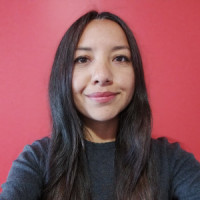
These words, spoken by an elderly woman from the Mixtec village of San Juan Mixtepec (Oaxaca, Mexico), sum up the significance of the fieldwork funded by the American Philosophical Society Digital Knowledge Sharing Fellowship (DKS) in 2025. For me, a researcher and member of the Mixtec people, this gesture of friendship shown by the elder was one of the most meaningful confirmations of nine years of work and research with my community.
A project to return oral archives to the Mixtec people
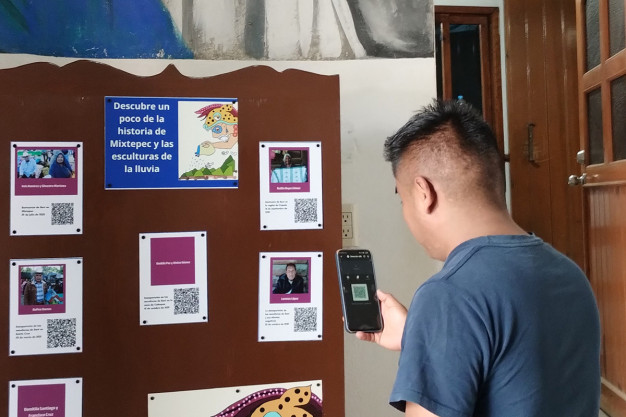
In 2025, I developed a project with a dual objective: on the one hand, to create an online archive of narratives collected in Mixtec language during my graduate studies (2016–25); on the other hand, to install a system of QR code panels in Mixtepec so that residents could access the voices of the elders and the history of the community. The project thus combines documentation, online archiving, and restitution.
The DKS Fellowship funded my return to Mixtepec in August 2025 to monitor the system's operation after five months of use, speak with the families of the interviewed witnesses, and hear their reactions. It was one of the most meaningful returns I have ever made. The families were happy to see the researcher return, to see that I was maintaining the connection, sharing updates on my work, and ensuring that the creation of the corpus and the implementation of the system were not causing any discontent. The elderly woman whose words open this text embodied, for me, the essence of this kind of research: situated, committed, and reciprocal.
Municipal authorities informed me that the panels installed in the town hall corridor are displayed on market days and local holidays so that people can see and consult them. This gesture of taking ownership of the display, making it visible, sharing it, speaks volumes about the relevance of this work. At the end of my visit, the authorities issued a letter expressing the community's desire for projects of this kind to continue, and for them to keep receiving materials that help preserve their memory, their language, and their culture. This letter is both a request and a driving force to continue seeking new institutional partnerships that bring scholarly work closer to the community. The APS support made it possible not only to create a space for the restitution of archives, but also to give the community a space to renew this demand.
Discovering the APS and the CNAIR
Being selected as a DKS Fellow was, in itself, a moment of joy and renewed motivation. Yet I see this fellowship as recognizing something larger than my own work alone. It honors the intrinsic value of the life stories I have collected over the years, and it makes me feel like an intermediary: a bridge between the fellowship and the voices of the Mixtec people who trusted me with their words. That strength comes, first and foremost, from the richness embodied in the words of the elders, as the the fruit of nine years of fieldwork I have conducted, of the ongoing restitution process—the online publication of these life stories, together with the installation of commemorative plaques—and of the relationship with the community that this project allows me to strengthen in new ways.
It was also the starting point for an institutional discovery. The American Philosophical Society was founded in 1743 by Benjamin Franklin. Its collections related to the languages, traditions, histories, and continuity of more than 650 Indigenous cultures of the Americas make it "the oldest and one of the largest archival collections" of documentary materials on the continent's Indigenous peoples. The APS hosts the Center for Native American and Indigenous Research (CNAIR), which embodies the institution's mission: returning materials to their communities of origin, funding Indigenous researchers, supporting community projects, and collaborating directly with peoples across the Americas. Upon learning about its mission, its programs, and the richness of its collections, I felt I had found an institutional partner, an organization with which I hope to maintain a lasting relationship and continue collaborating.
My participation in the Seventh Annual Digital Knowledge Sharing Workshop
In July 2025, I participated in the Digital Knowledge Sharing Workshop organized by CNAIR. Sitting around a table with people deeply committed to working with Indigenous communities—many of them from the very communities where they conduct their research, coming from contexts as diverse as Mexico and Japan—was a new experience for me. I felt what I might call a sense of scientific belonging: discovering work in Amerindian contexts, geographically close to my own, seeing how others solve similar problems, reminding me that I am part of something larger than my individual project. It meant recognizing myself in a space where community roots are not something that needs to be epistemologically justified, but rather emerge clearly as a methodological strength and an element of openness and inclusion in the humanities.
While completing my studies in France, I had not previously had the opportunity to participate in an event of this format. Some French institutions, such as INALCO and the Musée du Quai Branly–Jacques Chirac, organize significant academic events on Indigenous languages and cultures, but specific funding to enable Indigenous researchers to participate in them is scarce. I believe the United States has developed a strong culture of fellowships and exchange spaces dedicated to researchers of Indigenous American origin, and my time as a DKS Fellow in Philadelphia is a direct example of this. In the French context, shaped by a different historical relationship to the Americas, I have not yet found an equivalent, either in terms of funding or in the number of events of this kind. This gap inspires me to work, from my position, toward multiplying similar spaces in the French context.
At the end of the workshop, Hali Dardar's keynote lecture, "Using Time: An Invitation for Creative Connections Between Communities and Archival Materials", a project that brought such a modern, Technicolor dimension to old photographs, left a lasting impression on me. She mentioned that at some moment she did not think her project would secure funding, but she succeeded at the APS. Her work, which touches on the vital importance of visual identities in the present day, struck me as so compelling and so inspiring. It was also a reminder that these projects, when they find the right support, can have an impact that reaches far beyond academic circles.
A milestone, not an endpoint
The 2025 fieldwork does not bring my project to a close, it reorients it. The letter from the authorities of San Juan Mixtepec, the corpus materials, and the conversations with families are currently informing the writing of a book, provisionally titled Voces de regreso: memorias orales mixtecas y restitución digital (Voices of Return: Mixtec Oral Memories and Digital Restitution), that documents, in an analytical yet accessible manner, the project's complete methodology: the online oral corpus, the QR code system, and above all, the community's responses. The volume includes a descriptive catalog of the narratives with information on the elders interviewed. This publication is part of an emerging field: community-based linguistic documentation in relation to the digital humanities and open science. The texts I am writing aim, in turn, to be restitutable: written with the awareness that their ultimate audience is not only academia, but also the community whose language and memory made them possible.
Along this path, the APS has been a privileged partner. I hope to return one day to Philadelphia to continue this collaboration. As that elderly woman told me: We already have a bond.