



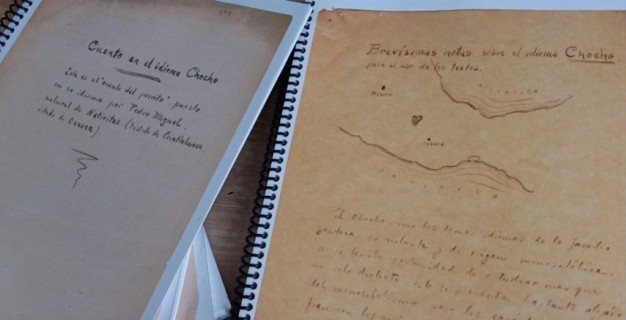
Image: Jaime de Angulo's manuscripts, 1922, American Council of Learned Societies Committee on Native American Languages, APS Digital Library.
Since its founding in 2014, staff from the Center for Native American and Indigenous Research (CNAIR) have visited 37 different Indigenous communities throughout the continent, from Utqiagvik, the northernmost community in Alaska, to multiple communities in Oaxaca in southern Mexico. These visits have been spread out over 49 individual trips, including multiple repeat visits to many of those places. At the time when this is published, I will be in the middle of the 50th such trip, this time visiting again a few Haudenosaunee communities and colleagues we have worked with, some for a relatively short time so far, and some, such as Tuscarora Nation, with whom we have been working for 15 years.
Archival materials have been kept at a distance from Indigenous communities in remote and unwelcoming archives for most of the past century or more. But when archivists at non-Native institutions are able to travel to the Indigenous communities who are directly related to the archival materials in the collection, it can help to put a face to the remote institution and make a small dent in the very reasonable expectation that the institution is unapproachable or indifferent. Even though these visits are central to CNAIR’s work, this aspect of what the Center does is not very well known, nor is the scale of it very apparent. Why?
One reason is that these visits may sometimes concern private discussions or occasions. Another more common reason is that sometimes these visits may not concern a specific discussion or project at all, but rather be more for the purpose of building a new working relationship or cultivating an ongoing one, in which there can then be a fertile ground of trust in which new collaborative ideas can emerge in the future. In either case, as a matter of caution we usually do not publicly share that we have made such a visit.
Every visit is a unique story, though many have elements they share in common. One such element is that they often form around the basic act of archivists at CNAIR returning to places that outside anthropologists or linguists visited many decades or even centuries ago, this time not to learn through obtaining, but learn through bringing, or listening and witnessing, if that is what is asked of them.
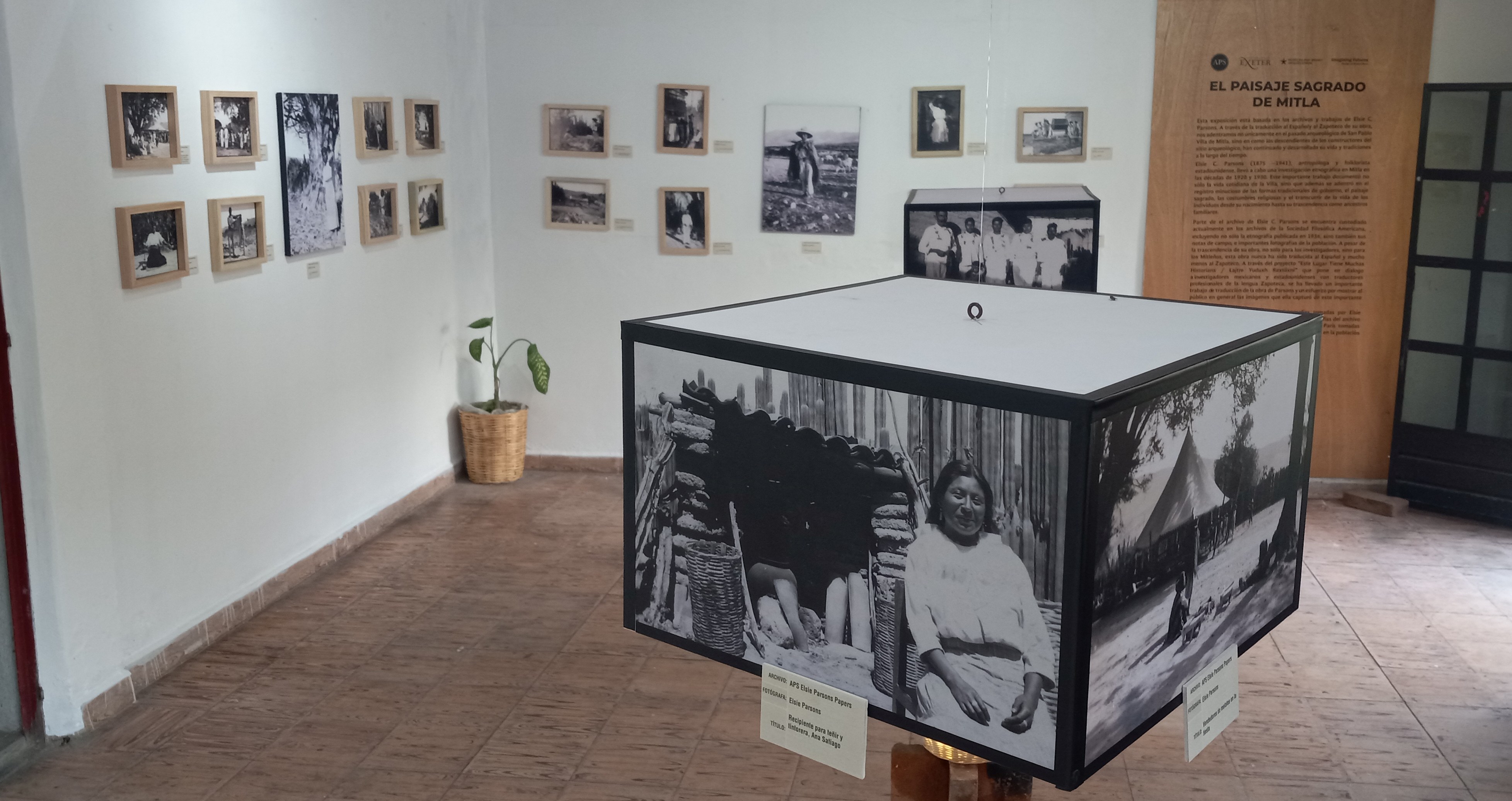
One example of this kind happened two summers ago in July of 2024, as part of a broader trip I took to Oaxaca. This was a trip with many individual stories in it, from visiting with Zapotec and Mixe language teachers and activists, learning about archival connections between the APS Library & Museum’s collections and those of the Biblioteca de Investigación Juan de Córdova (BIJC), and attending the opening of “El Paisaje Sagrado de Mitla” at the Centro Cultural Pitao Bezelao in Mitla, which featured over 40 photographs of Mitla from the 1920s that are in the APS collections. This exhibition in Mitla was the largest ever exhibition of APS Indigenous archival materials outside of the APS itself.
Each of these parts of the Oaxaca trip point to a larger story of their own. I will focus here on just one story that happened near the end of my trip. I traveled about an hour and a half northwest of the city of Oaxaca to visit the Chocholtec (or Ngigua-Ngiba) communities of Coixtlahuaca and Nativitas. I was taken there by Dr. Michael Swanton, Co-Director of the BIJC and a linguist at the Universidad Nacional Autónoma de México who has worked with speakers in those communities for over 30 years.
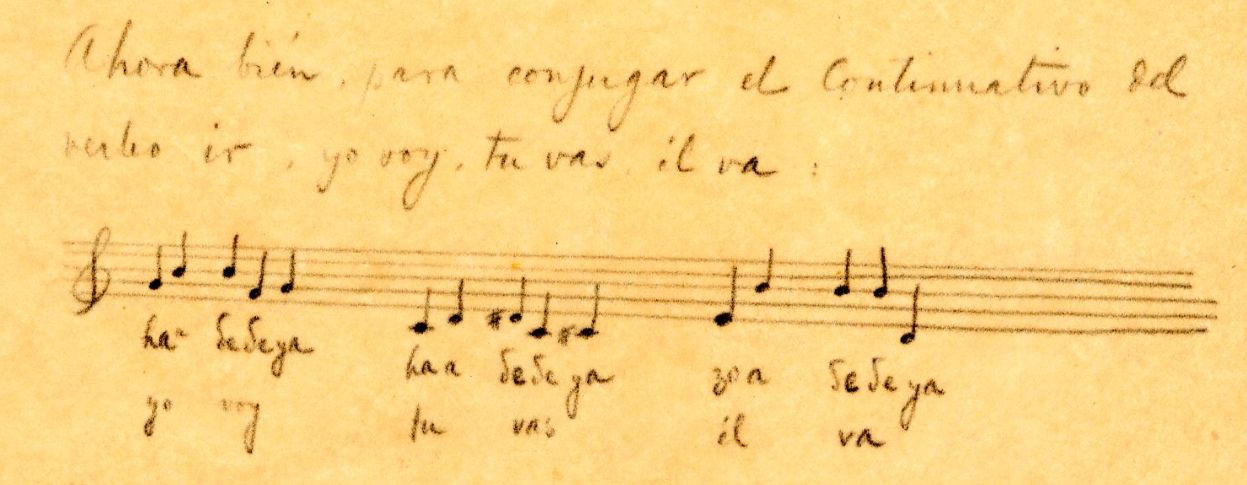
I brought with me several high-quality facsimile copies of an important Chocholtec manuscript in the APS Library & Museum’s collections. The American linguist Jaime de Angulo wrote down this manuscript in 1922 after a chance encounter with a barber in Oaxaca City named Pedro Miguel who he found out was a speaker of Ngigua. Archival documentation of this language is very rare, and this document, which centers on a “Cuento del perrito” (Story of the puppy), appears to be the first document on the language that describes one of its key characteristics: its contrastive tone. This term describes a feature some languages have, which is when a change in the melody or pitch of a person’s voice changes the meaning of an utterance to an entirely different word, even though the utterances in different tones are exactly the same in all other sounds characteristics, such as vowels and consonants. Mandarin Chinese is a particularly well-known example of this linguistic feature among world languages. De Angulo was the first to identify this important phonological feature in Chocholtec, which he described by a comparison with musical notation.
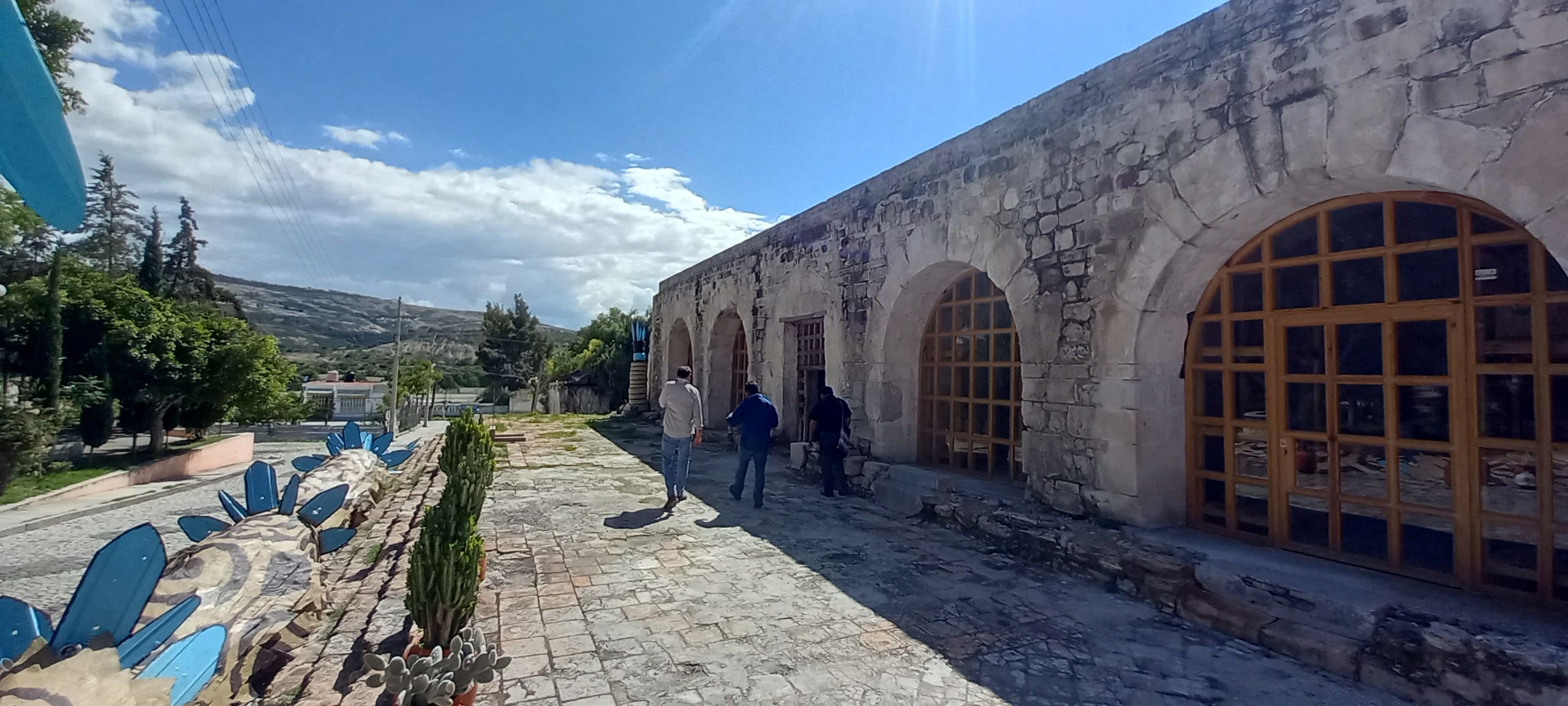
We first visited the Museo Comunitario Coixtlahuaca, where the museum staff gave us a tour of their impressive, wide-ranging exhibitions on the history of the region, from early geological periods through contemporary Indigenous history, including important annual festivals in the area and works by contemporary artists. I was able to share copies of the manuscript with the museum’s library, which they then shared with local teachers of the language.
After that, we stopped by Santa María Nativitas, the hometown of Jaime de Angulo’s language consultant Pedro Miguel 102 years earlier. There Dr. Swanton introduced me to Professor Agustín Jiménez García, a longtime writer, educator, and language activist. He was President of the organization 𝙀𝙨𝙘𝙧𝙞𝙩𝙤𝙧𝙚𝙨 𝙚𝙣 𝙇𝙚𝙣𝙜𝙪𝙖𝙨 𝙄𝙣𝙙𝙞́𝙜𝙚𝙣𝙖𝙨, 𝘼.𝘾. (Writers of Indigenous Languages Civil Association) when it played a key role in advocating for the creation of Mexico’s General Law on the Linguistic Rights of Indigenous Peoples of 2003.
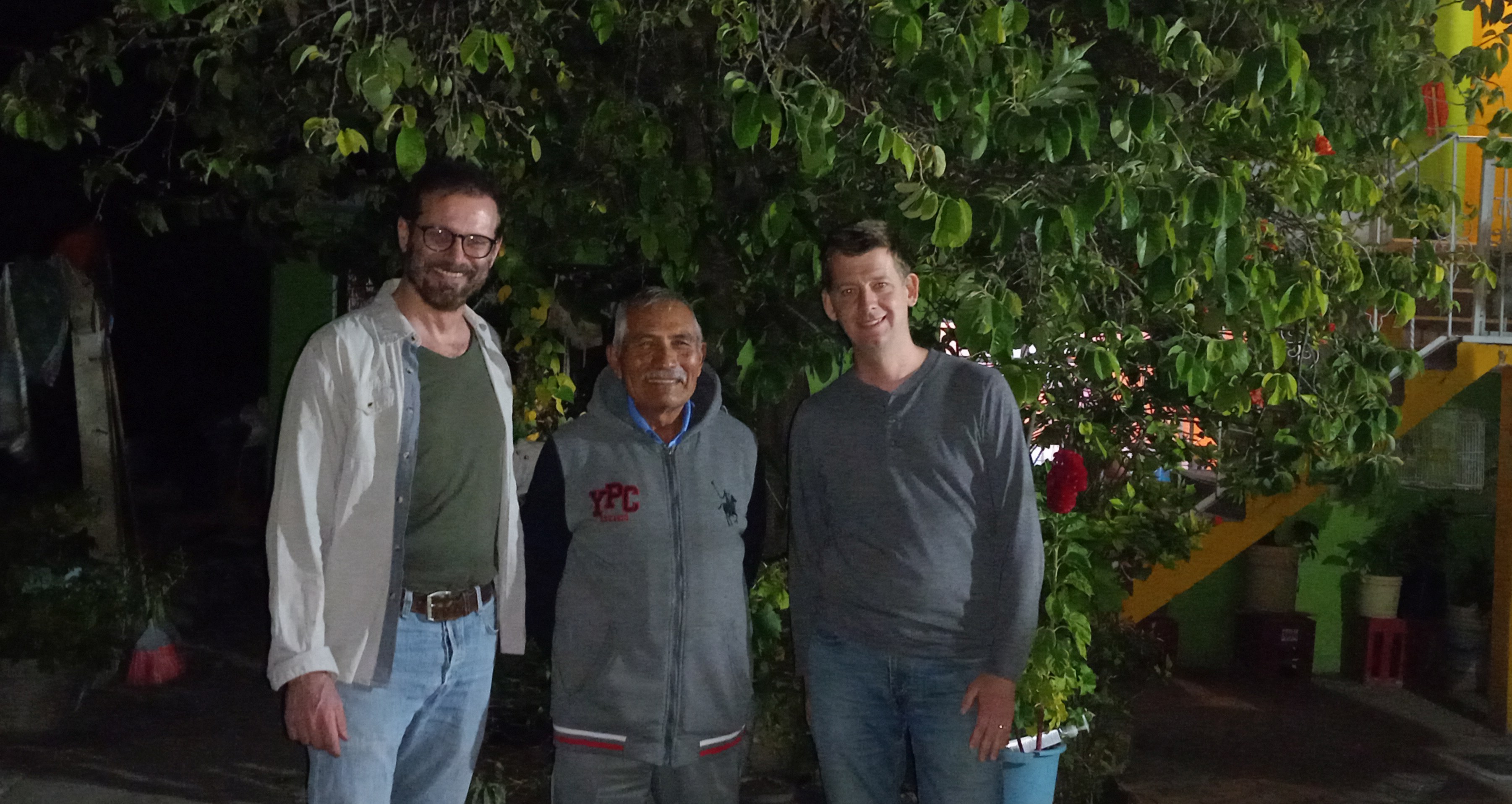
It was a very great honor to meet Professor Jiménez García and share a copy of Angulo’s important Chocholtec manuscript with him. In turn, he very generously donated three Chocholtec language books to the APS Library & Museum that he wrote or compiled. These three books, now cataloged in the APS collections, appear to be the only copies of these books appearing in WorldCat, the international catalog of research libraries.
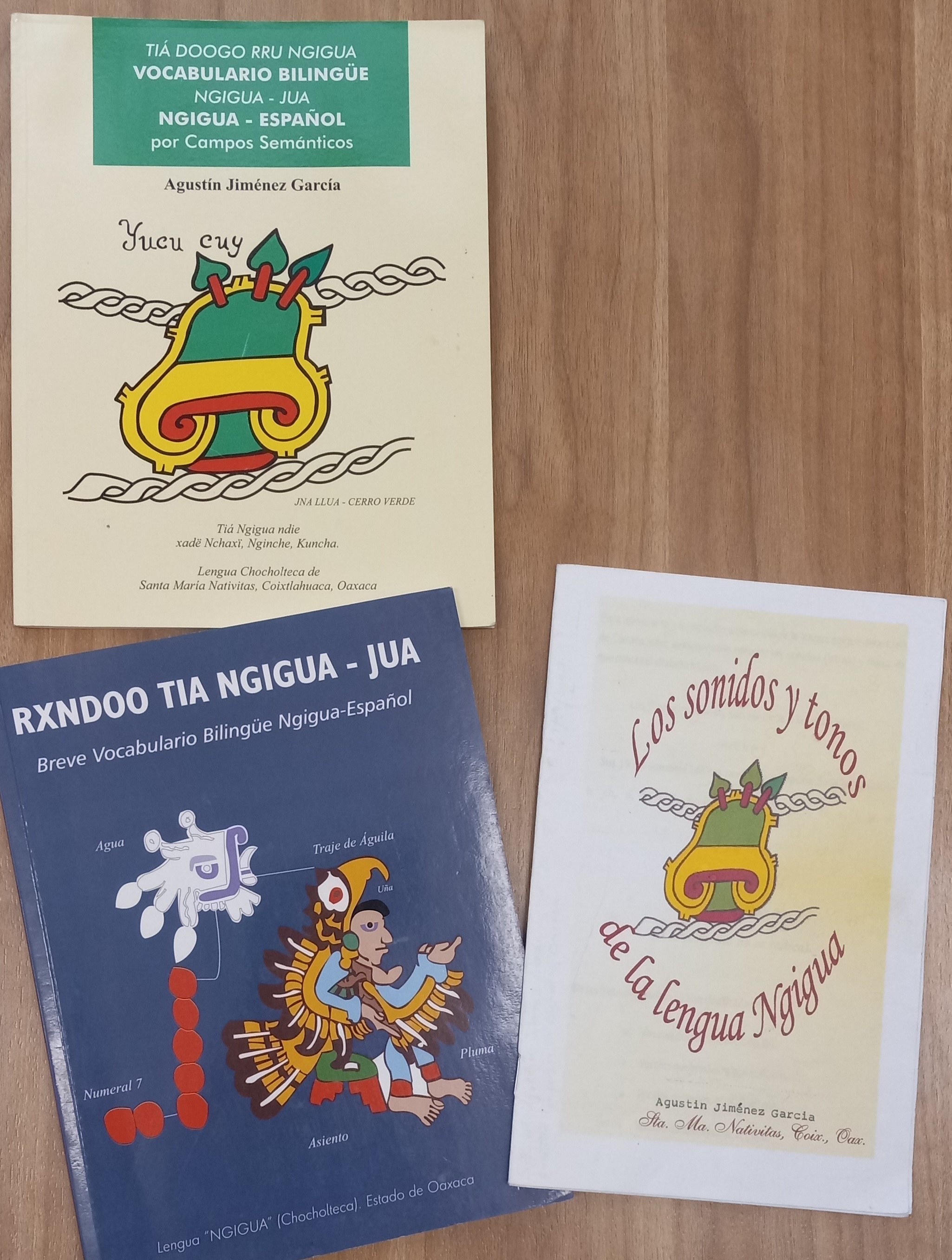
Despite declaring his intention to retire, Professor Jiménez García’s work continues. He has recently published a new book to learn Chocholtec, Tiaá Xadeena (Voces de mi Pueblo). Furthermore, he is currently the president of an internal committee created by the Chocholtec Nation to coordinate the documentation of the language. As a first activity, the committee is preparing a diagnostic of the language including a registry of its speakers. This is the first time such an internal, community-made registry has been made for a Mesoamerican language. The preliminary results indicate there are approximately 120 mother tongue speakers of Chocholtec, which is considerably lower than the official government figure of 847 speakers.
The new book and the preliminary results of the committee’s diagnostic were shared in two events celebrating International Mother Language Day. On February 20, 2026, Professor Jiménez García participated in the inauguration of the exhibition "Ngigua-Ngiba. Renacimiento de la escritura de una lengua en riesgo" (“Ngigua-Ngiba: Rebirth of the Writing of an Endangered Language”) opened at the BIJC. It was attended by many community members of Santa María Nativitas and other towns in the Chocholtec region. The following day, on February 21, International Mother Language Day itself, a community event was held that not only included the book presentation and diagnostic, but also an exhibit of Chocholtec painters, the presentation of a new board game based on the historic documents of the region, songs and poetry in the Chocholtec language, and a movie about the efforts to preserve the language.
In the future, we hope to share more stories of visits of this kind, and the stories that come from them, which point to the innovative work that so many Indigenous communities are doing to reclaim their languages, protect and steward their lands, and re-assert their sovereignty, often through utilizing and re-purposing archival documents, photos, recordings, and much else. These will be some of the central themes of the APS Museum’s exhibition in 2027, which will center on the Indigenous-related collections at the APS and many of the communities that CNAIR works with. The exhibition is actively in development and will be a great venue to learn more of these many stories.
(I would like to thank Dr. Michael Swanton for his corrections and suggestions after reviewing my first draft of this post.)