



When Carl Linnaeus (1707–78) and Peter Artedi (1705–35) were students together at Uppsala University, the two Swedish naturalists became fast friends. Before leaving university in 1732, each pledged to leave his books and manuscripts to the other, and to publish the work of his friend in the event of an untimely death. Artedi went on to work in London and in Amsterdam, where he described and cataloged the fishes. On a late night in 1735, on his way home from his employer’s house, Artedi fell into a canal and drowned. According to his promise, Linnaeus went on to publish a biography of his friend, as well as his seminal works in classifying and describing fish: five volumes gathered together under the title Ichthyologia Sive Opera Omnia de Piscibus. Thanks to Linnaeus’s 1738 Leiden publication, Artedi is now widely acknowledged as the father of ichthyology. Linnaeus went on to achieve fame as the father of modern taxonomy.[1]
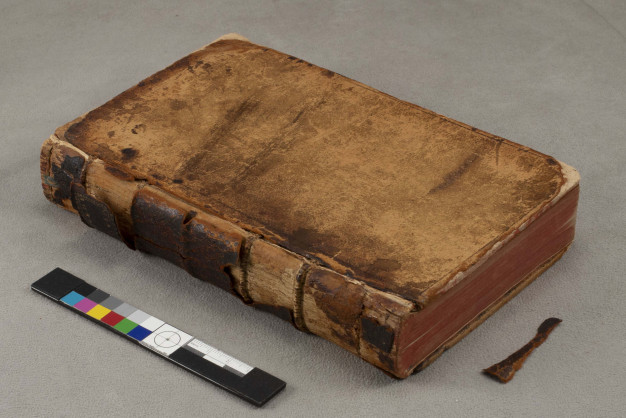
When APS Friends James and Pamela Hill sought a book to restore in memory of their friend and former APS Executive Officer Keith Thomson, an evolutionary biologist who specialized in the development of ancient fish, it is only fitting that Thomson’s former copy of Artedi’s Ichthyologia caught their attention. Its spine was blackened and flapping, and its corners were worn through from use. While the dark and crispy leather looked as though it had been burned, water stains next to the spine suggest that water rather than fire was the culprit for the damage. In aged leathers, exposure to moisture often catalyzes rapid deterioration of the collagen fibers, making the leather weak and brittle.
Like Linnaeus before them, the Hills hoped Ichthyologia would serve as a memorial to their departed friend. As a book collector and scientist, Thomson often purchased books on natural history, even when they were damaged by handling or exposure to damp. In 2019, he and his wife, Linda, left his copy of Ichthyologia to the APS Library to ensure its continuing availability to researchers. My conservation treatment would preserve not only Artedi’s profound knowledge of fish but Thomson’s curiosity about the same subject. It would also have an added bonus: In examining and documenting the volume, I recorded details about its construction and the work of its anonymous 18th-century binder. In restoring some of the book’s original aesthetic features as well as its functionality, I became part of a chain of honor and memory reaching back almost 300 years.
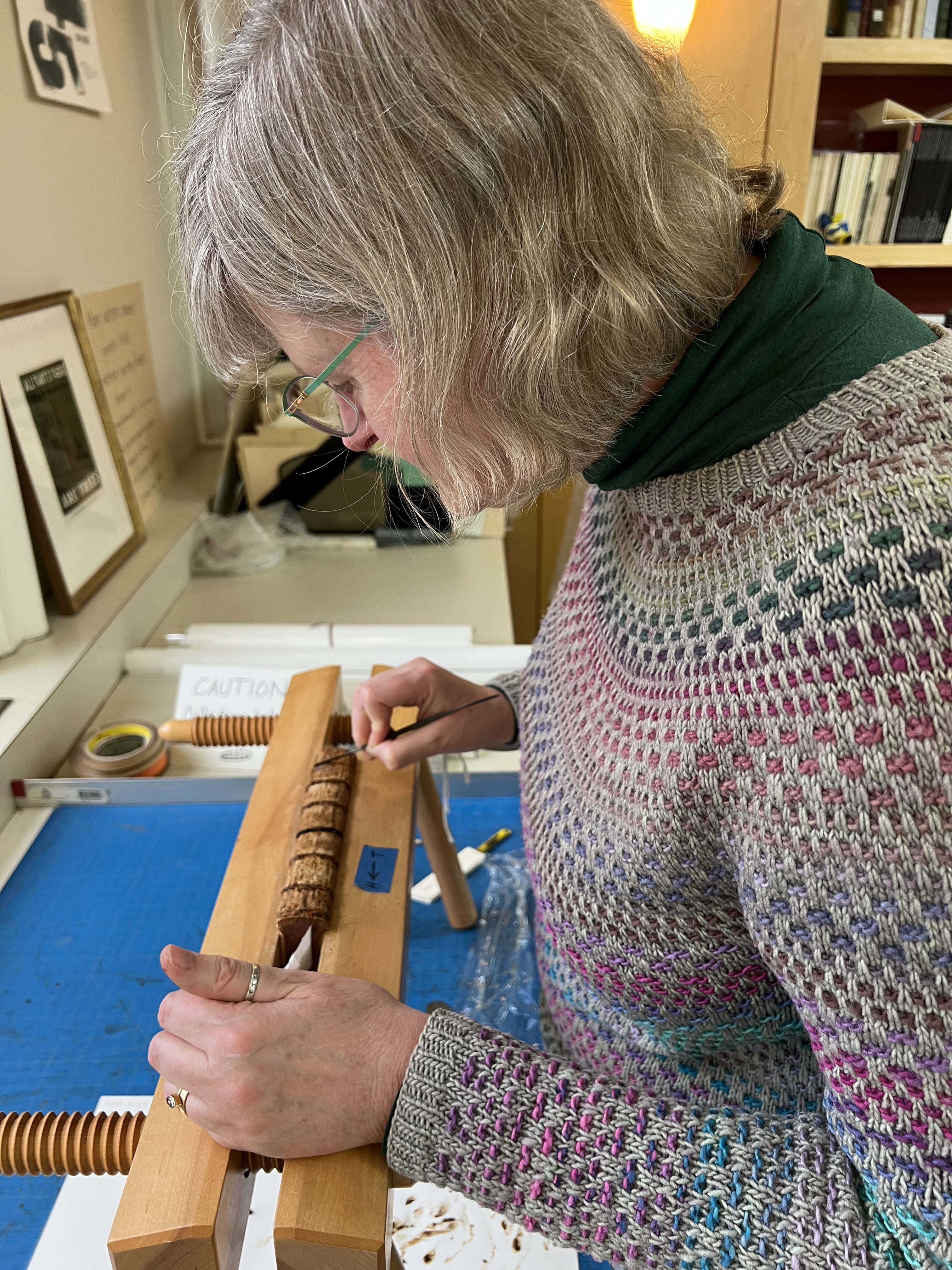
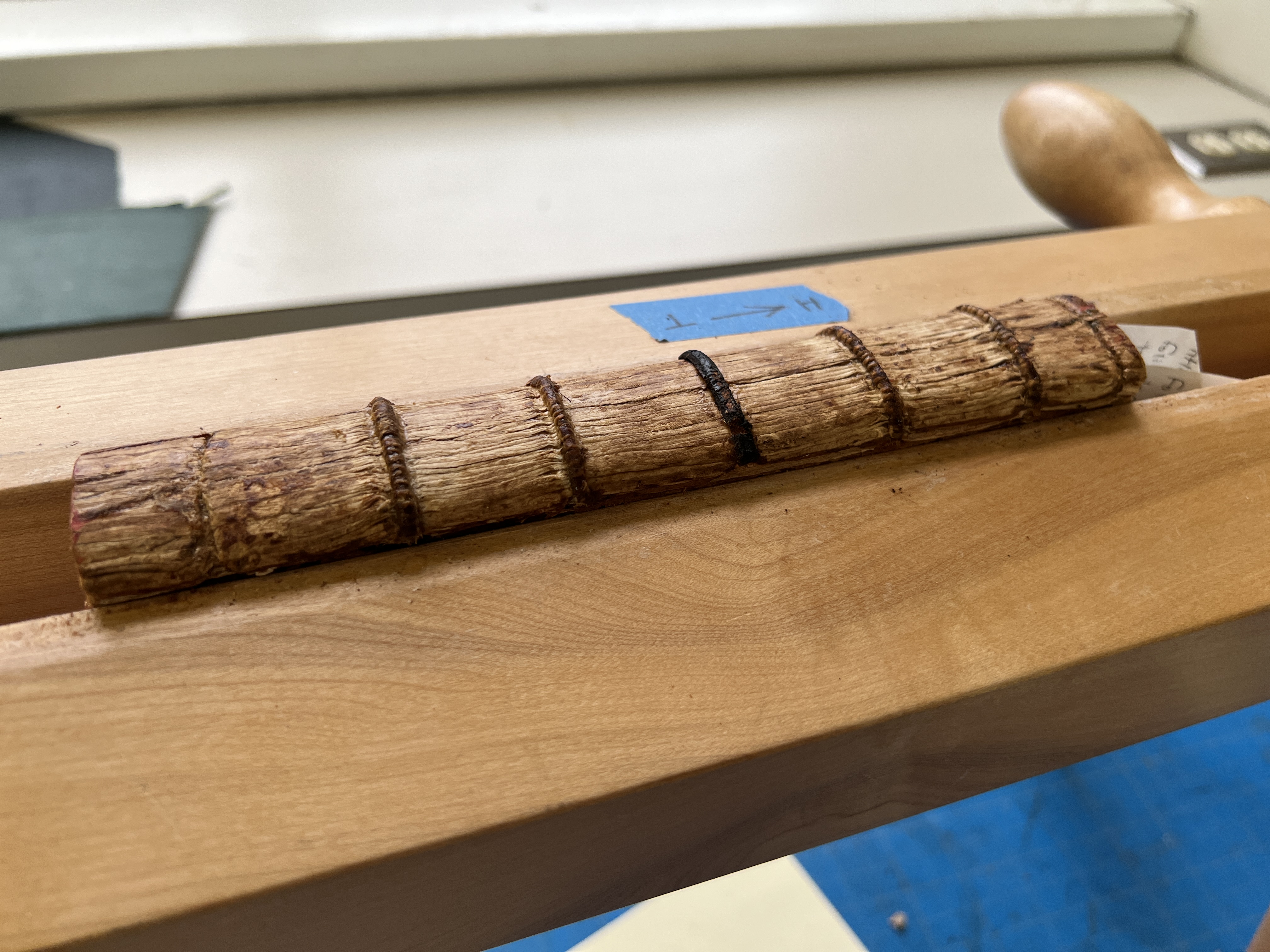
Conservation is almost always a blend of historical craft techniques and new procedures and materials. In this case, replacing the damaged spine (rebacking) and rebuilding the board corners allowed me to experiment with new techniques that had been developed by former conservation interns. My first step before rebacking the book was to remove the remaining original leather from the spine, as it was too warped and brittle to reuse. One exception was the original spine label, a gold-tooled rectangle of thin red leather bearing the words “ARTEDI ICHTIO.” I cut the flapping spine panels free, then scraped excess leather from the back of the spine label with a scalpel. To clean the underlying backbone of the book, I brushed it with a clear, thick, sticky poultice of methyl cellulose, let it humidify beneath a layer of plastic cling wrap, and then scraped off the humidified leather and adhesive residues with a spatula. This allowed me to confirm that the middle of the five raised bands on the spine was a glued-down strip of leather rather than a fifth sewing support. (The four other raised bands were the linen cords over which the book was sewn.) Bindings with more sewing supports took longer to sew and were more expensive; false raised bands gave booksellers the look of expensive bindings with less labor.
To make a new spine cover that imitated the look and feel of the original leather, I used dilute acrylic paints to tone two strips of fabric: a tightly woven cotton and a smooth nonwoven polyester. I then laminated the strips together with a mixture of conservation adhesives for a strong, flexible bond. Willman Spawn Conservation Intern Brittany Murray first experimented with this technique, using polyester rather than paper as the outermost layer in the spine laminate, while she was working at the APS in summer 2024. I carried the experiment one step further and set the new laminate down over a spine former of thin cotton blotter, with lengths of linen cord glued at the head and tail to help shape the endcaps. While the cotton blotter helped imitate the give and thickness of real leather, it also tended to deform and wrinkle when dampened with adhesive, so the technique needs further development. In all, however, I consider the attempt a success.
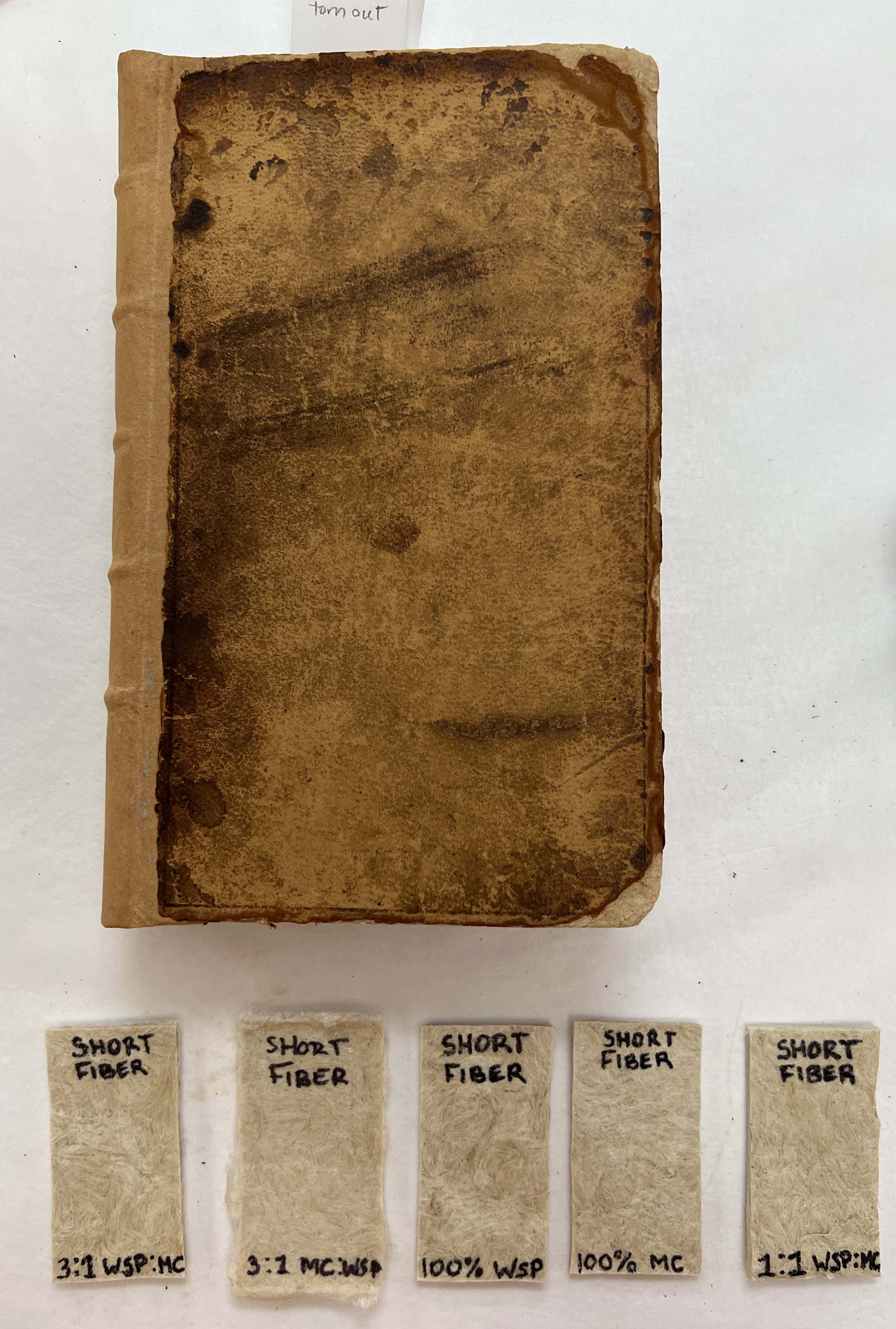
To fill the losses in the worn corners of the book boards, I turned to another technique that was first developed by an intern. During her time at the APS in summer 2025, Willman Spawn Conservation Intern Natalie Naor blended frayed linen cords with dilute adhesives and packed the sticky, fibrous mixtures into molds to assess their utility as fill materials for worn or broken boards. The results were very promising, and she used the technique to recreate missing pieces of the brittle boards from a 1700 anatomy book. I evaluated the sample coupons she left behind, and used a similar technique to cast strong new board corners for Ichthyologia.
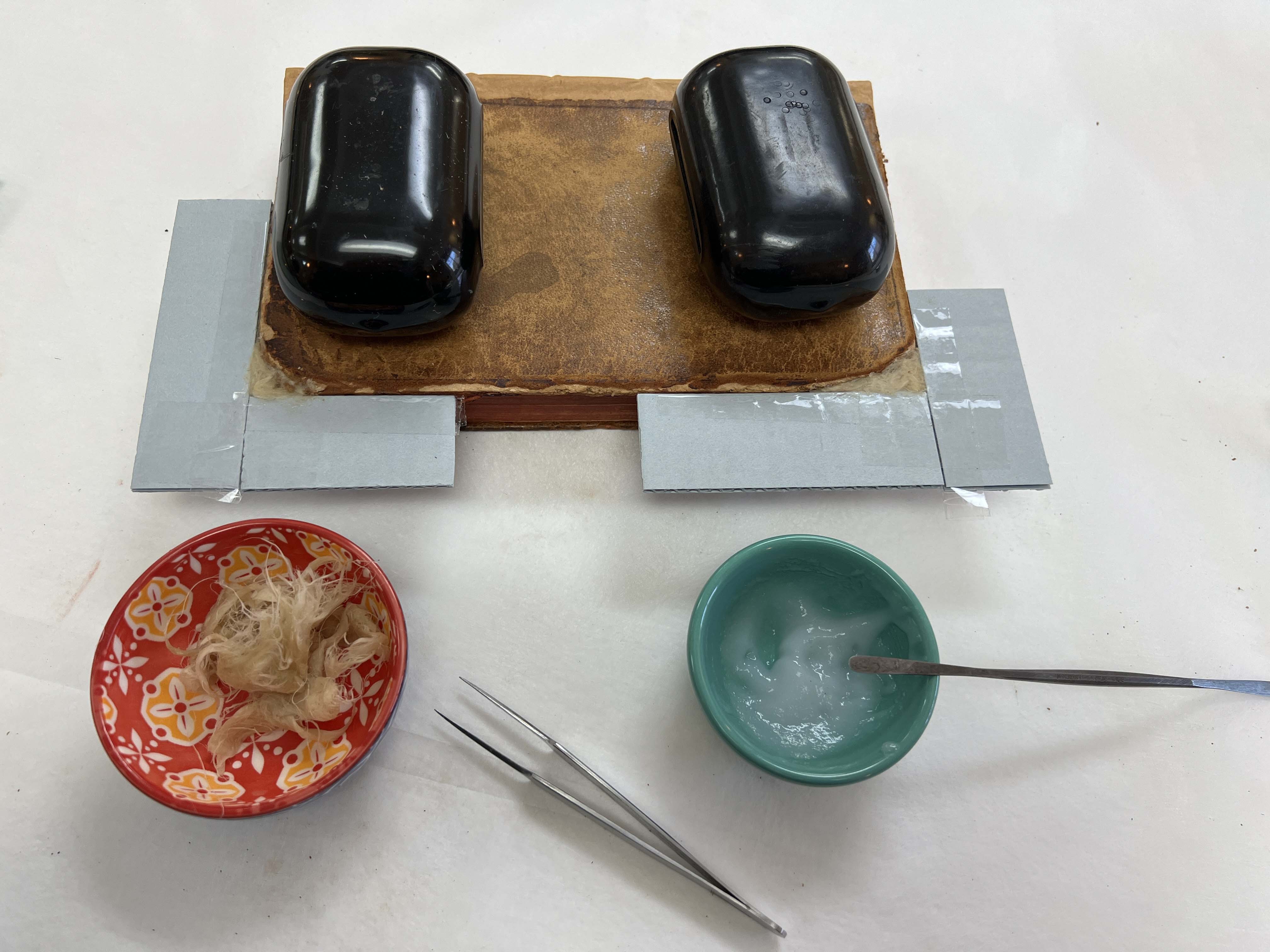
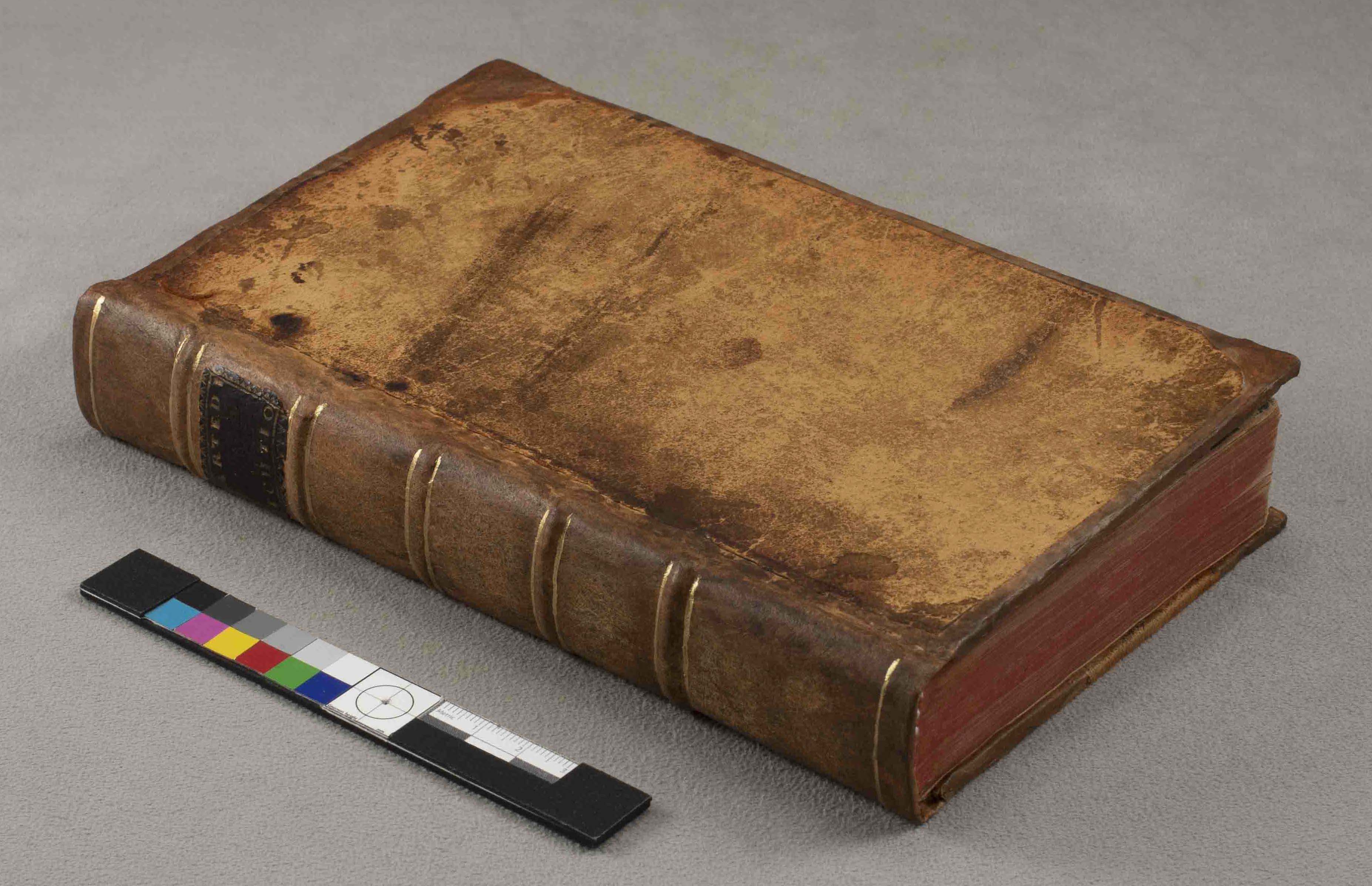
Once the corners were dry, I sanded them smooth and covered the new fills and the crumbling leather over the board edges with thin Asian paper to prevent further loss. I then used dilute acrylic paints to create a satisfying match between the new binding materials and the old leather. The original spine had a complex allover floral pattern gold-tooled into it, but it was too deteriorated to recreate. To reference the luxurious appearance of the original binding while keeping things simple, I painted narrow lines of gold acrylic paint on either side of the raised bands to imitate gold tooling. I also took the original leather spine label and re-adhered it in its original location. The completed treatment restores the physical and aesthetic integrity of the original binding while paying homage to the intellectual and emotional ties binding scholars and friends across time and beyond death.
If you’d like to adopt a book like Ichthyologia for the APS Library, or to fund a similar conservation treatment in honor or memory of a loved one, visit the APS Adopt-a-Book Program page for details.
[1] Information for this introductory paragraph comes from the Wikipedia articles on Peter Artedi and Carl Linnaeus.