




When I began my summer research through the Mellon Foundation Native American Scholars Initiative (NASI) at the American Philosophical Society (APS), I knew that I wanted to produce something that would actively benefit my community’s ongoing language reclamation efforts.
I am involved with the Northern California Okinawa Kenjinkai (NCOKK), a local nonprofit that supports the Okinawan diaspora through cultural gatherings and resource distribution. One of the largest problems facing our community right now is lack of youth engagement, particularly surrounding our indigenous language. As this issue is deeply personal, my work needed to return with me. Not as a scholarly paper, but as a tool of empowerment for our elders, children, and future generations.
The APS archives held several documents on the Okinawan language, many of which were produced prior to the 1950s. These materials offered a rare glimpse into how our language was spoken, studied, and recorded during that immediate postwar era, when many fluent Okinawans fled our islands to the Americas and formed communities in places like California. I hoped that these linguistic fieldnotes would provide valuable information that would help me teach Okinawan back home, such as indigenous pronunciations that differed from the Japanese-dominant curriculum available.
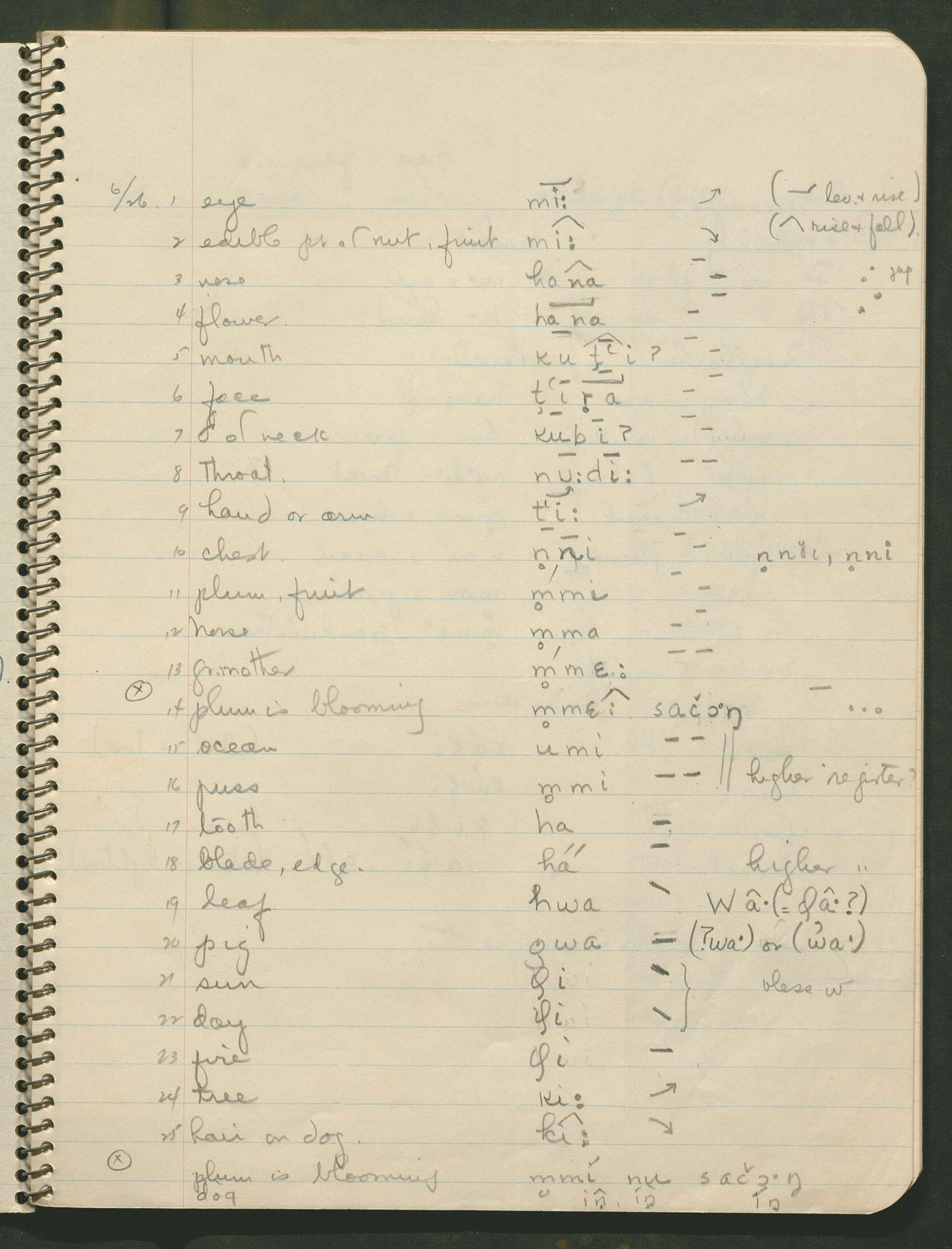
However, as I continued with this project, I felt like my work was increasingly alienated from my community. Sure, I may be learning more about the history of our language, but how does this work functionally support our elders sharing stories with our children? How does it encourage youth to interact and innovate in Okinawan, when their families may hold trauma around it? And how does it connect the diasporic efforts of my local kenjinkai to a global dream of Okinawan sovereignty?
Language has never existed in a vacuum. Okinawan is not “underdocumented”. Our living tongues have been academically dissected for decades, often through colonial and extractive frameworks that prioritized cataloging our language over helping our ancestors who were being exploited. Much of the foundational Japanese and American scholarship on Okinawan has stripped our community of the right to define our language on our own terms. By analyzing, fragmenting, and recontextualizing Okinawan without our consent, these institutions have damaged our collective ability to revitalize and reinstitutionalize the language in ways that are effective reclamations in our own communities.
So I decided to pivot from an archival project to a creative exercise.
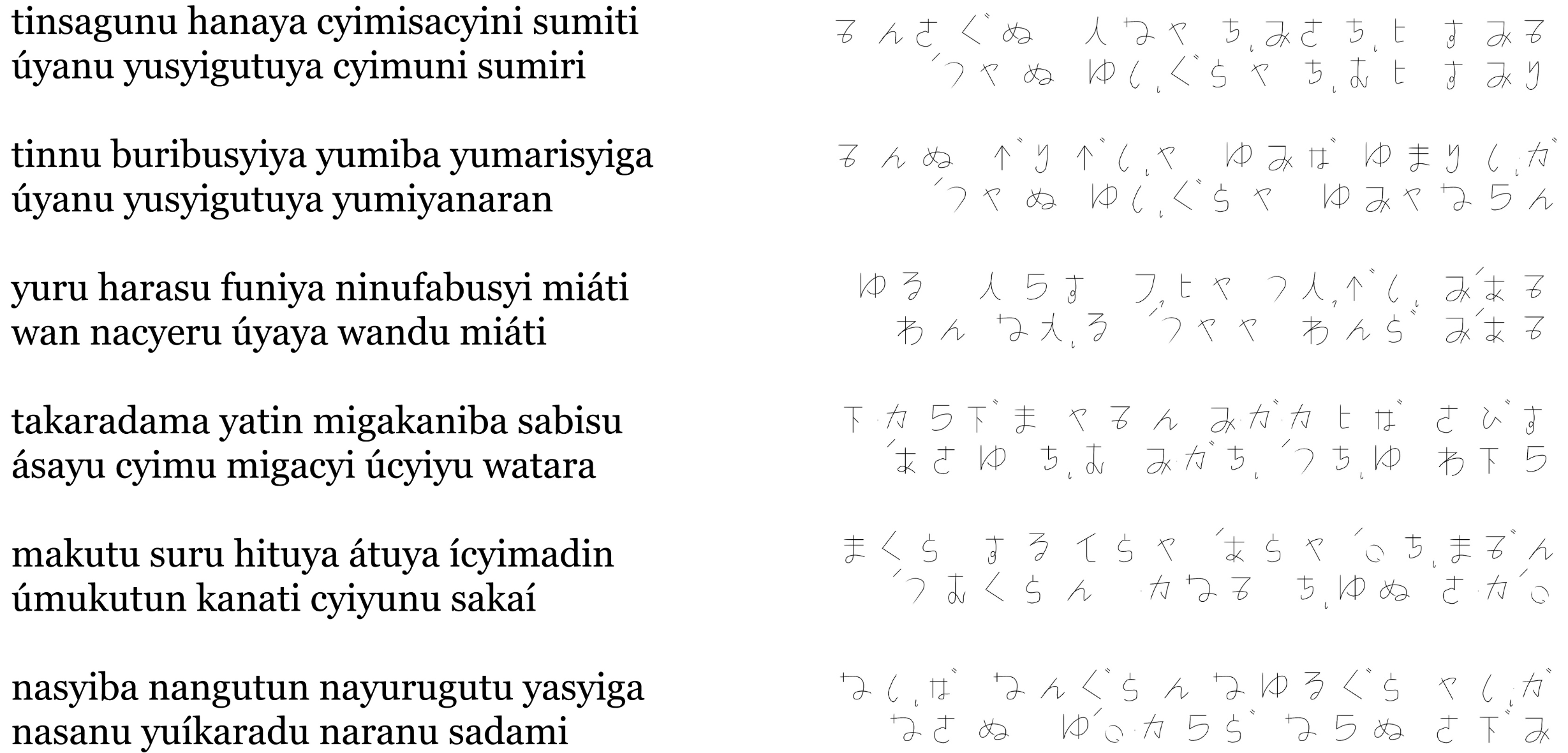
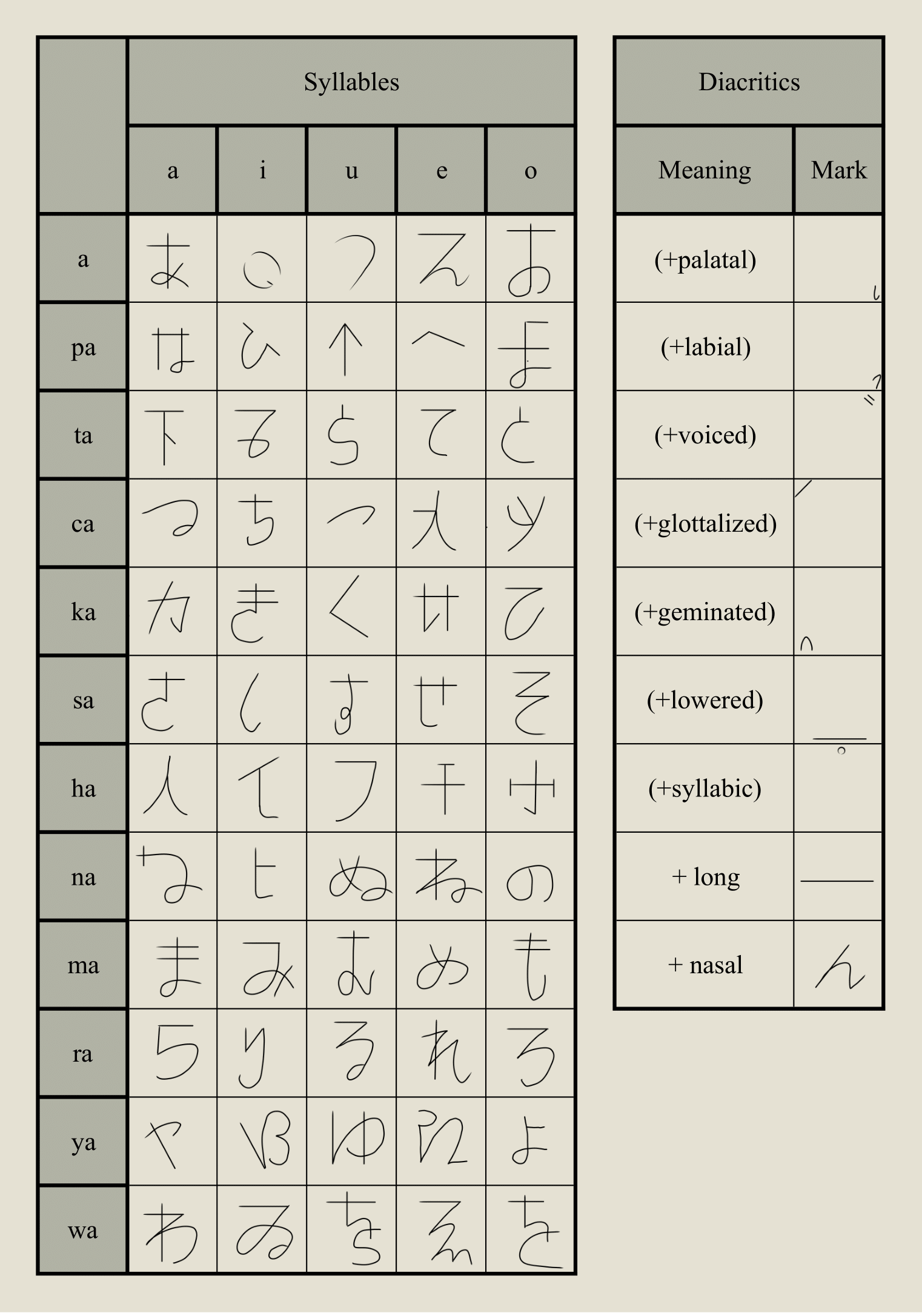
After looking through the APS resources, I saw the many different methods that non-Okinawan scholars have used to transcribe our language, which have been unevenly adopted across our communities. For example, the indigenous name for our people has been spelled “uchinānchu”, “うちなんちゅ”, “ʔucinaancu”, “ウチナンチュ”, or “沖縄人”. In response, I was inspired to design my own Okinawan script that took the best parts from each method.
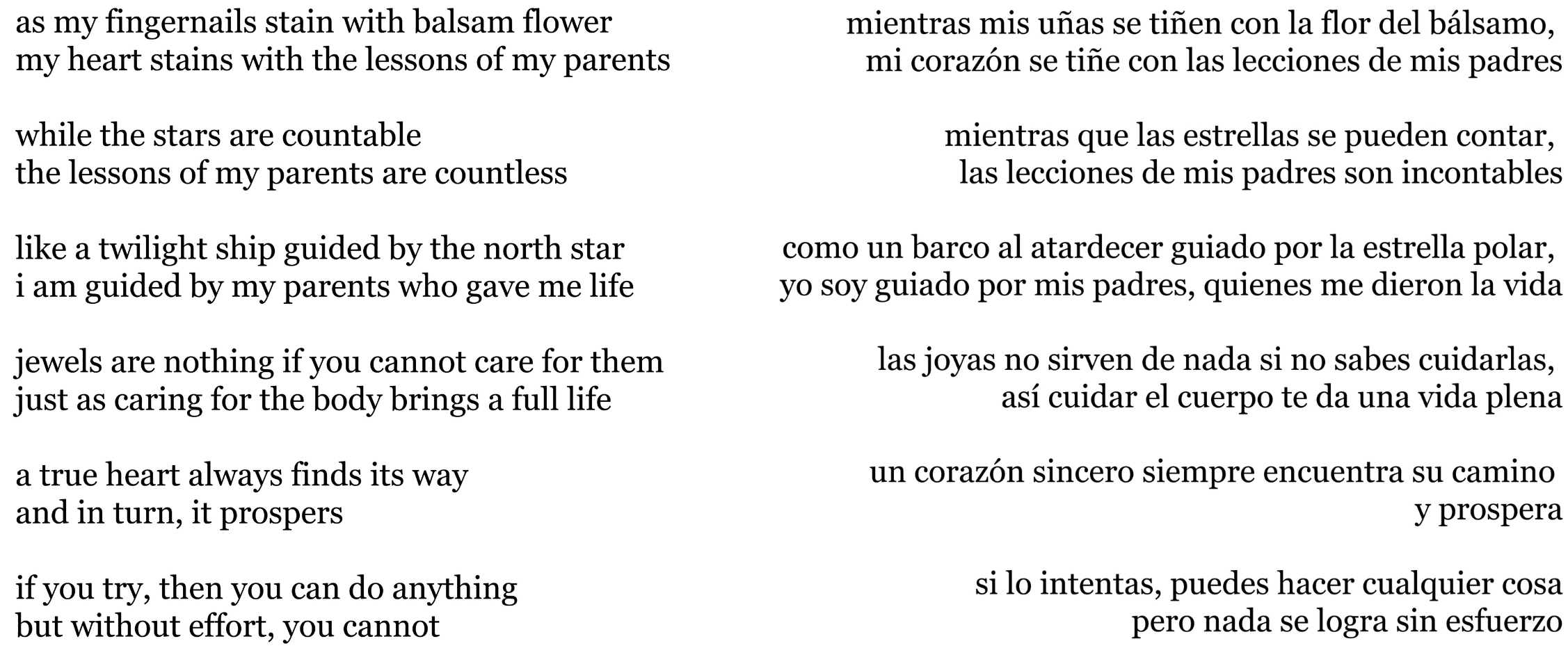
I demonstrate Okinawan script in this blog post with the Tinsagunu Hana, a well-known Okinawan ruuka poem which is traditionally sung with the banjo-like sansyin. We would not be úcyinaancyu without poetry, without music, without story, without taking our ancient ways and bringing them back into our daily lives. Much like the young singers who breathe life into the words of Tinsagunu Hana, I hope my project will inspire others and these old lessons will find new homes.
Modern performance of this old Okinawan poem, Tinsagu nu Hana
Íppee nifeedeebiru Yumi Shiroma, the CNAIR staff, and the Pomona LGCS department for helping me with this project!