“People Making” and Racially Classifying Latin Americans in the Eugenics Record Office 1920s



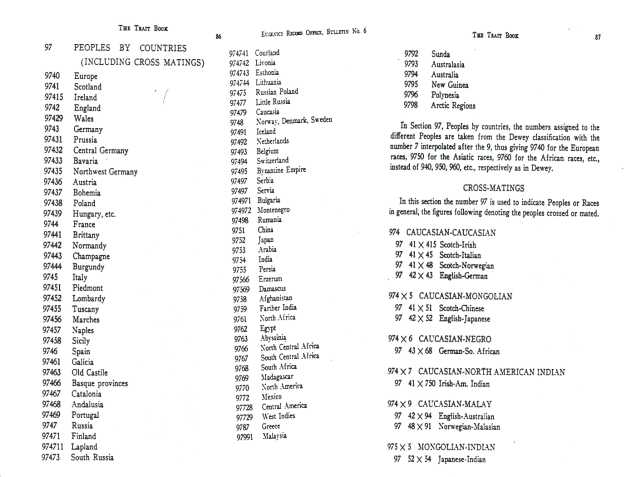
Image 1: “Peoples By Countries” Numerical List from The Trait Book, pages 86–87.
During my time as a William S. Willis Jr. Short-Term Research Fellow at the American Philosophical Society, the main question that guided my research in the Eugenics Record Office (ERO) collection was: How did eugenicists racially classify Latin Americans? Here, I will highlight how ERO fieldworkers racially classified Latin American–origin people, mainly Mexicans, in the Whittier State School for Boys files in the 1920s.
ERO fieldworkers utilized a racial taxonomic system developed by the ERO in The Trait Book (1919) and implemented these race categories onto the individuals they studied. The Trait Book used a numerical system to catalogue all the heritable traits, including “People by Countries” (see image 1). “People by Countries” numerically categorized people broadly by geography and race, and specifically by country or region. The most common race codes ERO field workers used to racially classify Latin American origin people including Mexicans, Puerto Ricans, Cubans, and South Americans were 9746—Spain and Portugal (European prefix code), 9772—Mexico (North American prefix code), or both.
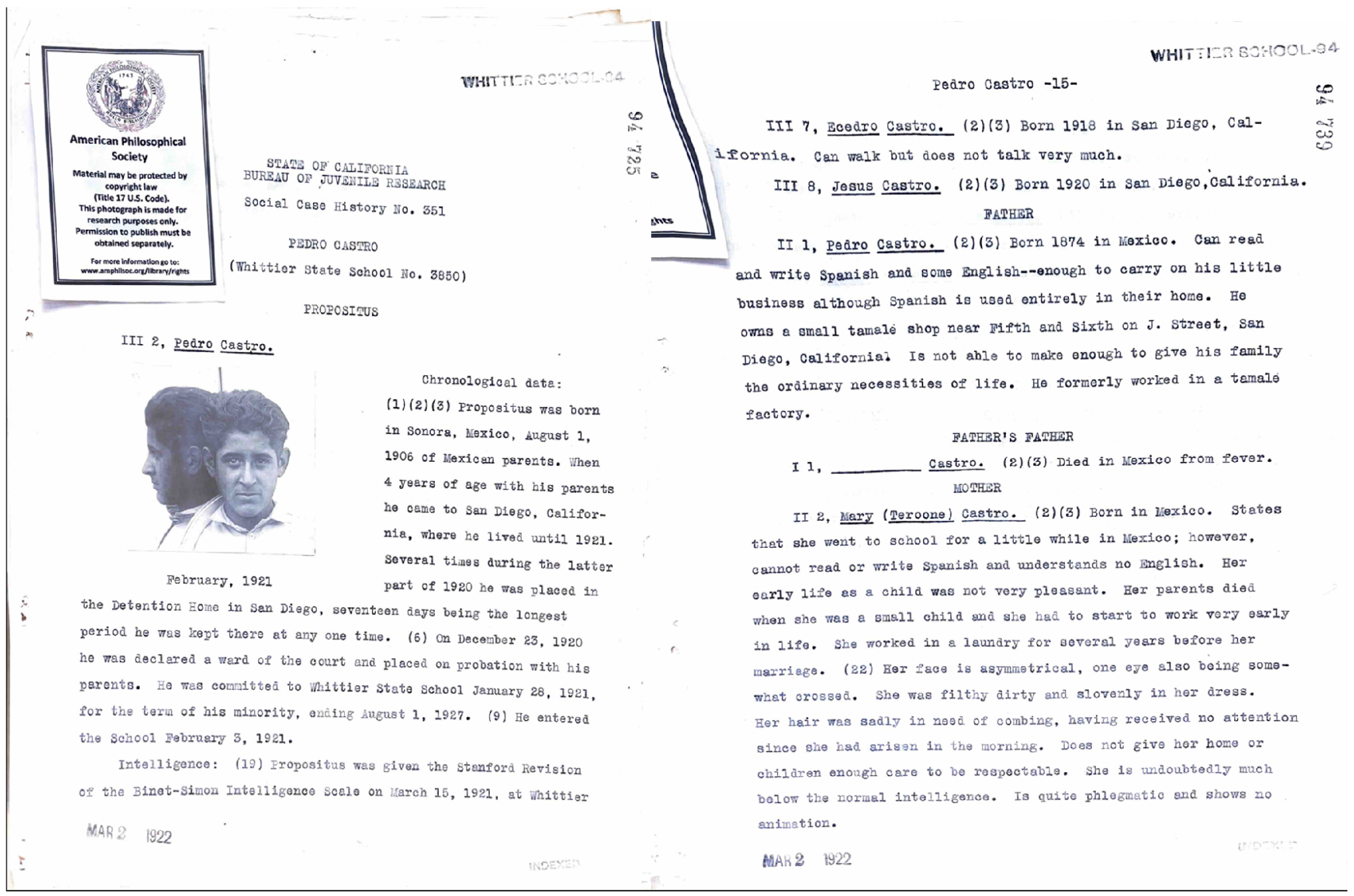
In the 1920s, four ERO field workers, numbered 91–94, wrote reports on “delinquent” youth who were committed to the Whittier State School for Boys, a correctional facility in Southern California. Though fieldworkers recorded where the boys were from, the race and ethnicity of their friends and accomplices, and provided a detailed genealogy of their family noting place of origin, race, and sometimes skin tone, I did not find explicit notions of racial classification until I saw the Index Cards.
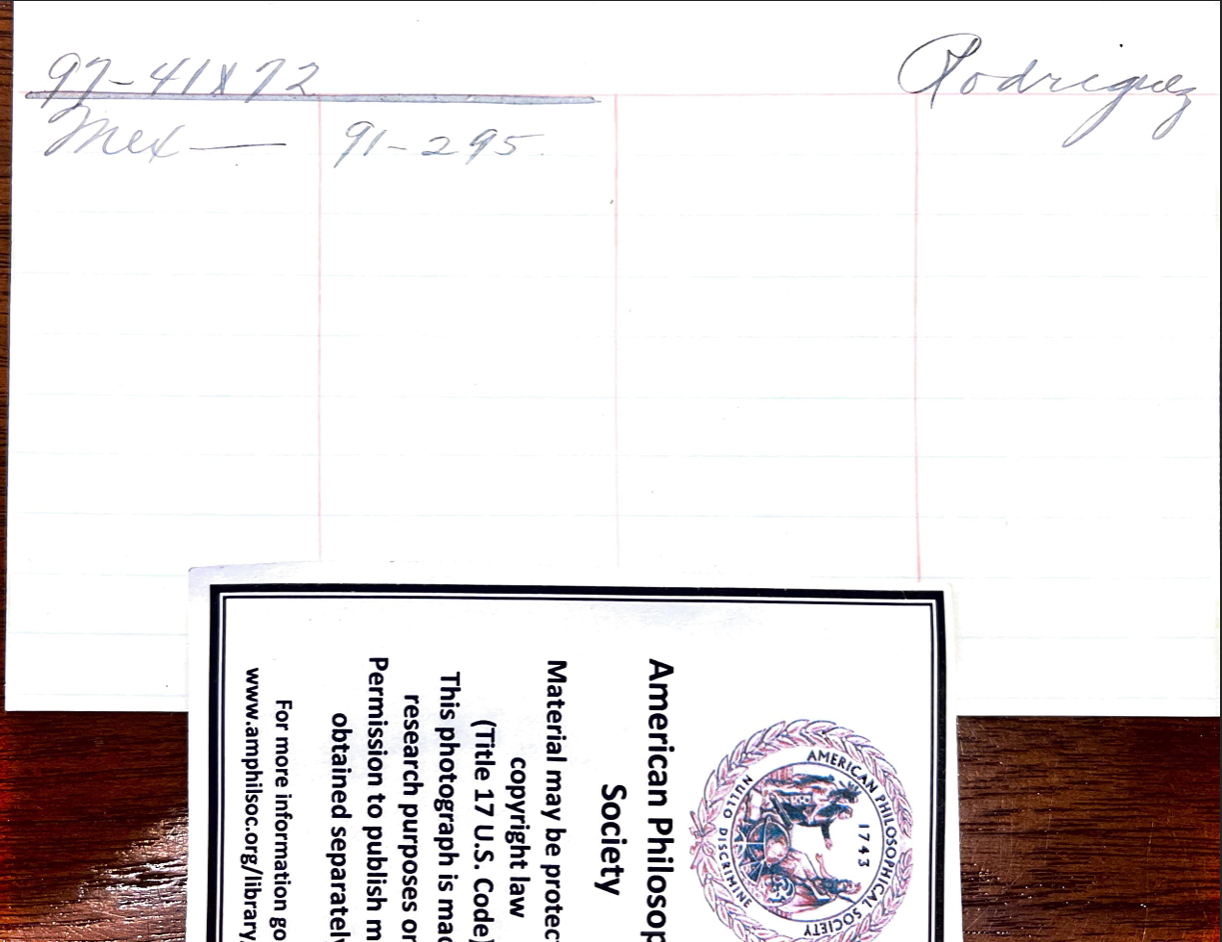
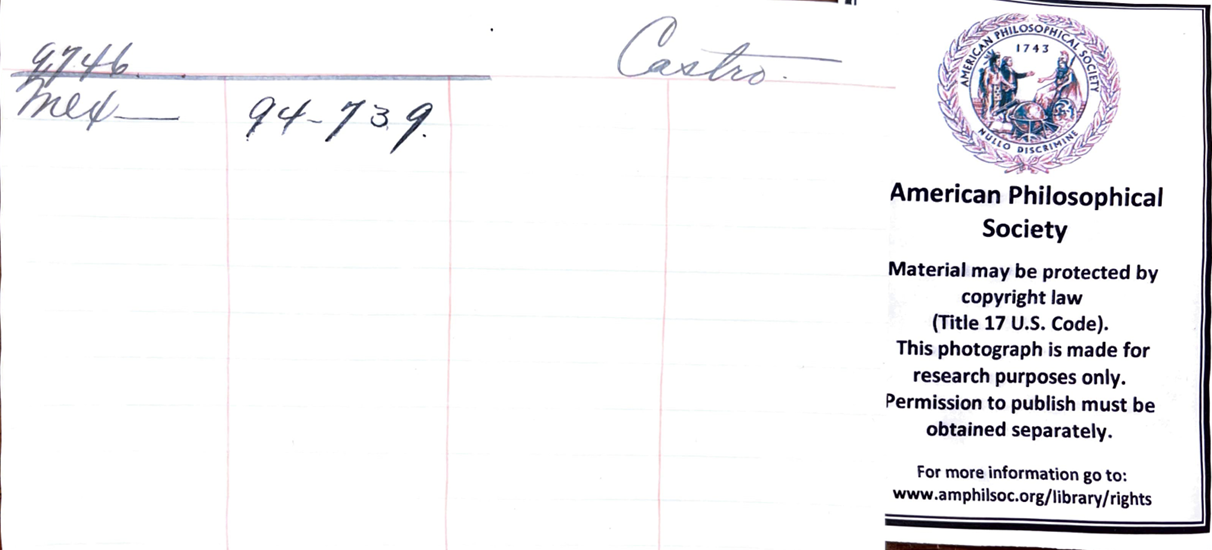
In analyzing the Index Cards (Series XIII) in conjunction with the Whittier files, I found that these documents connected directly to one another. The index cards listed trait number (in this case, race codes), surname, fieldworker number, and page number. I recognized the fieldworker numbers were affiliated with the Whittier files. Thus, I was able to determine who was being racially classified in the index cards by matching fieldworker number and page number to the Whittier files (see images 2–5).
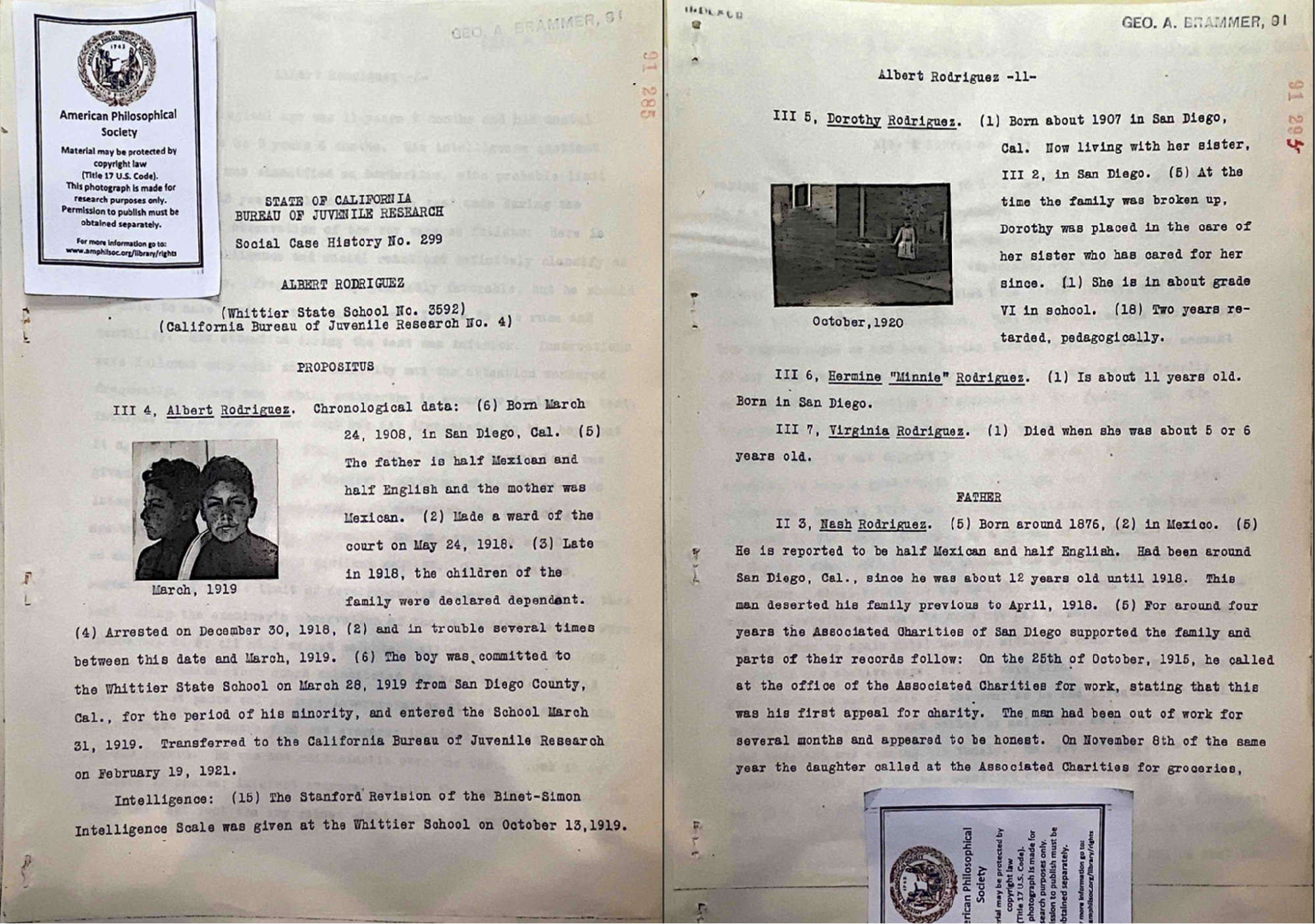
For instance, in images 2 and 3, fieldworker 91 racially classified Nash Rodriguez, the father of Albert Rodriguez, a Whittier student, as nationally Mexican but racially half White (European British descent) and half Mexican (Indigenous to North America). However, “Mexican” did not always equate to “American” or “Indigenous” races. In images 4 and 5, fieldworker 94 classified Pedro Castro senior, the father of Whittier student Pedro Castro Jr., as nationally “Mexican,” but racially as European Spanish descent. Interestingly, there were no descriptors in the Whittier files that indicated the Castros’ race.
By analyzing The Trait Book, the Whittier files, and the index cards together, I conclude that ERO field workers did not neatly nor consistently racially classify Latin Americans or Mexicans one way. In some instances, Latin Americans were classified as European, Indigenous, or both. Perhaps more importantly, my research demonstrates that the process of racially classifying Latin Americans is an example of how eugenicists constructed human difference and participated in “people making” through systematic classification.