



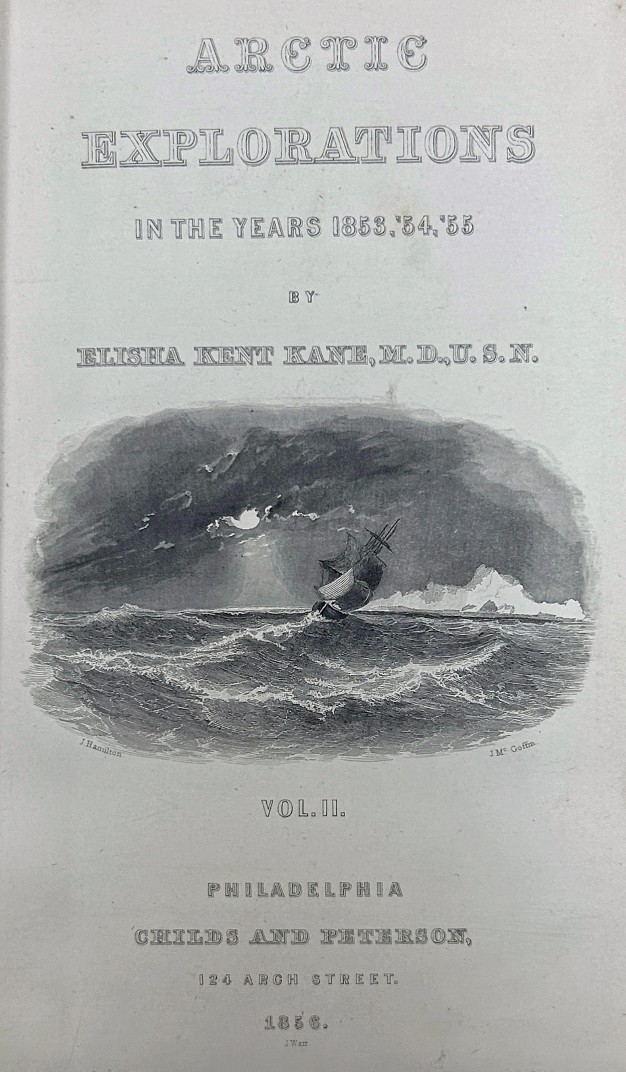
Title page of Elisha Kent Kane, Arctic Explorations in the Years 1852, 54, 55, vol. 2, Philadelphia: Childs & Peterson, 1856, American Philosophical Society.
Elisha Kent Kane (APS 1851) was an unlikely naval explorer. He contracted a disease early in his short life which left him with a weak heart, disliked the discipline of the navy, and became seasick if the ship traveled at a speed above five knots. Yet his book Arctic Explorations, describing the Second Grinnell Expedition’s voyage in search of Sir John Franklin, captured the imaginations of readers around the world, and has been called by Dr. George W. Corner (APS 1940) “the best written narrative of Arctic adventure in English.”
Kane was born in 1820, the son of John Kintzing Kane (APS 1825), a prominent Philadelphia lawyer, and Jane Duval Leiper Kane, active in Philadelphia private and public charities. John K. Kane eventually became the 21st Attorney General of Pennsylvania from 1845 to 1846, and a U.S. district judge for the Eastern District of Pennsylvania from 1846 to 1858.
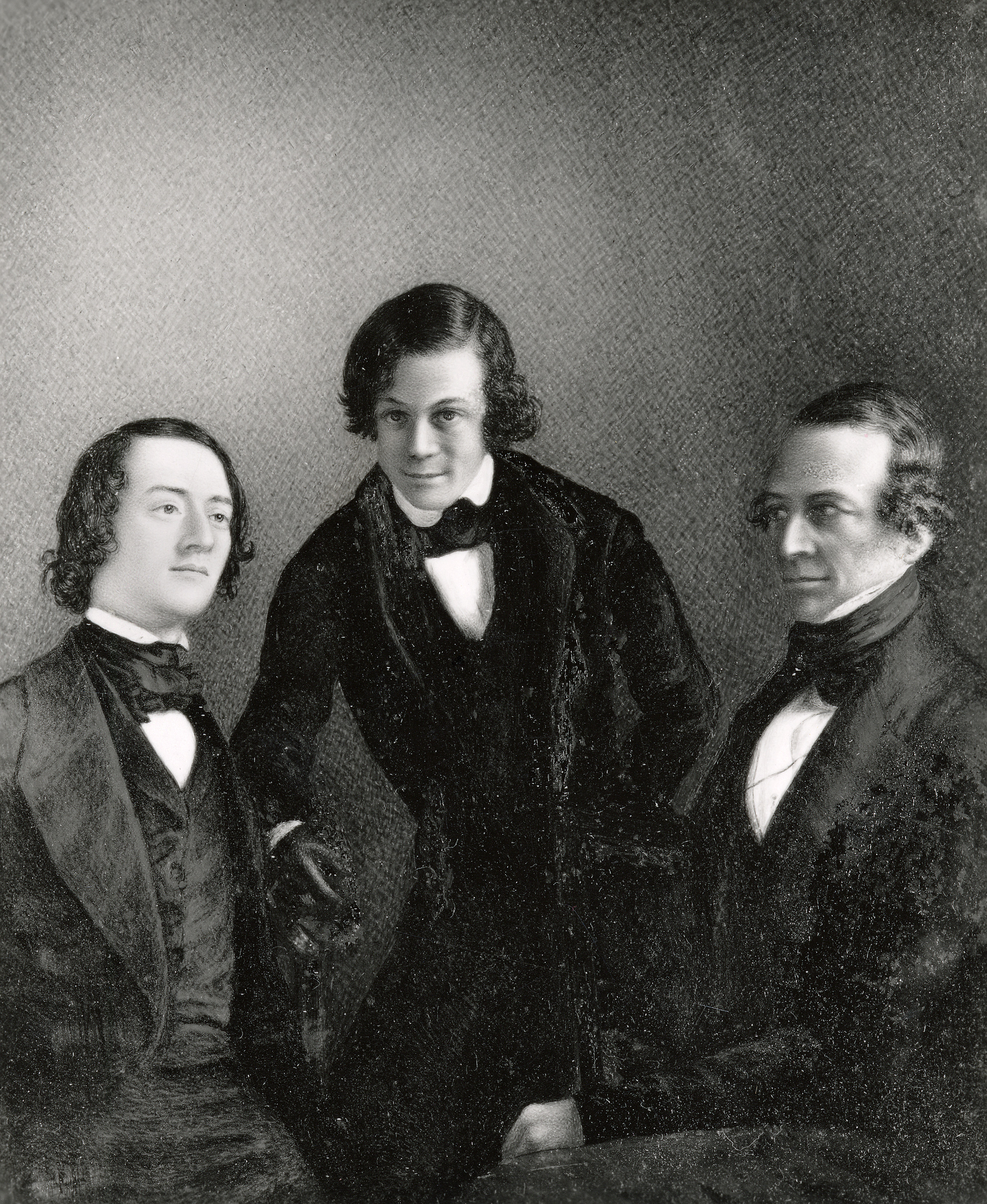
Elisha, the eldest of seven children, was an active, sometimes reckless child, more interested in adventure than his studies, although science and mathematics appealed to him. By the time he was seventeen, however, he improved his academic performance enough to apply to college, and he accompanied his father to Yale, where the senior Kane had studied. But the trip did not end in Elisha’s enrollment; the Yale interviewer pointed out that although his achievements in science and mathematics were impressive, he did not meet the school’s requirements in any other subjects. The journey to New Haven had another unfortunate result; Elisha became seriously ill.
When he returned to his home and the care of his mother, he recovered enough to enroll in the University of Virginia in 1838 to study civil engineering. He enjoyed his studies, even the ones previously neglected, and became an engaged, accomplished student. He was there for six months when he again had to return home due to illness, this time rheumatic fever. The diagnosis was bad enough, but made more serious by the fact that whatever ailment he had contracted in Connecticut had weakened his heart. The doctors had no treatment for the disease at this time, and Elisha had only his body’s resources to fight the fever. His doctors told him he could die at any moment. His father, not the most patient man, became tired of seeing him still in bed months after his return and told him: “Elisha, if you must die, die in the harness.” Whatever influence this statement might have had, Elisha was a determined young man who already had told a cousin he wanted to “make his mark on the world,” and he soon recovered enough to rethink his career plans. He conferred with his family and decided to study medicine.
When you consider how his life turned out, it is ironic that his family thought that this career would be less strenuous than civil engineering. Elisha’s improved study habits, and his abilities to keenly observe and communicate with people led to success in his medical studies at the University of Pennsylvania. On March 19, 1842, Elisha became Dr. Kane, who shortly after, at the request of his medical professors, published a paper on his experimental studies during medical school. The paper was well-received, and he entered the medical profession with a certain amount of prestige, but he never established his own practice.
His father believed that he needed more discipline than a doctor’s life would provide, and without consulting Elisha about his plan (not for the first time), he used his political connections to request that the Secretary of the Navy consider his son for a naval surgeon appointment. Elisha accepted his father’s decision, and easily passed the required examination.
There were, unfortunately, no assistant surgeon appointments available at the time, but Elisha soon turned this situation to his advantage. He learned that Great Britain and China had signed a treaty ending the Opium War, and that the United States was sending a diplomatic mission to China to explore the possibilities of trade between the two countries. This appealed to Elisha’s spirit of adventure. Now he employed his father’s political influence, and with the recommendation of the Secretary of State and the permission of the Secretary of the Navy, he was on his way to China as physician to the diplomatic delegates. This began a naval career which took him to five continents within three years. His adventures included descending into a volcano, mountaineering in the Alps, and fighting with Bedouins.
In 1850, now assigned to the Coast Guard, Kane received news that the United States Navy had decided to contribute a party to the search for the famous English explorer Sir John Franklin. Franklin’s story was well known: he and his crew sailed from England in 1845 on the ships Erebus and Terror to explore and chart the Northwest Passage. When there was no word from his expedition by 1848, Great Britain and other countries sent expeditions to search for him for many years.
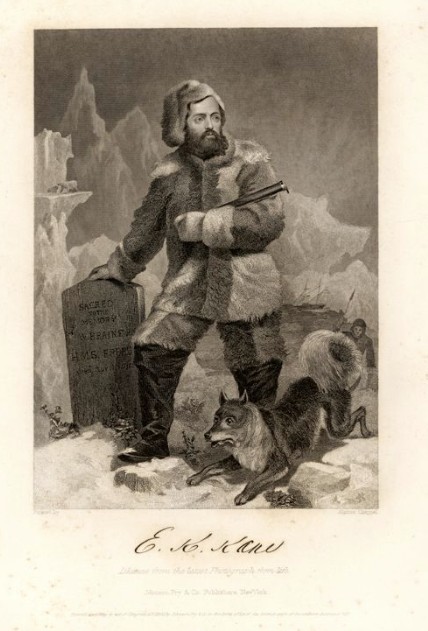
Ultimately, there were 25 searches over the next four decades. We now know that both of Sir John’s ships became icebound in the Victoria Strait between King William Island and Nunavut. The crew abandoned the ships in 1848, but none survived. When Dr. Kane received permission to join the first Grinnell Expedition (largely financed by private citizen Henry Grinnell), however, there still was hope of survivors. During this voyage Elisha began a journal which would become the genesis of the first of his two books in which he eloquently described the beauty and terror of the Arctic, as well as the extent of explorations.
The Grinnell Expedition, which also became icebound, did not achieve its goal. Despite this, the crew returned home as national heroes. Grinnell, who had begun a correspondence with Lady Jane Franklin, told her that while many of his countrymen no longer had any hope of finding survivors, some members of his expedition still believed it possible. Dr. Kane was convinced that Franklin still lived, and in hopes of raising money for a second expedition, embarked on a series of public speaking appearances, in which he reaffirmed his belief in Franklin’s survival, and speculated on the existence of an Open Polar Sea, with a milder climate that could support Franklin and his crew.
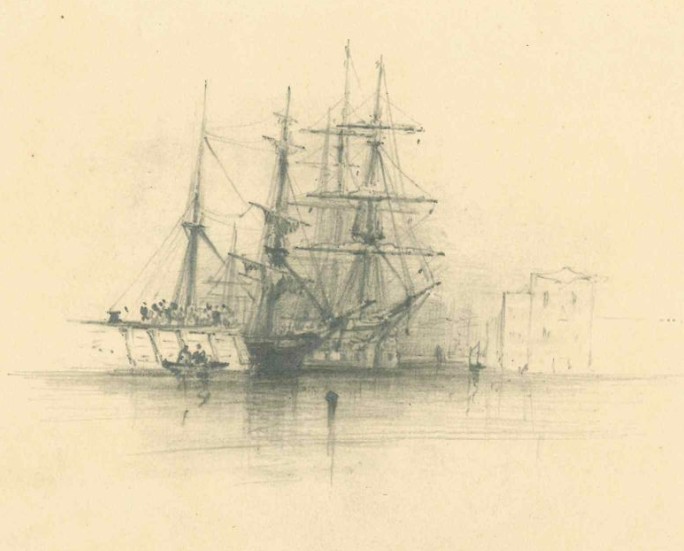
Dr. Kane’s popular lectures did help to finance the expedition, and in May 1853 the Second Grinnell Expedition sailed on the ship Advance, led by Elisha Kent Kane on behalf of the U.S. Navy and financed again by Grinnell, with additional support from the Geographical Society of New York, the Smithsonian Institution, and the American Philosophical Society. This expedition succeeded in exploring and mapping a large part of Greenland’s northern coast, and sailed farther north than any previous explorers.
After two years largely spent on a ship locked in the ice as the crew battled scurvy and starvation, they had found no sign of Franklin’s party. Dr. Kane decided to abandon their ship in May 1855. He and his men embarked on an 83-day march to the west coast of Greenland where they were fortunate to find a ship to take them home. They lost only one man.
Kane’s health now was precarious. It had begun to deteriorate during his lengthy speaking engagements prior to the expedition, and the deprivations of the voyage weakened Kane even further. He almost didn’t finish his account of the second expedition. He went to England to report personally to Lady Jane Franklin, and the English climate further weakened him. He traveled to Cuba in the hope of recovering in its warm climate, but on the voyage there he suffered two strokes. He died in Havana, surrounded by his family, in February 1857, 13 days past his 37th birthday.
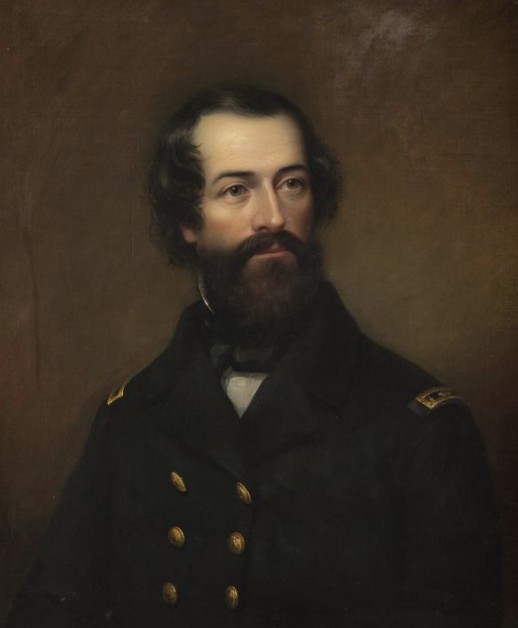
United States naval personnel accompanied his body back home, and the journey to Philadelphia found every route, on land and water, lined with mourners. He lay in state in Independence Hall beside the Liberty Bell until he was buried in Laurel Hill Cemetery. His explorations had made him a national hero, and his remarkable accounts of his Arctic travels, more than any other achievements, insured his mark on the world.
References:
Corner, George W. “The Adventures of Dr. Kane in Search of an Open Polar Sea” from Science, Medicine and History: Essays on the Evolution of Scientific Thought and Medical Practice Written in Honor of Charles Singer. London: Oxford University Press, 1953.
Edinger, Ray. Love and Ice … Savannah: Frederic C. Beil, 2015.
Kane, Elisha K. Arctic Explorations: The Second Grinnell Expedition in Search of Sir John Franklin … Philadelphia: Childs & Peterson, 1856.
The United States Grinnell Expedition in Search of Sir John Franklin: A Personal Narrative. Philadelphia: Sheldon, Blakeman; Childs & Peterson, 1857.
McGoogan, Ken. Race to the Polar Sea … Berkeley: Counterpoint, 2008.