

Featured Fellow: Jenna Hardin (2025-2026 Swan Foundation Fellow in Revolutionary-Era Material Culture)


The Library & Museum at the American Philosophical Society supports a diverse community of scholars working on a wide-range of projects in fields including early American history, history of science and technology, and Native American and Indigenous Studies, among others. Additional information about our fellowship programming and other funding opportunities can be found here.
Briefly describe your research project.
My dissertation, entitled “Cupid’s Dart: Making & Breaking Romantic Relationships in Revolutionary America, 1765-1815,” investigates how both romantic relationships and romantic culture were influenced by the American Revolution. My work describes both the personal and emotional experiences of historical individuals, as well as the cultural and legal norms that surrounded their break-ups.
What collections did you use while working at the APS?
I worked with several collections while at the APS. Because my dissertation has topical chapters, I make use of a wide variety of sources, including material culture, letters, diaries, newspapers, legal sources, and romantic literature, which allows me to cast a wide net when I approach the archive. Some of the collections I consulted were the Catharine Wistar Bache Papers, William Temple Franklin Papers, Sarah Franklin Bache Papers, Smith-Houston-Morris-Ogden Family Papers, and the Peale-Sellers Family Collection.
What’s the most interesting or most exciting thing you found in the collections?
The most intriguing sources I found during my time at the APS were three locks of hair, which I found in two separate collections. These strands of hair once belonged to Coleman Sellers, Sophonisba Peale, and Marie Augustine “Blanchette” Caillot, and they were in the Peale-Sellers Family Collection and the William Temple Franklin Papers, respectively.
I was captivated by the secret courtship letters written by Elizabeth Coleman and Nathan Sellers during the Revolution, which I was able to see in the APS Conservation Department, where they were undergoing preservation work. Elizabeth and Nathan eventually did marry. In 1804, their son Coleman Sellers exchanged snips of hair and love poems with Sophonisba Angusciola Peale, shortly before the two were married. The couple tied the strands of their hair in circles, representing their everlasting bond, with pink fabric. I also got to see a lock of hair that was sent to William Temple Franklin by his Parisian lover, Blanchette Caillot (née Saÿde), under very different circumstances. Blanchette was married to the renowned actor and singer Joseph Caillot, but she and Temple carried on a passionate affair for years. Blanchette was extremely distressed when Temple left Paris to return to Philadelphia in 1785, which explains why she may have felt compelled to include a piece of her hair in the letter.
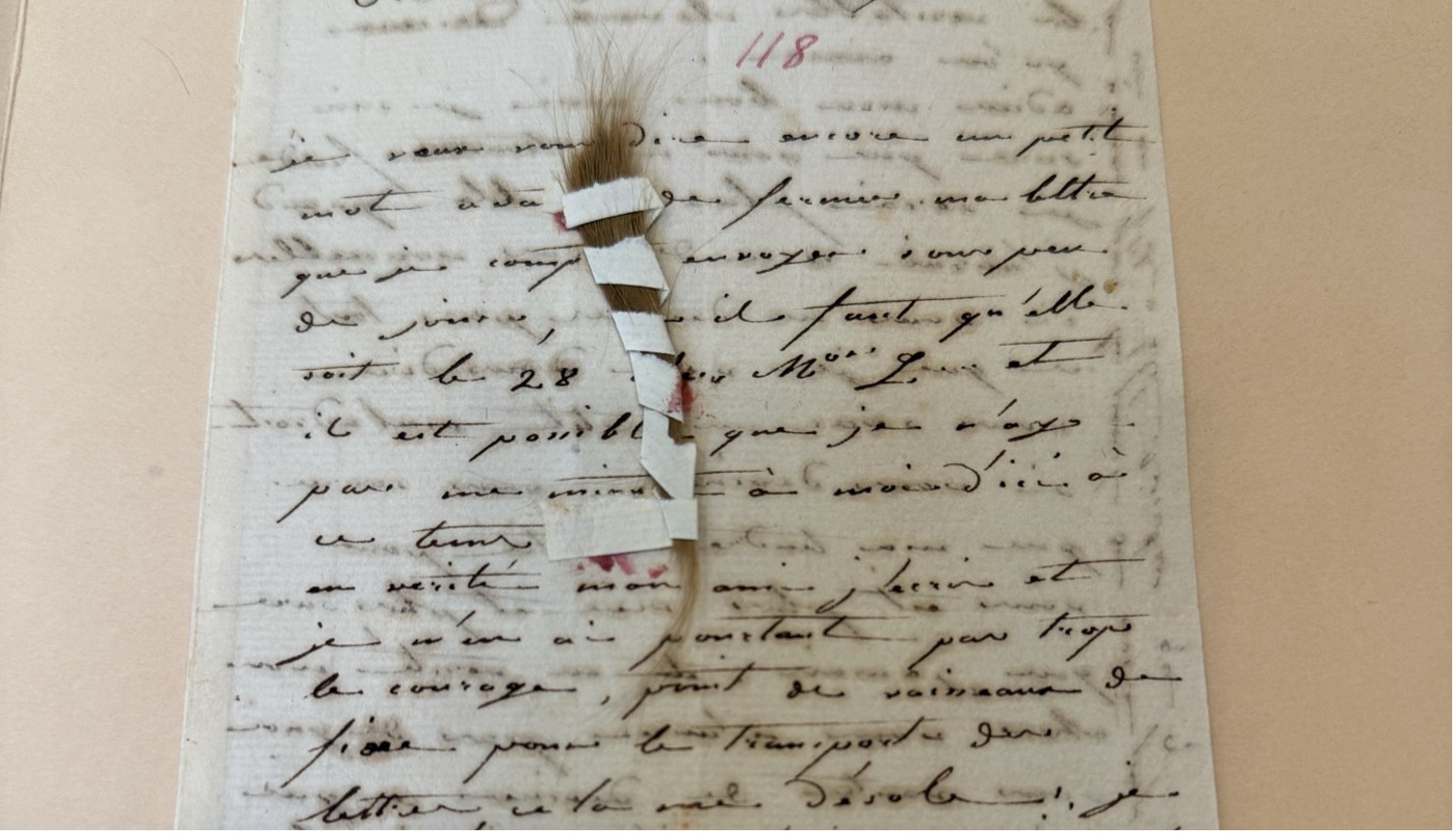
Hair was a common sentimental keepsake during the 18th century, and it was frequently gifted by individuals who were romantically entangled. Courting individuals, married couples, and even secret paramours gave one another pieces of their hair. Sometimes, it was tied with ribbon (a common courtship gift), kept enclosed in beautiful and elaborate jewelry, or enfolded within love letters and poems. I always find it delightful when hair mementos survive in the archive, as they are a physical testament to the emotional connection that was once shared between historical people.
Do you have any tips or suggestions for future fellows or researchers?
My biggest suggestion for future fellows or researchers would be to invest time in socializing with the community at the APS. Not only was everyone welcoming and kind, but I also learned a great deal from them. During coffee breaks and lunches, I received recommendations that persuaded me to explore collections that I would never have thought to consult on my own. This networking led to both enjoyable conversations and generative dissertation research, and I’m very grateful for it.
Any suggestions for must-see places or things to do in Philadelphia?
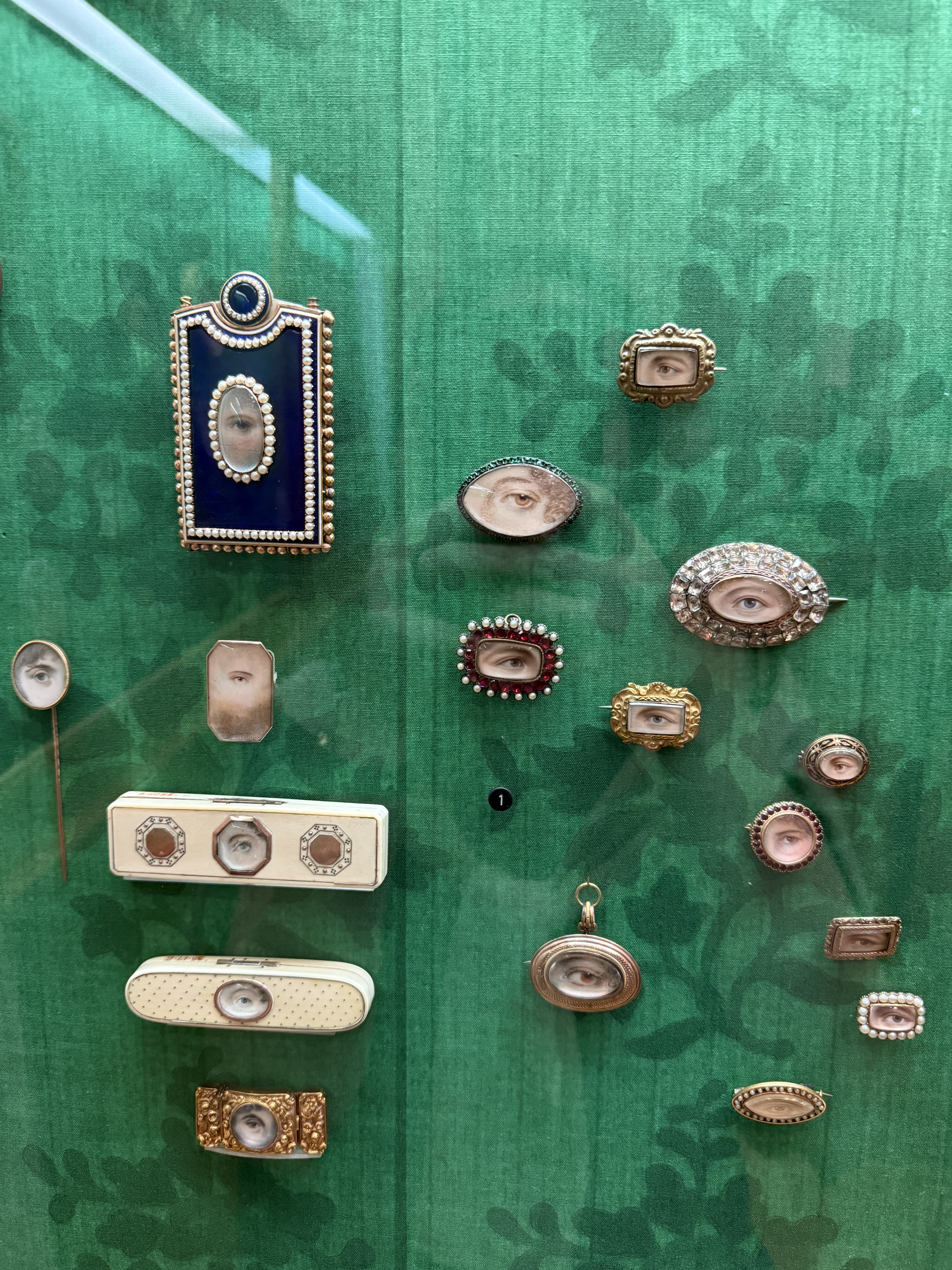
This was my first time in Philadelphia, and I thoroughly enjoyed myself. Most of my free time was spent in wonderful museums, parks, and historical sites. I especially appreciated my trip to the Philadelphia Art Museum, which houses a fantastic collection of late 18th-century and early 19th-century “lover’s eye” miniatures, romantic mementos that are also featured in my dissertation.
Jenna Hardin is a Doctoral Candidate in history at William & Mary whose research concentrates on the history of emotion in Anglo-America and Britain during the long 18th century. Her forthcoming dissertation, “Cupid’s Dart: Making & Breaking Romantic Relationships in Revolutionary America, 1765-1815,” is a study of love, romantic culture, and the circumstances that led romantic entanglements to either succeed or fail in Anglo-America during the American Revolution. Her project explores how ideas about romantic failure were influenced by Enlightenment thought and revolutionary rhetoric, particularly the notion that individuals had the right to liberate themselves from strained and arbitrary bonds.