

The Four Corners Potato: Indigenous Subsistence and Agricultural Legacy on the Colorado Plateau


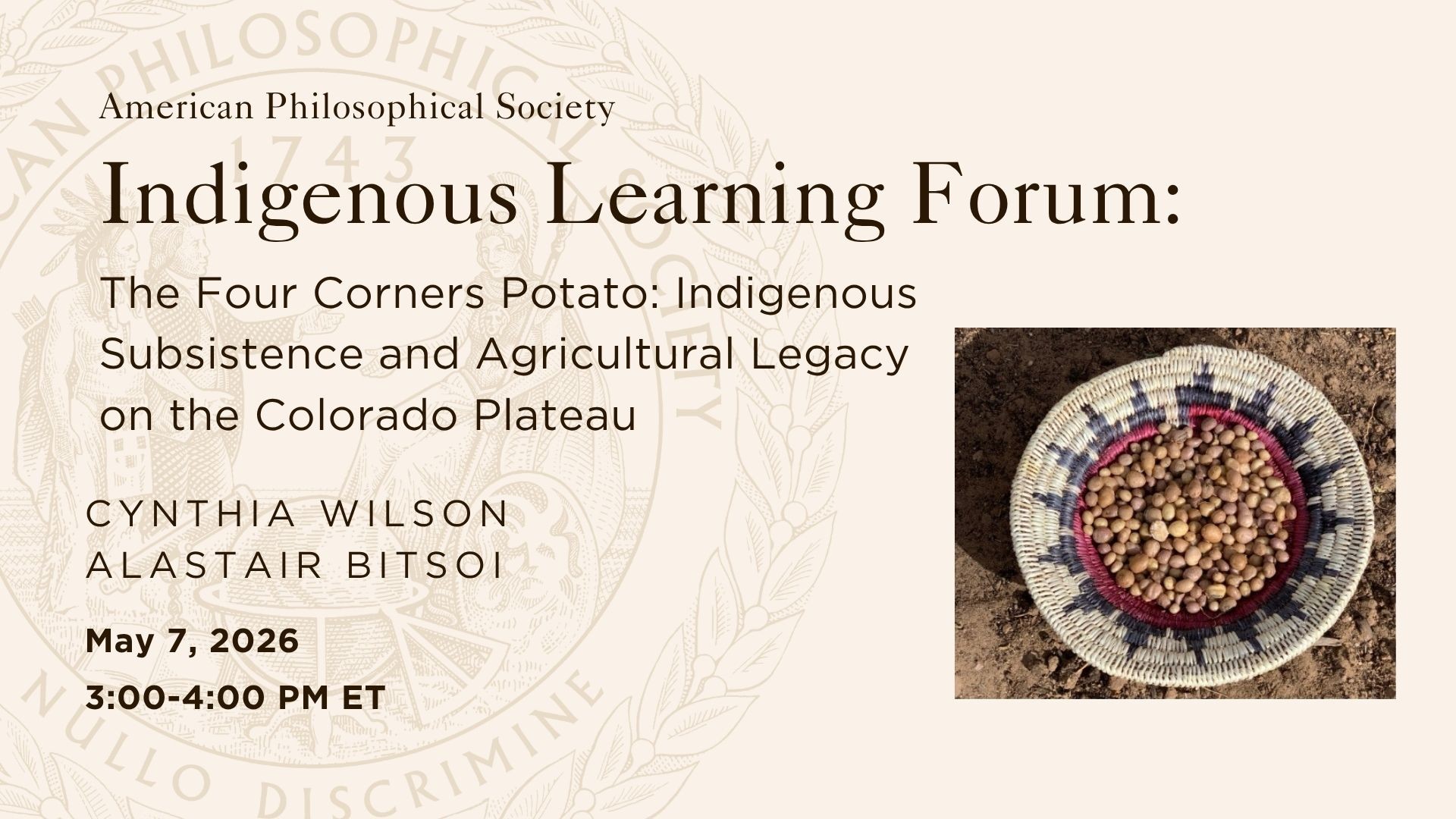
The final 2025-2026 Indigenous Learning Forum will take place May 7, 2026 at 3:00 p.m. ET on Zoom. This talk will be given in English with Spanish translation.
Se ofrecerá interpretación en español/inglés.
This event is open to all but registration is required.
Cynthia Wilson is a PhD Candidate at the University of California - Berkeley in Environmental Science, Policy, and Management. She is Diné from the Navajo Nation, studying Indigenous Environmental Science related to the restoration of traditional agricultural practices and land conservation. Since 2016, she has helped lead the cutting-edge of Indigenous land conservation and public land advocacy as a grassroots organizer, securing 1.35 million acres of the Bears Ears National Monument at the request of five tribes (Hopi Tribe, Navajo Nation, Ute Mountain Ute, Zuni Tribe, and Ute Indian Tribe).
Alastair Lee Bitsóí is a senior narrative strategist, former journalist, and Diné land-based practitioner from Naschitti, Navajo Nation, whose work spans Indigenous governance, storytelling, and food sovereignty. His reporting has focused on policy, infrastructure, water access, climate, and community impact across the Colorado Plateau. He cultivates the Four Corners Potatoes as part of a broader commitment to Indigenous subsistence, agricultural legacy, and land-based knowledge systems, grounding his work in both practice and narrative.
The Four Corners Potato (Solanum Jamesii), a 10,900-year-old native potato, is strongly associated with the archaeological complexity and ecological diversity of the Bears Ears region on the Colorado Plateau. The ecological legacy of past human behavior in subsistence lifeways significantly increases ethnographic species richness. Ethnographic accounts of S. Jamesii from Indigenous peoples provide evidence of use and long-distance transport throughout the Colorado Plateau. Ensuring persistence requires tribal input to conserve and restore archeo-ecosystems containing "high priority" plant species such as S. Jamesii. This transdisciplinary approach has important implications for resource management planning, especially in areas such as the contested Bears Ears National Monument.
Image Photo Credit: Alastair Bitsoi