

Communicating Disease: Assessing Benjamin Rush’s Public Health Legacies at America’s 250th – A Conversation with Paul Offit


Museum of the American Revolution
101 South Third Street Philadelphia, PA 19106
Event is free but registration is required. Attend virtually via the APS YouTube.
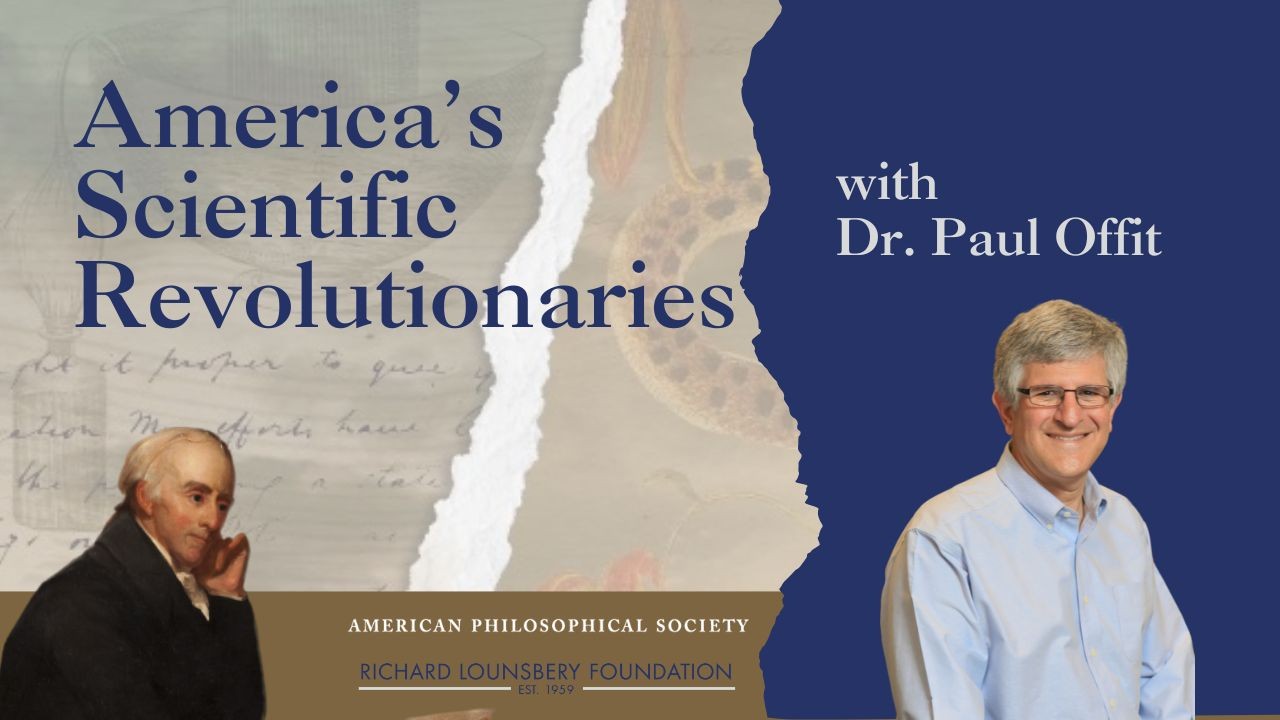
Join the American Philosophical Society and the Museum of the American Revolution for an in-person conversation with virologist and physician Paul Offit. Drawing on his own work on infectious diseases and his ongoing contributions to public health advocacy and vaccine education, Offit will reflect on the efforts of Revolutionary-era physician Benjamin Rush to manage the treatment and spread of illnesses during the 18th century. As a founder of the College of Physicians and Surgeon General of the Continental Army during the American Revolution, Rush played a key role in communicating an early program for American medicine, one that included calls for the widespread inoculation of smallpox as well as the implementation of more aggressive treatments like bloodletting. This program will take into consideration Rush’s complex medical legacy as a way to explore broader questions about how medical knowledge is cultivated, debated, and carried into practice—and why public trust can be as fragile as the evidence it rests on.
This conversation is part of “America’s Scientific Revolutionaries," a two-year initiative funded by the Richard Lounsbery Foundation highlighting the work of lesser-known scientists and physicians active during the Revolutionary era. This event will be held onsite at the Museum of the American Revolution in Philadelphia, Pennsylvania. This event is free and open to the public. Seating is limited. Please note that the event times reflect Eastern Time. Please register to attend. The event will also be livestreamed on the APS YouTube.
Dr. Paul Offit is the Director of the Vaccine Education Center at the Children’s Hospital of Philadelphia as well as the Maurice R. Hilleman Professor of Vaccinology and a Professor of Pediatrics at the Perelman School of Medicine at the University of Pennsylvania. Dr. Offit is currently a voting member on the FDA’s Vaccine Advisory. Committee and has previously served on the Advisory Committee for Immunization Practices to the CDC. He is also the co-inventor of the rotavirus vaccine, RotaTeq, recommended for universal use in infants by the CDC in 2006 and by the WHO in 2013. This vaccine was estimated recently to save about 165,000 lives a year. He is also the author of eleven books written for the public about science, medicine, and vaccines. He was elected as a Member of the American Philosophical Society in 2023.