

Using 3D Technologies in Knowledge Repatriation through the Co-production of Knowledge Framework


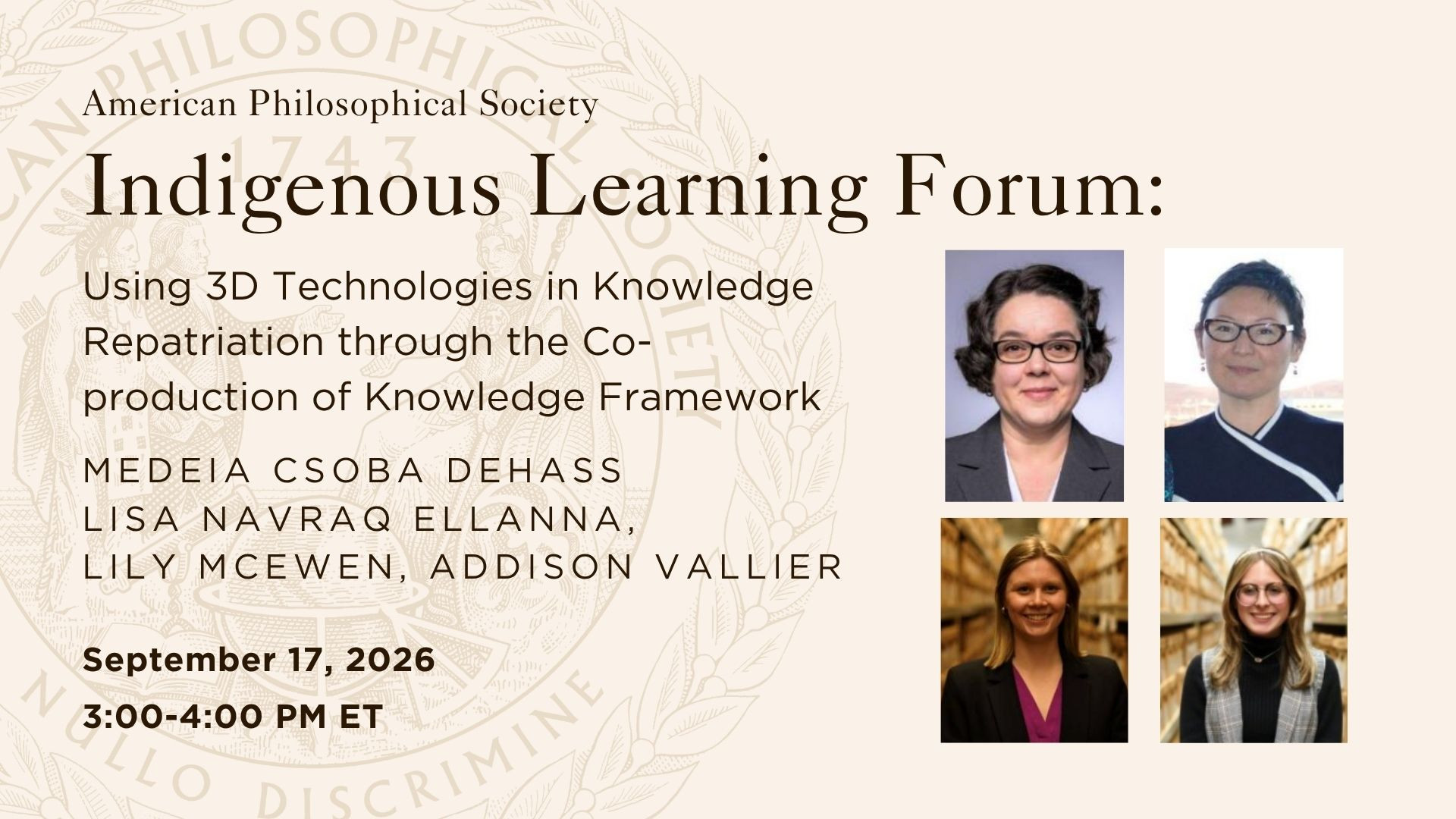
The first 2026–2027 Indigenous Learning Forum presentation will take place September 17, 2026, at 3:00 p.m. ET on Zoom. This talk will be given in English with Spanish translation.
Se ofrecerá interpretación en español/inglés.
This event is open to all but registration is required.
Medeia Csoba DeHass is an Associate Professor of Geography at the University of Missouri and core faculty at the MU Institute for Data Science and Informatics. Her NSF CAREER-funded research examines Indigenous perspectives on 3D technologies and Alaska Native heritage. She leads the 3D Heritage Informatics Lab, mentoring students in community-engaged research.
Lisa Navraq Ellanna is Inupiaq from Nome, Alaska. She holds a bachelor’s degree in Rural Development from the University of Alaska, Fairbanks, and a Juris Doctor from Mitchell Hamline School of Law. As the manager of the Kawerak Social Science department, she applies culturally sustaining approaches in her work while upholding Tribal policies, laws, and protocols. Lisa is a Tribal citizen of the King Island Native Community.
Lily McEwen is a PhD student at the University of Missouri Institute for Data Science and Informatics studying geospatial and heritage informatics. Her research focuses on how Indigenous cultural protocols, and research priorities can inform heritage informatics, using geospatial technologies to support Alaska Native digital heritage preservation.
Addison Vallier is a senior at the University of Missouri and research assistant at the 3D Heritage Informatics Lab. She is a recent recipient of the 2026 Mizzou Forward Undergraduate Training Grant, and her project focuses on the integration of AI into heritage informatics grounded in Indigenous Data Governance.
"Using 3D Technologies in Knowledge Repatriation through the Co-production of Knowledge Framework"
There are millions of Indigenous heritage pieces in museum collections around the world. Many of these pieces were removed from their communities without consent, yet they continue to carry in themselves Traditional and Indigenous tangible and intangible Knowledges. Our team has been working on reconnecting Alaska Native communities in the Bering Strait region with their belongings currently cared for at three museums in the Lower 48 states. We use the 3D technologies of photogrammetry and structured light scanning within the framework of co-production of knowledge, which prioritizes equity, respect, and reciprocity in research through integrating multiple knowledge systems for a comprehensive understanding of the world around us. Our team digitally documented over 2,000 heritage pieces using culturally responsive 2D photography and created over 250 digital 3D models in the past 5 years. In our project we bring together Indigenous and non-Indigenous partners as collaborators to better understand Alaska Native perspectives on the use of 3D technologies in heritage preservation and perpetuation. In our talk we will share our experiences about the collaborative process as well as lessons learned from the use of 3D and other emerging technologies informed by the Indigenous Data Governance framework.