

The New World Empires in the Age of Revolution


The third 2026–2027 David Center for the American Revolution Seminar will take place December 16, 2026, at 3:00 p.m. ET via Zoom.
The speakers will be Scott Wagner, Sydney Sweat-Montoya, and Mica Miralles Bianconi.
Descriptions of the speakers' papers are below. Papers will be pre-circulated to registered participants in advance of the seminar meeting.
To attend the seminar and to receive a copy of the paper, please register via Zoom.
The David Center for the American Revolution Seminar serves as a forum for works-in-progress that explore topics in the era of the American Revolution (1750–1820). Questions about the series may be directed to [email protected].
Note: Seminars are designed as spaces for sharing ideas and works still in-progress. For this reason, this event will not be recorded.
Scott Wagner, "'A Tragi-Comedy in the Face of Common Sense:' The Revolutionary Honor of George Mathews”
The East Florida Revolution of 1812, better known as the Patriot War, left the Georgia-Florida borderlands devastated by partisan violence and hastened the demise of Spanish rule in the Floridas. Scholars studying the conflict have tended to ignore its revolutionary dimensions, analyzing it instead as a product of American expansionism during the Jeffersonian period. This paper in contrast argues that the Patriot War was a product of revolutionary impulses by focusing on the central instigator of the revolution, General George Mathews. Mathews was a veteran of the American Revolutionary War whose later political career was derailed by scandal. Desperate to restore his reputation for honorable public service, Mathews engineered a revolutionary uprising in Spanish East Florida that would attach the province to the United States and allow him to once again play the part of the revolutionary hero. By analyzing George Mathews and his revolutionary honor, my paper demonstrates how the Age of Revolutions reshaped the relationship between men of prominence and the people who they claimed to represent.
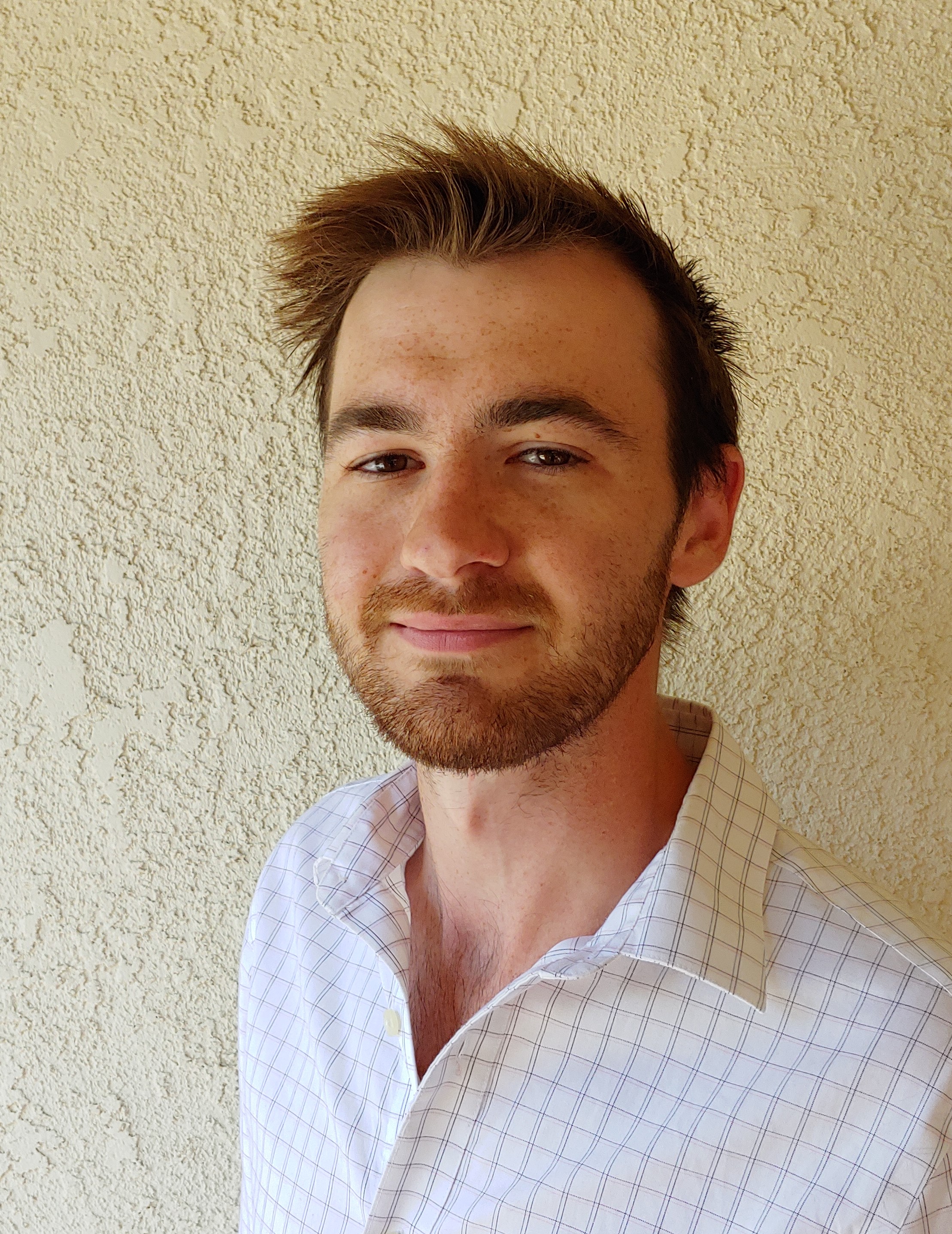
Scott D. Wagner is a Ph.D. Candidate in the Van Hunnick History Department at the University of Southern California. He specializes in the Age of Revolutions, focusing in particular on political and military culture in North and South America. His dissertation “Brawlers for Liberty: A History of Revolutionary Filibustering” analyzes private military expeditions that occurred in the Western Hemisphere during the latter half of the Age of Revolutions, arguing that these ventures were rooted in impulses borne from the revolutionary transformations of the era. Wagner’s work has been recognized by a number of fellowships and grants, including the Early Modern Studies Institute Ph.D. Dissertation Fellowship, the Chase Family Travel Grant, and the William and Madeline Smith Travel Award.
Sydney Sweat-Montoya, "Subjecthood, Authority, and Migration in the Circum-Caribbean, 1770-1800"
This chapter, “Subjecthood, Authority, and Migration in the Circum-Caribbean, 1770-1800” analyzes the effects of the American Revolution and Haitian Revolution on the western circum-Caribbean—modern-day Belize, Nicaragua, and Honduras— alongside local events including the evacuation of the Mosquito Coast, an enslaved rebellion in Honduras, and the threat of being outside the Mosquito tributary system. Drawing on diplomatic, admiralty, and merchant records from Spain, Great Britain, and Mexico this chapter argues that while conflict in North America and the Caribbean placed pressure on the recently evacuated communities from the Mosquito Coast to the Gulf of Honduras, Great Britain still lacked power to govern logging camps in the Gulf of Honduras. Instead, Baymen rejected British claims of legal jurisdiction in the Gulf of Honduras while others strengthened commercial networks with the Mosquito and Spanish on the Mosquito Coast. During this period of extreme disruption local actors responded by strategically engaging with the Mosquito, British, and Spanish to maintain autonomous logging camps.
Sydney Sweat-Montoya is a Ph.D. candidate at William & Mary specializing in Caribbean and Atlantic history. Her dissertation, “Evading Empire: The Lumber Trade in the Western Circum-Caribbean, 1630-1800,” investigates the development of logging camps in the Gulf of Honduras. By analyzing various strategies loggers relied on to move across British, Spanish, and Mosquito jurisdictions, this project shows how Caribbean actors influenced reactive imperial policies. Loggers relied on coerced Indigenous and African labor to cut, process, and load lumber. Once on the coast, logwood and mahogany were shipped to North America and across Europe. Generally framed as swampy outpost for the British Empire, Sydney’s work instead frames the region as an Atlantic commercial hub. Her dissertation is based on archival work across Central America, the Caribbean, North America, and Europe and has been supported by the Huntington Library, the John Carter Brown Library, the Massachusetts Historical Society, and Forum for Early Empires and Global Interactions, among others. Sydney received her B.A. in history at the University of West Georgia (2019), and holds an M.A. in History from Virginia Tech (2021) and from William and Mary (2022).
Mica Miralles Bianconi, "Foreigners and the British Invasions of Rio de la Plata, 1800s"
In 1806 and 1807, British forces attacked Buenos Aires and Montevideo, the main port complex in the Spanish Viceroyalty of Rio de la Plata. Although these invasions failed, they increased and strengthened the presence, involvement, and settlement of British and American people in the region. Starting in 1808, with the Napoleonic invasion of the Iberian Peninsula and the monarchical crisis in Spain, the crisis spread widely across the Spanish colonies. During this turbulent period, merchants from various empires and backgrounds exploited the chaos, using warfare and politics to advance their interests and profits. Before, during, and after the British invasions and the revolutionary period in Buenos Aires and Montevideo, Anglo people -British and American-, along with Spanish and Portuguese traders in the area, capitalized on the situation to make significant profits selling a variety of goods throughout the Americas and across the Atlantic basin. By exploring a wide range of sources from local, regional, and national archival repositories in Europe and the Americas, this chapter examines the trajectories of several British and American merchants in the Rio de la Plata region after the disruptions caused by the American Revolution and the Revolutionary War across the Atlantic world.
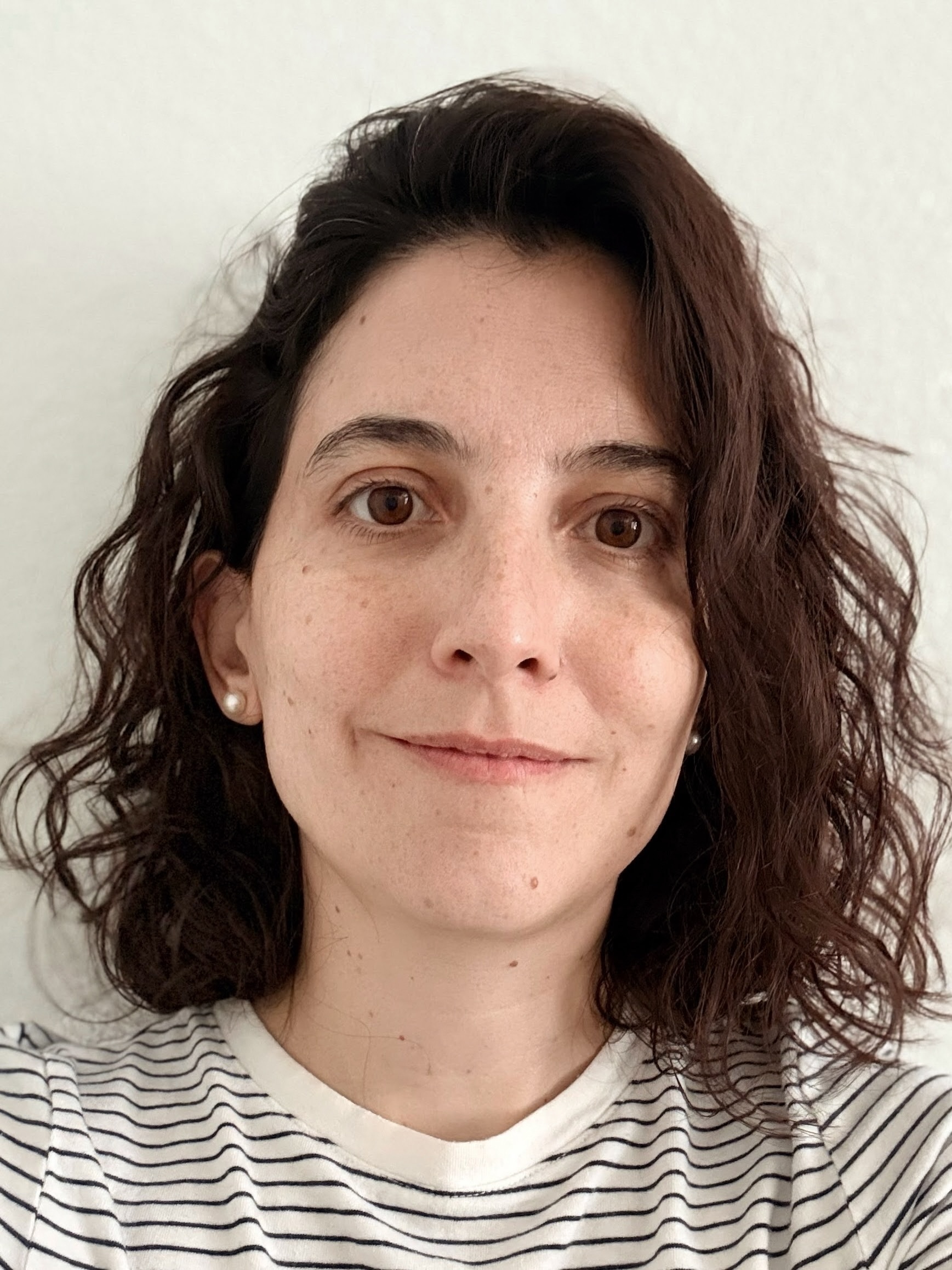
Mica Miralles Bianconi is a 6th-year Ph.D. Candidate focusing on Atlantic History and the History of the Americas during colonial and revolutionary times. Focusing on the failed British invasions of Rio de la Plata in 1806/1807, her dissertation explores Anglo-Iberian entanglements in the region and the South Atlantic during the Age of Revolutions. It argues that the invasions were not the beginning but the culmination of a British presence that began during the mid-18th century. By analyzing the establishment of the Royal Company of the Philippines in Buenos Aires, the presence of British merchants and slave traders in the area, and the arrival of convict women, Mica’s dissertation argues that Rio de la Plata had a trans-imperial character, that British subjects also shaped the region, and that, beyond inter-imperial rivalries, people on the ground cooperated and created networks overlooking imperial denominations or identities.