

“Much stressed with…pain”: Privacy, Surveillance, and the Making of Marginalized Healing Spaces in Revolutionary New England


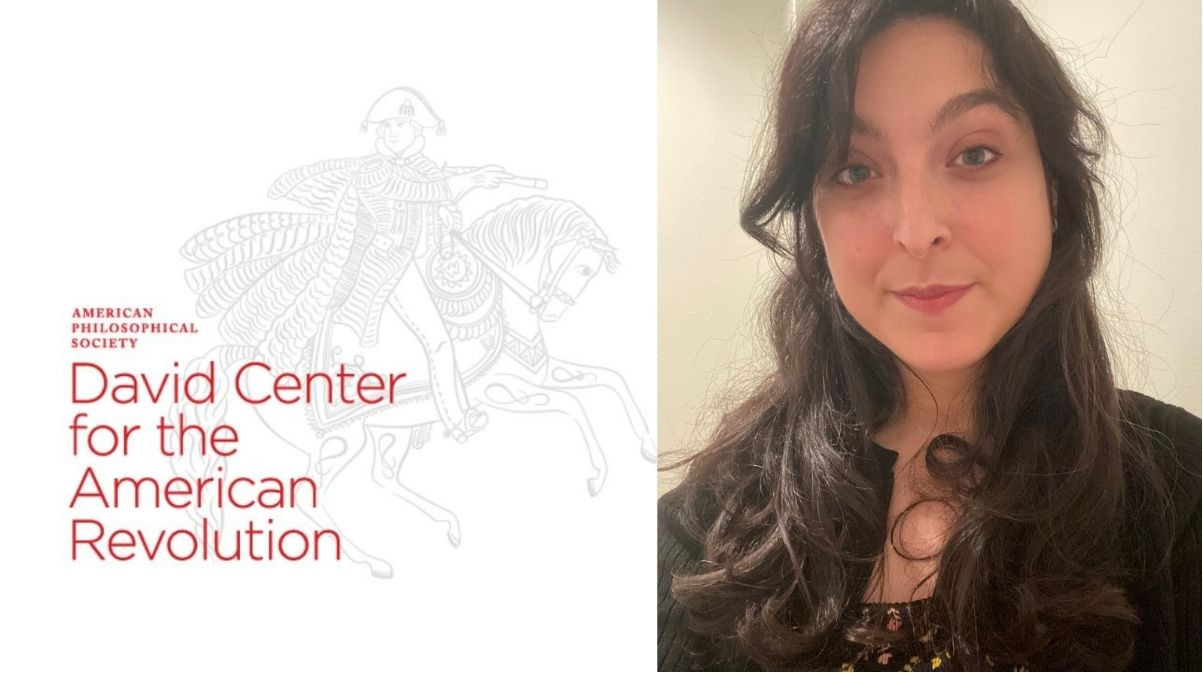
The second 2026–2027 David Center for the American Revolution Seminar will take place October 21, 2026, at 3:00 p.m. ET on Zoom.
The speaker will be Sarah Pearlman Shapiro. Sarah is the David Center for the American Revolution Postdoctoral Fellow at the American Philosophical Society. She examines the intersection of gender, medicine, and violence in the eighteenth century. Her book project examines women’s mobility amid both the routinized and punctuated violence of Revolutionary New England. She has forthcoming articles in the New England Quarterly and Transactions.
Sarah will be presenting her paper titled “‘Much stressed with…pain’: Privacy, Surveillance, and the Making of Marginalized Healing Spaces in Revolutionary New England.” A description of the paper is below. The paper will be pre-circulated to registered participants in advance of the seminar meeting.
To attend the seminar and to receive a copy of the paper, please register via Zoom.
The David Center for the American Revolution Seminar serves as a forum for works-in-progress that explore topics in the era of the American Revolution (1750–1820). Questions about the series may be directed to [email protected].
Note: Seminars are designed as spaces for sharing ideas and works still in-progress. For this reason, this event will not be recorded.
“‘Much stressed with…pain’: Privacy, Surveillance, and the Making of Marginalized Healing Spaces in Revolutionary New England”
This chapter examines tensions between public and private healing spaces by exploring who had access to care and who inherently became forced into the public eye due to illness and bodily harm. That is not to equate the two forms of illness or medical care, but rather to highlight the reliance on women’s networks of support when bodily conditions required and generated forms of isolation. Eighteenth-century Rhode Island, Massachusetts, and New Hampshire saw all health as public health, both because of the risk of epidemic diseases such as smallpox and because of local government commitments to keeping expenditures low in caring for those who became ill. Access to health care and privacy—that is, freedom from surveillance—was a prerogative of race and class. Wartime did not change these dynamics, especially for Indigenous and Black women in New England. Epidemics set patterns for women’s healing labor long before the movement of soldiers throughout the colonies. Laboring in hospitals and households alike to tend wounds and ease pain, women in wartime drew on an earlier accumulated medical knowledge base. In other words, during the War for Independence, most women still relied on mundane, everyday care practices.