

Greater Philadelphia: A New History for the Twenty-First Century


American Philosophical Society
Benjamin Franklin Hall
427 Chestnut St.
Philadelphia, PA 19106
This event is free, but Registration is required. Please RSVP here.
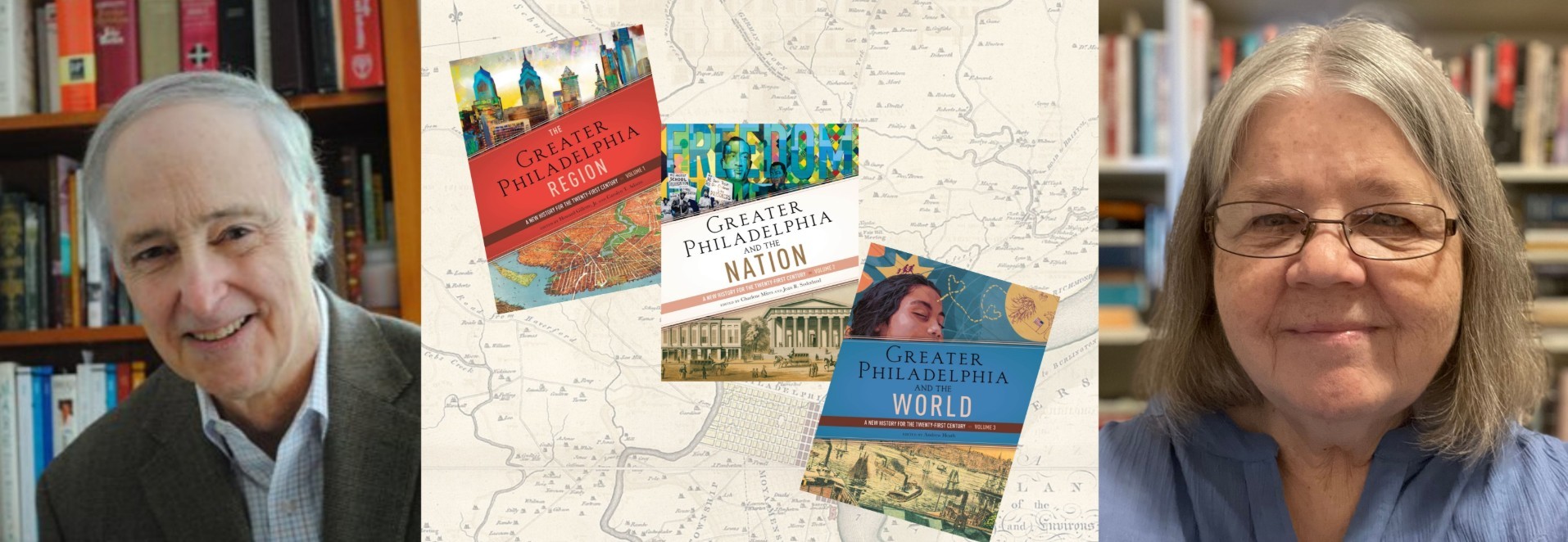
Join us on Thursday, December 18 to welcome Charlene Mires and Howard Gillette for a conversation celebrating Greater Philadelphia: A New History for the Twenty-First Century — a landmark three-volume publication from the University of Pennsylvania Press that redefines the story of the region and its role in shaping the nation.
As Philadelphia prepares to lead the nation in commemorating the 250th anniversary of American independence, The Greater Philadelphia Region (Vol. 1); Greater Philadelphia and the Nation (Vol. 2); and Greater Philadelphia and the World (Vol. 3) offer fresh, engaging, richly illustrated, and inclusive retellings of our region’s history from leading scholars and local voices.
- VOLUME 1: THE GREATER PHILADELPHIA REGION – Explores how “Greater Philadelphia” came to represent not just a city, but a dynamic region shaped by shared history, infrastructure, and identity across southeastern Pennsylvania, southern New Jersey, and northern Delaware. From early 20th-century department stores to regional planning efforts—this volume delves into the natural boundaries, transportation networks, neighborhoods, and political institutions that connect city and suburb. It offers a compelling portrait of a region defined as much by rivers, roads, and rail lines as by its economic and social interdependence.
- VOLUME 2: GREATER PHILADELPHIA AND THE NATION – Chronicles the city’s vital role in shaping American identity, democracy, and movements for justice across centuries. This volume traverses Philadelphia’s revolutionary origins and Civil War divisions through the fight for women’s suffrage, the civil rights and Black Power movements, and more recent moments like the AIDS activism of the 1980s and Occupy Philadelphia. Along the way, it illuminates how questions of citizenship, protest, and belonging have continually played out in the streets, courtrooms, and neighborhoods of the Philadelphia region—from Independence Hall to Girard College, from Germantown to City Hall Plaza.
- VOLUME 3: GREATER PHILADELPHIA AND THE WORLD – Reveals how Greater Philadelphia has long been a crossroads of global forces — shaped by waves of migration, transatlantic commerce, and international conflict. From its colonial roots in the British Empire to its rise as an industrial powerhouse and cultural beacon, this volume traces how the region welcomed immigrants from Europe, Asia, Africa, and the Americas; became a center of world religions; and responded to global challenges from cholera to COVID-19. It highlights the city’s impact on international labor, education, and peace movements, as well as its role in military conflicts at home and abroad.
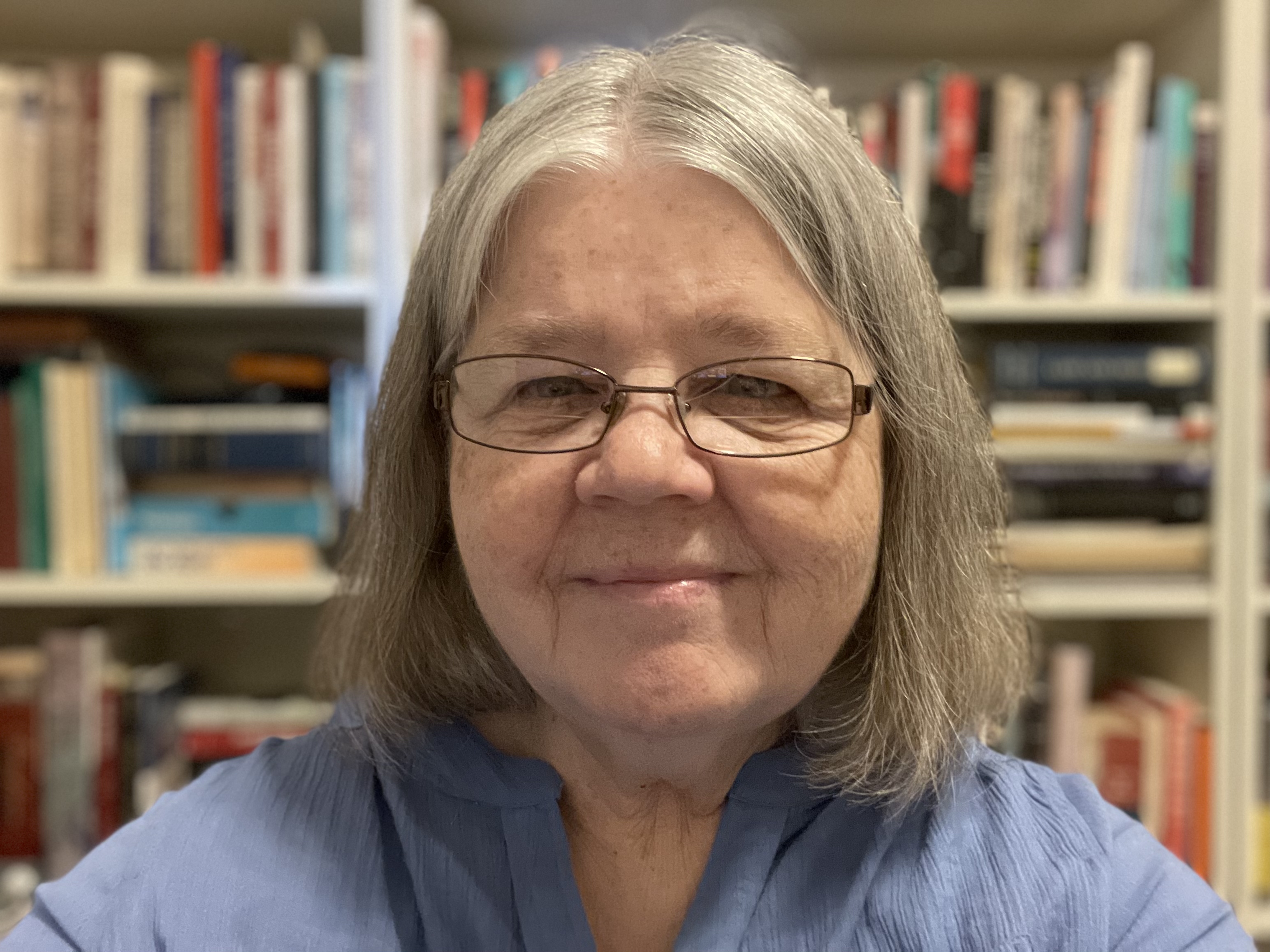
Charlene Mires, Professor Emerita of History at Rutgers University and co-editor of Greater Philadelphia and the Nation, says, “We set out to create something both timely and timeless—a resource that people can turn to now as we prepare for the 250th, and one that will endure for generations to come. This is more than a history of a city; it’s a story of how Greater Philadelphia helped shape the world.”
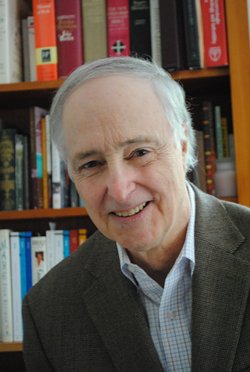
Howard Gillette is a co-editor of The Greater Philadelphia Region. As Professor of History Emeritus at Rutgers University-Camden, Gillette has specialized in modern U.S. history, with a special interest in urban and regional development. Currently he serves as co-editor of the online Encyclopedia of Greater Philadelphia. His latest book, The Paradox of Urban Revitalization: Progress and Poverty in America’s Post-industrial Age, was published by the University of Pennsylvania Press in March of 2022. His book, Camden After the Fall: Decline and Renewal in a Post-Industrial City (University of Pennsylvania Press, 2005), received best book awards from the Urban History Association and the New Jersey Historical Commission. He was honored with the Historical Society of Washington, D. C.’s Visionary Historian Award in 2018 and the Society for American City and Regional Planning History’s Laurence Gerckens Prize for sustained teaching excellence and educational leadership in the field of planning history in 2019. Previously he taught at George Washington University and the University of Pennsylvania, where he taught for the Urban Studies Department in 2016 and 2017. He received his B.A. and Ph.D. degrees in American Studies from Yale University.
Michelle McDonald is the Librarian/Director of the Library & Museum at the American Philosophical Society. She has worked for nearly three decades as an educator and administrator. Michelle earned her Ph.D. in History from the University of Michigan where she focused on business relationships and consumer behavior between North America and the Caribbean during the 18th and 19th centuries. She is the author of Coffee Nation: How One Commodity Transformed the Early United States (University of Pennsylvania Press, 2025) and co-author of Public Drinking in the Early Modern World: Voices from the Tavern (Pickering & Chatto/Routledge Press, 2011), and has contributed to anthologies published by Oxford University Press, Cornell University Press, Roman & Littlefield, and Berg Publishers. Her work has also appeared in the William & Mary Quarterly, the Journal of the Early Republic, Common-Place, the Business History Review, and the Pennsylvania Magazine of History and Biography. Michelle has served on governing boards of the Association of Caribbean Historians, the Society for Historians of the Early American Republic, and the McNeil Center for Early American Studies.