

Decolonizing Indigenous Climate Change Adaptation Research in the Missouri River Basin


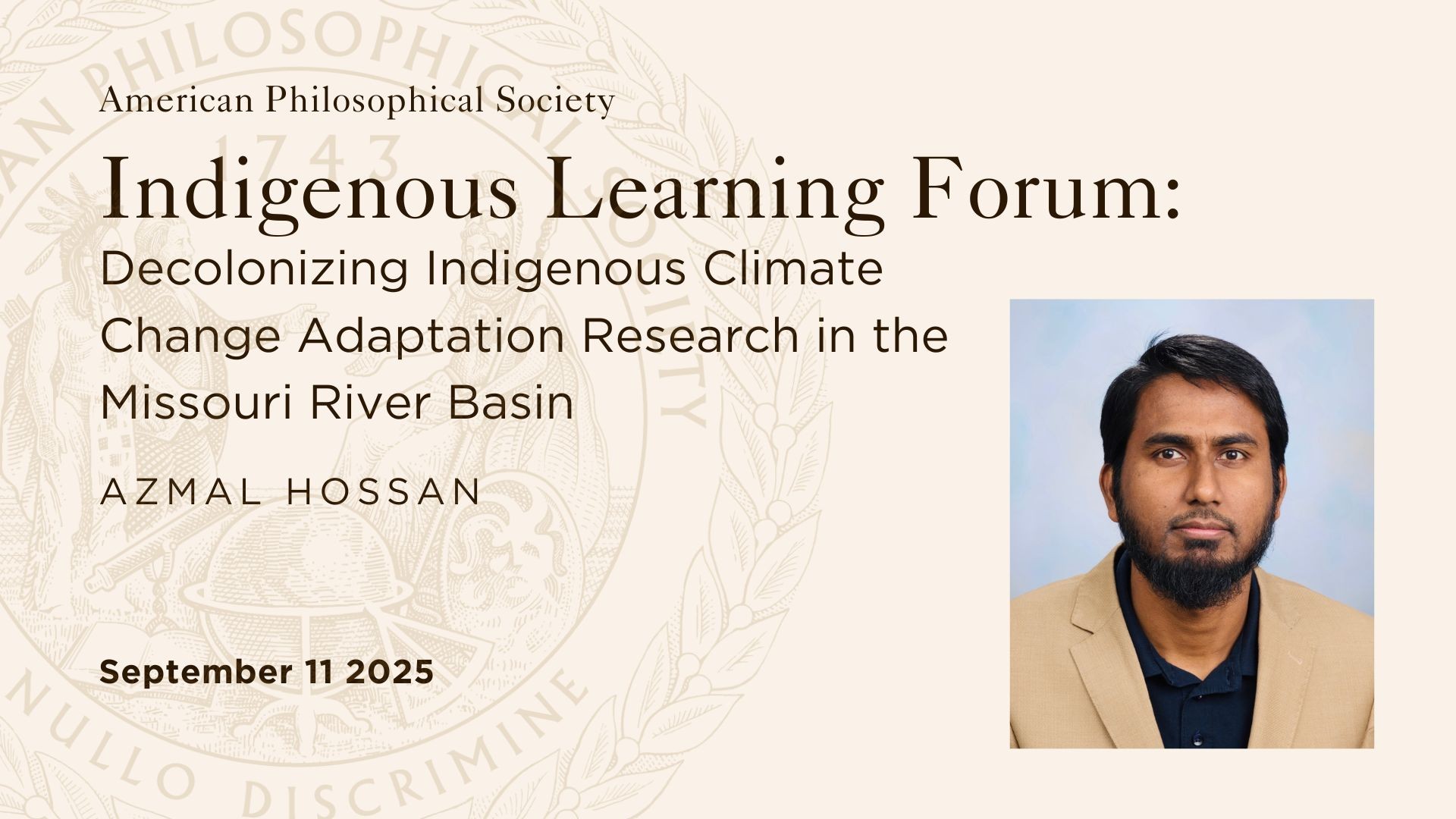
The first 2025-2026 Indigenous Learning Forum will take place September 11, 2025 at 3:00 p.m. ET on Zoom. This talk will be given in English with Spanish translation.
This event is open to all but registration is required.
Azmal Hossan is a Ph.D. candidate in Sociology at Colorado State University. His research interests are decolonization of research, Indigenous climate change adaptation, and environmental justice. Azmal’s research is supported by Interdisciplinary Training, Education, and Research in Food-Energy-Water Systems, Diana Wall Sustainability Leadership Fellow at Colorado State University, Water and Society Fellowship at the American Geophysical Union, and Agents of Change in Environmental Justice Fellowship at the Mailman School of Public Health, Columbia University. As part of his environmental activism, Azmal has been contributing as a member of the Environmental and Science Advisory Board and a member of the Air Quality Monitoring Advisory Committee of Larimer County, CO.
Decolonizing Indigenous Climate Change Adaptation Research in the Missouri River Basin
Indigenous Nations in the Missouri River Basin (MRB) are on the frontline of climate change impacts. Revitalization of their self-determination capacity, rooted in the practice of traditional ecological knowledge, is considered an effective climate change adaptation strategy for them. Partnering with the Great Plains Tribal Water Alliance, the study is being conducted as community-engaged participatory action research to examine how the revitalization of traditional ecological knowledge can help Indigenous Peoples adapt to climate change in the MRB. In doing so, a decolonizing research approach is used in this study. As a non-Indigenous early-career researcher with postcolonial lived experiences, the researcher realized that decolonization is an ongoing process of unlearning and relearning. He also learned that respecting local knowledge and prioritizing community needs over academic methodologies are essential to decolonize climate change adaptation research.