

Episode 5 (Neil Shubin) – Frozen in Time and Space: What Ice can tell us about our Past, Present, and Future
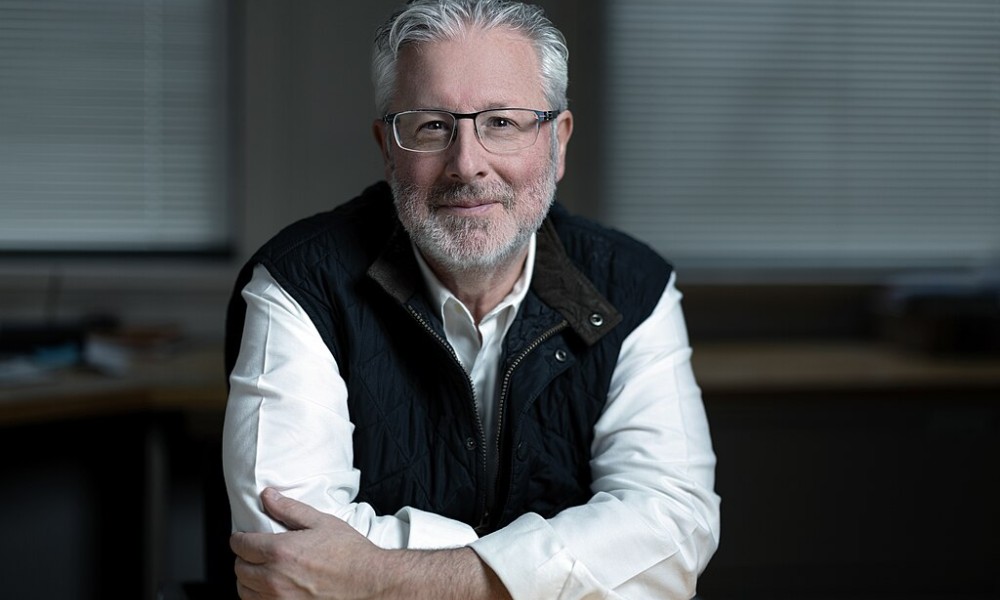
Distant, freezing, barren–it may seem that the icy regions of the Arctic and Antarctica have nothing to do with life in warmer homes. In this episode of Useful Knowledge, Neil Shubin, paleontologist, evolutionary biologist, and APS Member, joins host Patrick Spero to explain how much these regions can tell us about the history and future of life on our planet and beyond.
Shubin’s work has allowed him to crack open 380-million-year old rocks, uncovering histories of the times when the polar regions were tropical, meteorites and rocks from the Moon and Mars, and creatures that have evolved to survive in near-impossible conditions. What do scientists make of the freshwater lake hidden under Antarctica? Can polar ice release viruses onto our populace? What are the consequences of melting polar ice? In this episode, learn about these and other incredible findings.
Neil Shubin (APS 2017) is a paleontologist, evolutionary biologist, and author. His most recent book, Ends of the Earth: Journeys to the Polar Regions in Search of Life, the Cosmos, and Our Future, is used as a touchpoint in this episode. Shubin is the Robert R. Bensley Professor of Organismal Biology and Anatomy, Associate Dean of Organismal Biology and Anatomy, and Professor on the Committee of Evolutionary Biology at the University of Chicago. Starting in July of 2026, he will be President of the National Academy of Sciences. He has conducted fieldwork in North America, China, Africa, and Antarctica, and famously co-discovered a 275-million-year-old-fossil of the Tiktaalik roseae, a fish that shows the transition between fish and land mammals, in 2004.