

Episode 10—“Don’t we know enough now?”: Martin Chalfie on Scientific Progress and “Useless” Knowledge
“The result is not curing a disease, it’s having an advance in our knowledge.”
In this episode of Useful Knowledge, Martin Chalfie shares the story of how, by building on another scientist’s findings, they both went on to win the 2008 Nobel Prize in Chemistry. “Useful knowledge” is at the core of the APS, but Chalfie argues for the utility of “useless knowledge.” Some discoveries push us forward by nature of their innovation, but others are useful in the way they inform and influence future scientists. Chalfie insists that scientists should always be concerned with the future implications of their work, and ought to focus on expanding our collective knowledge. In this way, knowledge that might initially seem “useless” is ultimately quite useful.
Listen on Apple Podcasts or Spotify.
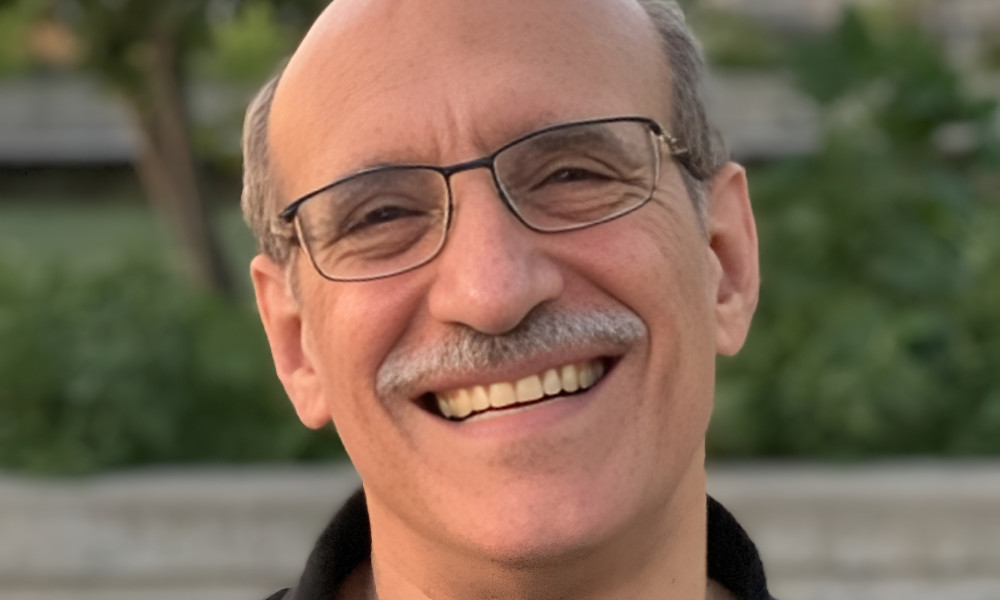
Martin Chalfie, University Professor in the Department of Biological Sciences at Columbia University, shared the 2008 Nobel Prize in Chemistry for his introduction of Green Fluorescent Protein (GFP) as a biological marker.
As a postdoctoral fellow, Martin Chalfie with John Sulston established the first genetic model for mechanosensation using the nematode Caenorhabditis elegans. He and his lab subsequently used molecular, genetic, and electrophysiological means to study neuronal specification, differentiation, outgrowth, and degeneration, microtubule structure and function, and mechanosensory transduction and its modulation in C. elegans.
Dr. Chalfie is a past president of the Society for Developmental Biology and of the American Society for Cell Biology. A member of the US National Academies of Sciences and of Medicine and a foreign member of the Royal Society, he chairs the Committee on Human Rights of the National Academies of Sciences, Engineering, and Medicine.